



Civil engineering jobs in Germany are in high demand in 2026, driven by ageing infrastructure, housing shortages and large public investment in transport and energy projects. As a result, the country is actively looking for skilled civil engineers, including international candidates, and offers competitive salaries, strong career growth and clear visa options such as the EU Blue Card.
This blog covers the top civil engineering job roles, salaries, visa sponsorship opportunities, English speaking options, leading companies and answers to common questions to help you plan your move
Table Of Content
1Are Civil Engineers in demand in Germany?2Civil Engineering Jobs in Germany3Civil Engineering Jobs in Germany with Visa Sponsorship4English Speaking Civil Engineering Jobs in Germany5Civil Engineer Salary in Germany6Civil Engineering Companies in Germany7Conclusion8FAQs About Civil Engineering Jobs in Germany
Are Civil Engineers in demand in Germany?
Yes, civil engineers are in demand in Germany, and the shortage is expected to continue through 2026. Several factors are driving this, and they directly shape civil engineering jobs in Germany for both experienced professionals and international applicants.
The demand for Civil Engineers in Germany is driven by:
- Ageing Infrastructure: Many of Germany’s bridges, roads, railways, and public buildings need repair or replacement.
- Government Investment: Large public funding for infrastructure and modernisation projects is creating a steady flow of new work.
- Housing Shortage: The need for more affordable housing keeps residential and commercial construction active.
- Energy Transition: Wind farms, solar projects, and power grid expansion all need civil engineering expertise.
- Retiring Workforce: A large share of the current engineering workforce is nearing retirement, leaving gaps that local graduates cannot fill alone.
- Skilled Immigration Rules: Easier work visa options and the EU Blue Card make it simpler for foreign engineers to fill these vacancies.
Civil Engineering Jobs in Germany
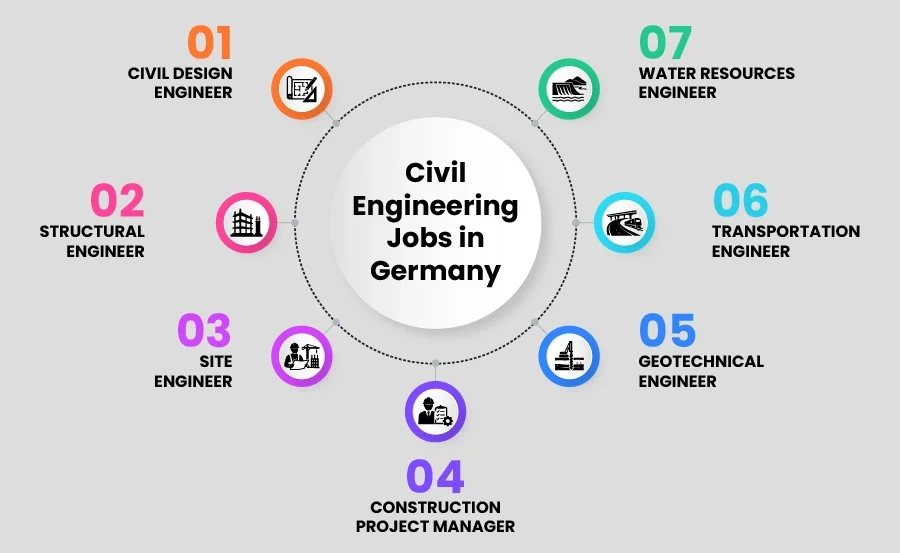
The civil engineering jobs in Germany include:
1. Civil Design Engineer
2. Structural Engineer
3. Site Engineer
4. Construction Project Manager
5. Geotechnical Engineer
6. Transportation Engineer
7. Water Resources Engineer
1. Civil Design Engineer
Civil Design Engineers plan, design and develop infrastructure projects, including buildings, roads, bridges, drainage systems and other civil structures. They are needed in Germany as the country continues to invest in infrastructure development, construction and urban projects.
Civil Design Engineer Job Description
- Design and develop civil engineering structures and infrastructure projects.
- Prepare technical drawings, plans and construction documentation using CAD software.
- Perform structural, material and other engineering calculations.
- Develop designs according to project requirements and technical standards.
- Collaborate with architects, structural engineers, contractors and other project teams.
- Review designs and identify technical issues before construction.
- Ensure designs comply with German and relevant European construction standards.
How to Become a Civil Design Engineer in Germany
1. Earn a Bachelor’s or Master’s degree in Civil Engineering or a related field.
2. Learn industry-standard software such as AutoCAD, Civil 3D, Revit or other BIM tools.
3. Gain practical experience through internships, engineering projects or construction experience.
4. Improve German language skills, as many employers may prefer candidates with German proficiency.
5. Check whether your qualification requires recognition in Germany.
6. Apply for suitable civil engineering jobs and obtain the required German work visa or EU Blue Card, if eligible.
Civil Design Engineer Salary in Germany
The average salary for a Civil Design Engineer in Germany is approximately €60,000 per year, varying with experience, qualifications, industry, location and employer.
Salary by Experience Level:
- Entry Level (0–2 years): €45,000–€55,000 per year
- Mid Level (3–7 years): €55,000–€70,000 per year
- Senior Level (8+ years): €70,000–€85,000+ per year
2. Structural Engineer
Structural Engineers ensure that buildings, bridges, tunnels and other structures are safe, stable and able to withstand loads and environmental forces. Germany’s ageing infrastructure and ongoing construction activity keep demand for them strong, making this one of the most sought-after civil engineering jobs in Germany.
Structural Engineer Job Description
- Analyse and design structural systems using steel, concrete, timber and other materials.
- Perform load, stress and stability calculations.
- Prepare structural drawings and reports using CAD and structural analysis software.
- Assess existing structures for safety, repair and strengthening needs.
- Coordinate with architects, civil engineers and contractors during design and construction.
- Ensure compliance with Eurocodes and German DIN standards.
- Inspect structures and resolve structural issues on site.
How to Become a Structural Engineer in Germany
1. Earn a Bachelor’s or Master’s degree in Civil or Structural Engineering.
2. Learn software such as SAP2000, STAAD.Pro, ETABS, Revit and Tekla.
3. Study Eurocodes and German DIN standards.
4. Gain experience through internships or entry-level design roles.
5. Build German language skills, as technical and client communication often requires them.
6. Apply for jobs and secure a work visa or EU Blue Card, if eligible.
Structural Engineer Salary in Germany
The average salary for a Structural Engineer in Germany is approximately €65,000 per year, depending on specialisation, project type, location and employer size.
Salary by Experience Level:
- Entry Level (0–2 years): €48,000–€56,000 per year
- Mid Level (3–7 years): €56,000–€72,000 per year
- Senior Level (8+ years): €72,000–€90,000+ per year
3. Site Engineer
Site Engineers manage the day-to-day technical work on construction sites. They make sure projects are built according to plans, specifications, safety rules and deadlines, which makes this one of the key engineering jobs in Germany for those who prefer hands-on project work.
Site Engineer Job Description
- Supervise construction activities and site workers.
- Interpret technical drawings and ensure work follows approved plans.
- Monitor quality, safety and progress on site.
- Coordinate with contractors, suppliers and project managers.
- Measure, survey and verify site work accuracy.
- Prepare daily progress reports and site documentation.
- Resolve technical problems that arise during construction.
How to Become a Site Engineer in Germany
1. Earn a Bachelor’s degree in Civil Engineering or Construction Engineering.
2. Gain site experience through internships or training programmes.
3. Learn construction planning tools such as MS Project and Primavera.
4. Understand German construction safety and quality regulations.
5. Develop German language skills, as site communication is mostly in German.
6. Apply for site engineer roles and obtain the required work visa, if eligible.
Site Engineer Salary in Germany
The average salary for a Site Engineer in Germany is approximately €57,000 per year, depending on project size, region and the employer’s industry.
Salary by Experience Level:
- Entry Level (0–2 years): €45,000–€52,000 per year
- Mid Level (3–7 years): €52,000–€65,000 per year
- Senior Level (8+ years): €65,000–€80,000+ per year
4. Construction Project Manager
Construction Project Managers lead projects from planning to completion, managing budgets, schedules, teams and quality. The role suits engineers with strong technical and leadership skills.
Construction Project Manager Job Description
- Plan and manage construction projects within budget and schedule.
- Coordinate architects, engineers, contractors and clients.
- Prepare project schedules, cost estimates and resource plans.
- Monitor progress, quality and safety compliance.
- Manage contracts, tenders and procurement.
- Identify project risks and take corrective action.
- Report project status to clients and senior management.
How to Become a Construction Project Manager in Germany
1. Earn a Bachelor’s or Master’s degree in Civil Engineering or Construction Management.
2. Gain several years of site or design experience.
3. Learn project management tools and methods, such as MS Project, Primavera and PMP-based practices.
4. Understand German construction contracts and regulations.
5. Build strong German language and communication skills.
6. Apply for project management roles and obtain the required work visa or EU Blue Card, if eligible.
Construction Project Manager Salary in Germany
The average salary for a Construction Project Manager in Germany is approximately €70,000 per year, making it one of the better-paid civil engineering roles, especially on large projects.
Salary by Experience Level:
- Entry Level (0–2 years): €50,000–€58,000 per year
- Mid Level (3–7 years): €60,000–€78,000 per year
- Senior Level (8+ years): €78,000–€100,000+ per year
5. Geotechnical Engineer
A geotechnical engineer studies soil, rock and groundwater conditions to design safe foundations, tunnels, embankments and retaining structures.
Geotechnical Engineer Job Description
- Conduct site investigations and soil testing.
- Analyse soil and rock behaviour for construction suitability.
- Design foundations, retaining walls, slopes and tunnels.
- Prepare geotechnical reports and recommendations.
- Assess risks such as settlement, landslides and groundwater issues.
- Coordinate with structural and civil engineering teams.
- Ensure designs meet German and European geotechnical standards.
How to Become a Geotechnical Engineer in Germany
1. Earn a Bachelor’s or Master’s degree in Civil or Geotechnical Engineering.
2. Learn software such as PLAXIS, GeoStudio and AutoCAD.
3. Gain field and laboratory experience through internships or projects.
4. Study German geotechnical standards and testing methods.
5. Improve German language skills for reports and client communication.
6. Apply for suitable jobs and obtain the required work visa, if eligible.
Geotechnical Engineer Salary in Germany
The average salary for a Geotechnical Engineer in Germany is approximately €60,000 per year, depending on specialisation, project complexity and employer.
Salary by Experience Level:
- Entry Level (0–2 years): €46,000–€54,000 per year
- Mid Level (3–7 years): €54,000–€68,000 per year
- Senior Level (8+ years): €68,000–€85,000+ per year
6. Transportation Engineer
Transportation Engineers plan and design roads, highways, railways, airports and public transport systems. Germany’s focus on rail upgrades and road maintenance supports steady demand.
Transportation Engineer Job Description
- Design roads, railways, junctions and transport networks.
- Conduct traffic studies and transport planning analysis.
- Prepare drawings and project documentation using CAD and GIS tools.
- Improve traffic flow, safety and sustainability.
- Work with city authorities, contractors and planners.
- Estimate project costs and timelines.
- Ensure designs follow German road and rail standards.
How to Become a Transportation Engineer in Germany
1. Earn a Bachelor’s or Master’s degree in Civil or Transportation Engineering.
2. Learn tools such as AutoCAD Civil 3D, PTV Vissim and GIS software.
3. Gain experience through internships or infrastructure projects.
4. Understand German transport regulations and planning guidelines.
5. Build German language skills, as public sector projects often require them.
6. Apply for jobs and secure a work visa or EU Blue Card, if eligible.
Transportation Engineer Salary in Germany
The average salary for a Transportation Engineer in Germany is approximately €58,000 per year, with public and private employers offering different pay structures.
Salary by Experience Level:
- Entry Level (0–2 years): €45,000–€53,000 per year
- Mid Level (3–7 years): €53,000–€67,000 per year
- Senior Level (8+ years): €67,000–€82,000+ per year
7. Water Resources Engineer
Water Resources Engineers design and manage systems for water supply, drainage, wastewater treatment, flood protection and irrigation. Climate concerns and flood management needs are increasing demand for this role, making it one of the growing civil engineering jobs in Germany.
Water Resources Engineer Job Description
- Design water supply, drainage and wastewater systems.
- Carry out hydrological and hydraulic modelling.
- Plan flood protection and stormwater management projects.
- Assess environmental impact and water quality issues.
- Prepare technical reports and design documents.
- Coordinate with government bodies, contractors and environmental teams.
- Ensure compliance with German and EU water regulations.
How to Become a Water Resources Engineer in Germany
1. Earn a Bachelor’s or Master’s degree in Civil, Environmental or Water Resources Engineering.
2. Learn software such as HEC-RAS, MIKE, EPANET and GIS tools.
3. Gain experience through internships or water infrastructure projects.
4. Study German and EU water management regulations.
5. Improve German language skills for official and technical communication.
6. Apply for relevant roles and obtain the required work visa, if eligible.
Water Resources Engineer Salary in Germany
The average salary for a Water Resources Engineer in Germany is approximately €58,000 per year, depending on project type, region and employer.
Salary by Experience Level:
- Entry Level (0–2 years): €45,000–€53,000 per year
- Mid Level (3–7 years): €53,000–€67,000 per year
- Senior Level (8+ years): €67,000–€82,000+ per year
Civil Engineering Jobs in Germany with Visa Sponsorship
Civil Engineering Jobs in Germany with Visa Sponsorship include:
- Structural Engineer
- Civil Design Engineer
- Site Engineer
- Construction Project Manager
- Geotechnical Engineer
- Transportation Engineer
- Water Resources Engineer
- BIM Engineer
Most civil engineering jobs in Germany with visa sponsorship are offered by construction firms, engineering consultancies and infrastructure companies facing a shortage of skilled workers. Once you receive a job offer, the employer usually provides the employment contract and supporting documents needed for your work visa or EU Blue Card. Some also help with relocation and accommodation.
Sponsorship is not automatic, though. Candidates need a recognised engineering degree and relevant experience, and German language skills improve their chances. Because civil engineering is one of the in demand jobs in Germany, qualified applicants who plan to migrate to Germany from India often find employers open to hiring from abroad.
English Speaking Civil Engineering Jobs in Germany
- BIM Engineer
- Structural Design Engineer
- Civil Design Engineer
- Geotechnical Engineer
- Water Resources Engineer
- Transportation Planning Engineer
- Sustainability Engineer
- Project Engineer (International Projects)
English-friendly roles are mostly found in international consultancies, multinational construction firms and design-focused teams. While English-speaking jobs in Germany are available, on-site civil engineering roles usually require German language skills.
Civil Engineer Salary in Germany
The average civil engineer salary in Germany per month is around €4,000 to €5,800, which works out to roughly €48,000 to €70,000 per year.
Pay for civil engineering jobs in Germany depends on experience, qualifications, job role and region.
Engineers working on large-scale infrastructure, construction, structural design and transportation projects often earn more, especially when they combine specialised technical skills with project management experience. This is why civil engineering features among the highest paying jobs in Germany at senior levels
Factors That Influence a Civil Engineer’s Salary in Germany
Professional Experience: Senior engineers earn more because they handle complex projects and lead teams, while entry level civil engineering jobs in Germany start at the lower end of the range.
Specialisation: Structural, geotechnical, transportation and construction engineering roles each have different pay levels.
Project Type: Major projects such as highways, bridges, tunnels and railways often offer more competitive pay.
Qualifications: A relevant degree, plus additional training in BIM, project management or structural design, improves earning potential.
Industry: Salaries differ across construction, infrastructure, engineering consulting and property development.
German Language Skills: Strong German widens the choice of roles and employers, and can lead to better-paid positions.
Technical Skills: Proficiency in AutoCAD, Civil 3D, Revit and BIM tools strengthens job prospects and pay.
Location: Pay varies across Germany depending on local demand, construction activity and cost of living.
Civil Engineering Companies in Germany
Some of the leading civil engineering companies in Germany include:
- HOCHTIEF
- STRABAG
- Bilfinger
- Max Bögl
- Implenia
- GOLDBECK
- Drees & Sommer
- Ramboll
- Arup
- WSP
- Sweco
- Arcadis
- Schüßler-Plan
- DB Engineering & Consulting
Germany is home to many leading construction companies and engineering consultancies that regularly hire civil engineers. These are some of the top employers to consider when looking for civil engineering jobs in Germany.
Conclusion
Germany continues to offer strong prospects for qualified professionals, and civil engineering jobs in Germany are expected to stay in demand through 2026 because of ageing infrastructure, housing needs and large public investment. With the right degree, technical skills and some German language ability, international engineers can build a rewarding career in the country. Keeping your documents ready and applying early will improve your chances.
For official guidance on work visas, qualification recognition and the EU Blue Card, visit the Make it in Germany portal, the German government’s official platform for skilled workers.