




Australia continues to offer opportunities for qualified chefs, supported by demand across restaurants, hotels, catering businesses, resorts and regional hospitality employers. For overseas professionals, chef jobs in Australia can provide a pathway to work in the country, while some eligible chefs may also explore employer-sponsored or skilled migration options.
For Indian chefs and other overseas professionals, understanding the difference between finding a chef job in Australia, obtaining visa sponsorship, and becoming eligible for permanent residence (PR) is important before planning a move.
Table Of Content
1Is Chef a High-Demand Occupation in Australia?2Is Chef on Australia’s Skilled Occupation List?3Is a Chef Eligible for PR in Australia?4Chef Jobs in Australia for Foreigners5Chef Jobs in Australia With Visa Sponsorship6Salary of Chef in Australia Per Month7How to Find Chef Jobs in Australia From Overseas8Conclusion9FAQs
Is Chef a High-Demand Occupation in Australia?
Yes. Chefs are in demand in Australia, particularly across hospitality businesses that need qualified and experienced kitchen professionals.
Demand can vary by location, employer and level of experience. Regional areas may also offer opportunities where hospitality businesses experience difficulty recruiting suitably qualified workers locally.
Chefs can find employment across:
- Restaurants and cafés
- Hotels and resorts
- Catering companies
- Clubs and pubs
- Aged-care facilities
- Hospitals and institutions
- Remote hospitality operations
- Regional hospitality businesses
The demand for chefs does not mean that every chef automatically qualifies for an Australian visa. Immigration eligibility depends on the requirements of the relevant visa and the applicant’s individual circumstances.
Why are chefs in demand in Australia?
Australia has a large hospitality and tourism industry. Restaurants, hotels, resorts and catering businesses require trained kitchen professionals to prepare food and manage kitchen operations.
The demand can be particularly relevant in regional Australia, where employers may have difficulty filling hospitality positions with local workers.
Is Chef on Australia’s Skilled Occupation List?
Yes, Chef (ANZSCO 351311) is a recognised occupation within Australia’s skilled migration system. However, the relevant occupation list and visa requirements can differ depending on the visa pathway.
The ANZSCO code for Chef is 351311.
For an overseas chef, simply having the occupation code is not enough to qualify for a visa. Applicants must check whether Chef is eligible for their chosen visa and whether they meet the associated requirements.
These may include:
- Relevant qualifications
- Skilled work experience
- English-language requirements
- Skills assessment requirements
- Age requirements, where applicable
- Employer sponsorship, where required
- Health and character requirements
- Other visa-specific criteria
What is ANZSCO 351311?
ANZSCO 351311 is the Australian and New Zealand Standard Classification of Occupations code assigned to the occupation of Chef.
The occupation generally involves planning menus, preparing and cooking food, supervising kitchen staff and managing kitchen operations.
Therefore, when searching for chef jobs in Australia, overseas applicants should compare the duties listed in a job advertisement with the duties associated with their nominated occupation
Is a Chef Eligible for PR in Australia?
Yes, chefs may be eligible for Australian permanent residence through certain skilled or employer-sponsored pathways, provided they meet the requirements of the relevant visa.
However, being a chef does not automatically provide a chef PR Australia pathway.
Depending on their circumstances, chefs may explore pathways that can include:
- Employer-sponsored permanent residence
- Skilled migration pathways
- Regional migration pathways
- Employer-sponsored temporary visas that may potentially lead to permanent residence
The exact options depend on the occupation’s current eligibility, the applicant’s qualifications and experience, visa requirements, employer circumstances and other factors.
Can a chef get PR through employer sponsorship?
Potentially, yes. An eligible Australian employer may sponsor a qualified chef under an applicable employer-sponsored visa pathway. Some temporary employer-sponsored arrangements may provide a potential route towards permanent residence if the worker and employer later meet the requirements of a permanent visa.
However, temporary sponsorship does not guarantee PR.
For this reason, chefs should evaluate the complete migration pathway rather than choosing a visa solely because an employer offers sponsorship.
Chef Jobs in Australia for Foreigners
Australia offers chef jobs for foreigners across restaurants, hotels, resorts, catering companies and other hospitality businesses.
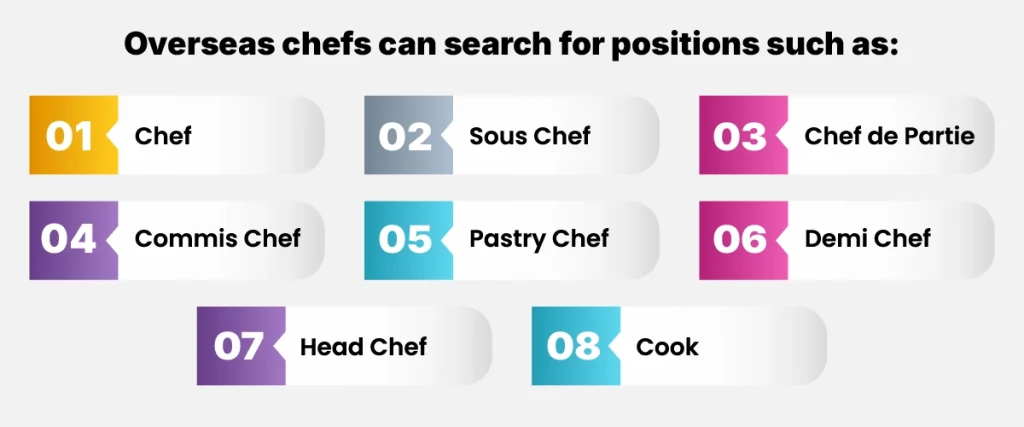
The availability of positions depends on the employer, location, experience and specialisation.\
Chef Jobs in Australia for Indians
Indian chefs can explore chef jobs in Australia for Indians through Australian job portals, hospitality recruitment agencies, employer websites and professional networks.
Indian candidates should prepare:
1. An Australian-style CV
2. Relevant qualification certificates
3. Employment reference letters
4. Evidence of professional experience
5. English-language test results, where required
6. Passport and other identity documents
7. Skills assessment documentation, where applicable
Candidates should also research the employer before accepting an overseas job offer, particularly when the advertisement claims to include visa sponsorship.
Chef Jobs in Australia With Visa Sponsorship
Some Australian employers may sponsor eligible overseas chefs when they meet the requirements of an applicable employer-sponsored visa.
This is why searches such as “chef jobs in Australia with visa sponsorship” and “482 visa sponsorship chef jobs Australia” are common among overseas applicants.
The Skills in Demand visa (subclass 482) is an employer-sponsored temporary visa that can allow eligible skilled workers to work in Australia for an approved sponsoring employer, subject to the applicable stream and requirements.
A chef seeking sponsorship generally needs to satisfy both:
The employer’s requirements
- The employer must be eligible to sponsor workers.
- The position must meet the applicable requirements.
- The employer must comply with sponsorship obligations.
The applicant’s requirements
- The applicant must meet the relevant occupation and visa criteria.
- They must have the required skills and experience.
- They may need to meet English-language and other requirements.
- Health and character requirements may apply.
Does every chef job offer visa sponsorship?
No, many Australian chef vacancies are open only to candidates who already have Australian work rights. Others may be advertised with sponsorship depending on the employer’s needs and eligibility.
Therefore, overseas candidates should specifically look for terms such as:
- Visa sponsorship available
- Employer sponsorship
- Sponsorship considered
- Overseas applicants welcome
- Skills in Demand visa sponsorship
Candidates should confirm sponsorship directly with the employer before relying on a job advertisement.
Salary of Chef in Australia Per Month
The average chef salary in Australia is around A6,000–A6,200 per month before tax, based on annual salary estimates of approximately A$74,000. However, earnings vary depending on experience, job title, location, employer and working hours. Senior chefs and executive-level roles can earn considerably more.
Government earnings data puts the median annual earnings for chefs at around A$73,996, equivalent to approximately A$6,166 per month before tax. Indeed reports a similar average base salary of about A$74,220 per year.
Average Chef Salary in Australia by Role
| Chef Role | Approx. Annual Salary | Approx. Monthly Salary |
|---|---|---|
| Chef de Partie | A70,000–A75,000 | A5,800–A6,250 |
| Sous Chef | A75,000–A80,000 | A6,250–A6,700 |
| Head Chef | A85,000–A100,000 | A7,100–A8,300 |
| Executive Chef | Around A$88,000 average | Around A$7,350 |
These monthly figures are approximate calculations based on annual salaries divided by 12 and represent gross income before tax.
What Affects a Chef’s Salary in Australia?
A chef’s earnings can vary significantly depending on:
Experience: Experienced and senior chefs generally earn more than entry-level chefs.
Job role: Sous chefs, head chefs and executive chefs typically earn more as their responsibilities increase.
Location: Major cities, resort destinations and high-end hospitality venues can offer higher salaries.
Type of employer: Luxury hotels, large restaurants, resorts and institutional kitchens may have different pay structures.
Working hours: Overtime, weekend work and applicable award or penalty rates can affect total earnings.
For example, executive chefs in Sydney can earn more than the national average, with some salary estimates placing annual earnings at around A$104,762.
Are Chefs Paid Hourly in Australia?
Yes. Some Australian chefs are paid an hourly rate rather than a fixed annual salary. Current job advertisements can show rates of A$32 or more per hour, although the actual amount depends on the position, employer, experience and applicable employment conditions.
How to Find Chef Jobs in Australia From Overseas
Finding overseas chef jobs in Australia requires more than simply submitting applications. Candidates should combine job searching with visa research so they understand whether a potential position can support their migration plans.
Step 1: Check your occupation
Confirm that your work experience and job duties align with Chef (ANZSCO 351311).
Your actual duties should be relevant to the nominated occupation rather than relying only on your job title.
Step 2: Check your qualifications, experience and skills assessment
Review your culinary qualifications and professional experience against the requirements of your intended visa and any applicable skills assessment.
Depending on the visa pathway and your circumstances, you may need to complete a skills assessment before applying for the visa. Check the specific requirements of your intended visa and the relevant assessing authority before proceeding.
Step 3: Prepare an Australian-style CV
Your CV should clearly show:
- Job title
- Employer
- Employment dates
- Main responsibilities
- Cuisine specialisation
- Qualifications
- Certifications
- Relevant skills
Use measurable information where possible, such as the size of the kitchen team you supervised or the type of kitchen you managed.
Step 4: Search Australian job platforms
Look for vacancies through reputable Australian employment websites like seek, hospitality recruitment companies and individual employer websites.
Use search terms such as:
- Chef jobs Australia
- Chef jobs in Australia for foreigners
- Chef jobs with visa sponsorship Australia
- 482 visa sponsorship chef jobs Australia
- Overseas chef jobs Australia
- Chef jobs Australia for Indians
Step 5: Check whether sponsorship is available
Read the job description carefully.
If sponsorship is important to you, ask the employer:
Does this position offer employer sponsorship for an eligible overseas chef?
Do not assume that an employer will sponsor you simply because the occupation is eligible for a particular visa.
Step 6: Compare the job with your visa pathway
Before accepting an offer, check whether the position, employer and your personal circumstances satisfy the requirements of the relevant Australian visa.
Step 7: Verify the offer
Be cautious of employers or recruiters who ask for large upfront payments in exchange for a guaranteed Australian job or visa.
A genuine employment opportunity should be independently verified before you make financial commitments.
Conclusion
Chefs in Australia can find opportunities across restaurants, hotels, resorts, catering businesses and regional hospitality establishments. For overseas professionals, Australia can also offer employer-sponsored and skilled migration options, depending on the current immigration rules and the applicant’s circumstances.
The key is to separate three questions:
Can I find a chef job?
You need to meet the employer’s recruitment requirements.
Can I get visa sponsorship?
You need an eligible employer, position and visa pathway.
Can I obtain PR?
You need to qualify for an applicable permanent residence pathway; a chef occupation or temporary sponsorship alone does not guarantee PR.
For Indian and other overseas chefs, checking ANZSCO 351311, qualifications, work experience, skills assessment requirements, employer sponsorship and current visa rules before applying can make the migration process more structured and realistic.
Check your Australia PR points based on factors such as age, English proficiency, qualifications, skilled work experience and other applicable criteria to understand your potential points score.