


Caregiver Jobs in Canada provide career opportunities for people who want to help those who need assistance with their daily activities. A caregiver’s job requires patience, responsibility and the ability to understand the needs of others. For international candidates, exploring this career path involves understanding the nature of the work, employment conditions and opportunities available in various parts of Canada. Being aware of what to expect can help candidates make informed career decisions and plan their future in the Canadian care sector.
Table Of Content
1Is there a Shortage of Caregivers in Canada?2Caregiver Jobs in Canada3Caregiver Jobs in Canada with Visa Sponsorship4Salary for Caregivers in Canada5Caregiver Jobs in Canada Requirements6Age Limit for Caregiver in Canada from India7How to Apply for Caregiver Jobs in Canada?8New Caregiver Program in Canada9Conclusion10FAQs About Caregiver Jobs in Canada
Is there a Shortage of Caregivers in Canada?
Yes, Canada is experiencing a shortage of caregivers, especially those who provide home support and personal support. The country’s aging population, increasing demand for home-based care and workforce shortages are contributing to the need for skilled caregiving professionals.
Key Reasons for the Shortage of Caregivers in Canada:
1. An Ageing Population: Canada’s senior population is growing, increasing the need for caregivers who can help older adults with daily activities, personal care and independent living.
2. Greater Need for Home-Based Care: More seniors and individuals with disabilities require assistance at home, creating a growing need for home support workers and personal care providers.
3. Experienced Workers Approaching Retirement: A considerable share of the existing home support workforce is aged 50 and above. As experienced workers retire, additional job openings may become available.
4. Gaps in the Caregiving Workforce: The availability of qualified home support workers may not be sufficient to meet the demand for care services in certain regions of Canada.
5. Increasing Long-Term Care Requirements: More people require ongoing assistance due to ageing, disabilities and other care needs, placing additional pressure on Canada’s caregiving workforce.
Caregiver Jobs in Canada
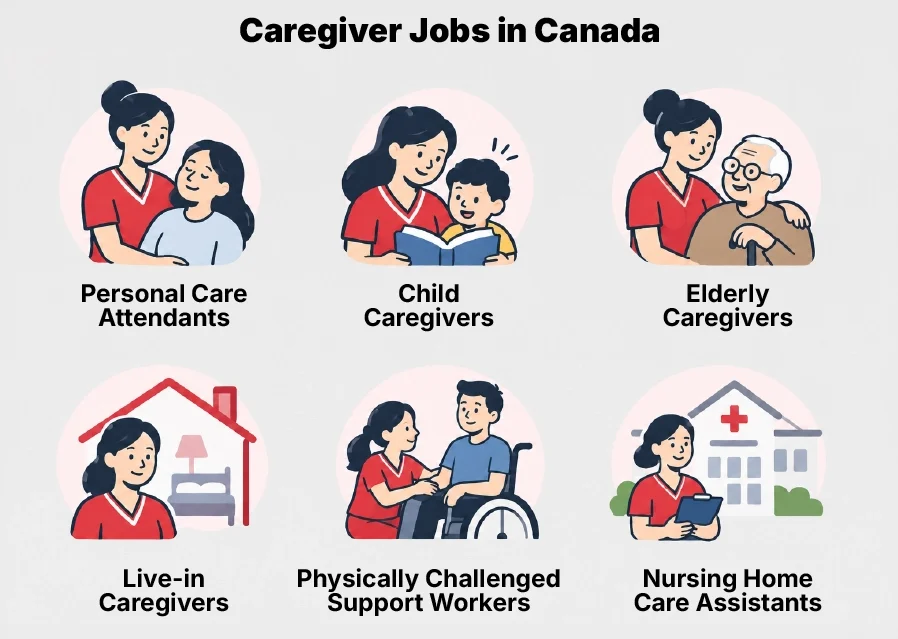
The most common caregiver jobs in Canada include Personal Care Attendants, Child Caregivers, Elderly Caregivers, Live-in Caregivers, Physically Challenged Support Workers and Nursing Home Care Assistants.
1. Personal Care Attendant
Personal care attendants assist people who need help with personal hygiene, mobility and daily activities. Their work may be in private homes, assisted living facilities or health care settings, depending on the workplace.
Key Responsibilities of Personal Care Attendant:
- Help clients with bathing, dressing and personal hygiene.
- Assist with walking, movement and other daily activities.
- Support clients with eating and meal preparation.
- Monitor clients’ general well-being and report concerns.
- Provide companionship and emotional support.
- Maintain a clean and safe environment.
Required Qualifications for Personal Care Attendant in Canada:
- Secondary school education may be required.
- Previous personal care or caregiving experience may be preferred.
- Training in personal support or home care may be required.
- First aid and CPR certification may be necessary.
- Good communication and interpersonal skills are important
NOC Code: 44101 for home care roles or 33102 for medical and institutional care roles.
2. Child Caregiver
Child caregivers provide care for infants and children in private homes. They help parents to take care of their childcare responsibilities, support children’s daily routines, safety, physical well-being and social development.
Key Responsibilities of Child Caregiver:
- Supervise children and ensure their safety.
- Prepare meals and assist with feeding.
- Bathe, dress and maintain children’s personal hygiene.
- Organise indoor and outdoor activities.
- Help children with learning and daily routines.
- Take children to school and other appointments when required.
Required Qualifications for Child Caregiver in Canada:
- Secondary school education may be required.
- Childcare training or a related qualification may be preferred or required.
- Previous childcare experience may be an advantage.
- First aid and CPR certification may be required.
- Patience, communication and child-handling skills are important.
NOC Code: NOC 44100 – Home Child Care Providers (TEER 4).
3. Elderly Caregiver
Elderly caregivers provide assistance to senior citizens who require help with personal care and daily activities. They assist older adults to live in comfort, safety and independence especially in their own homes.
Key Responsibilities of Elderly Caregiver:
- Assist seniors with bathing, dressing and grooming.
- Help with meal preparation and feeding.
- Support mobility and daily physical activities.
- Provide companionship and emotional support.
- Assist with medication routines as permitted by their role.
- Help maintain a safe and comfortable living environment.
Required Qualifications for Elderly Caregiver in Canada:
- Some secondary school education is usually required.
- Previous experience in elderly care may be preferred.
- Training in senior care or home support may be required.
- First aid certification may be necessary.
- Patience, empathy and communication skills are essential.
NOC Code: 44101 – Home Support Workers, Caregivers and Related Occupations (TEER 4), when providing care in a client’s home.
4. Live-in Caregiver
Live-in caregiver jobs in Canada involve living at an employer’s or client’s residence and providing regular assistance with personal care and household activities. Depending on their role, they may support seniors, individuals with disabilities or children.
Key Responsibilities of Live-in Caregiver:
- Provide personal care and daily assistance.
- Prepare meals and help with household activities.
- Support clients with mobility and personal hygiene.
- Monitor daily routines and general well-being.
- Offer companionship and emotional support.
- Maintain a safe and comfortable home environment.
Required Qualifications for Live-in Caregiver in Canada:
- Secondary school education may be required.
- Previous caregiving experience may be preferred.
- Relevant home support or childcare training may be required.
- First aid and CPR certification may be necessary.
- Good interpersonal and communication skills are important.
NOC Code: NOC 44101 for senior and disability home care or NOC 44100 for home-based childcare, depending on the duties.
5. Physically Challenged Support Workers
Physical support workers help people with physical disabilities to perform their daily activities. They assist clients with personal care, mobility and daily tasks, as well as promoting independence and improving quality of life.
Key Responsibilities of Physically Challenged Support Workers:
- Assist clients with personal hygiene and daily routines.
- Support mobility, walking and movement.
- Help with meal preparation and household activities.
- Accompany clients to medical appointments and community activities.
- Assist with the use of mobility aids when required.
- Provide companionship and support independent living.
Required Qualifications for Physically Challenged Support Workers in Canada:
- Secondary school education may be required.
- Training in disability support or personal care may be preferred.
- Previous experience assisting individuals with physical disabilities may be an advantage.
- First aid and CPR certification may be required.
- Patience, empathy and good communication skills are important.
NOC Code: NOC 44101 for home-based support roles. Other positions may fall under different NOC classifications depending on their duties and work settings.
6. Nursing Home Care Assistant
Nursing home care assistants work with residents in long-term care facilities and nursing homes. They work with nurses and other health care professionals to give basic patient care and assist residents with their daily needs.
Key Responsibilities of Nursing Home Care Assistant:
- Assist residents with bathing, dressing and grooming.
- Help with feeding and personal hygiene.
- Support residents with walking and mobility.
- Monitor basic health indicators and report changes to nursing staff.
- Assist with patient positioning and transfers.
- Maintain cleanliness and comfort in residents’ rooms.
Required Qualifications for Nursing Home Care Assistant in Canada:
- Secondary school education may be required.
- A nursing aide, healthcare aide or personal support worker programme may be required.
- Practical training or supervised experience may be necessary.
- First aid and CPR certification are usually required.
- Good communication and teamwork skills are important.
NOC Code: NOC 33102 – Nurse Aides, Orderlies and Patient Service Associates (TEER 3).
Caregiver Jobs in Canada with Visa Sponsorship
Some common Jobs in Canada with Visa Sponsorship for caregivers include:
1. Home Support Worker
2. Personal Care Attendant
3. Child Care Provider
4. Elderly Caregiver
5. Live-in Caregiver
6. Physically Challenged Support Worker
7. Nursing Home Care Assistant
How Can Foreign Caregivers Get a Canadian Work Permit Through an Employer?
Canadian employers may hire eligible foreign caregivers through the Temporary Foreign Worker Program (TFWP). Under this program, employers generally need to obtain a positive Labour Market Impact Assessment (LMIA) before hiring a foreign worker, unless an exemption applies.
Steps to Apply for Caregiver Jobs in Canada with Employer Support:
1. Search for Suitable Job Opportunities: Search for caregiver vacancies through Job Bank Canada and other trusted job sites in Canada to identify employers who are willing and eligible to hire foreign workers.
2. Secure an Employment Offer: Obtain a genuine job offer that clearly explains the job responsibilities, salary, working hours and employment conditions.
3. Employer Applies for an LMIA: Where required, the Canadian employer must apply for a Labour Market Impact Assessment (LMIA) and receive a positive decision before the worker applies for an LMIA-based work permit.
4. Submit a Work Permit Application: Apply for a Canadian work permit with the required documents, including the employment offer and LMIA details, where applicable.
5. Travel to Canada and Start Working: After receiving work permit approval, travel to Canada and begin employment according to the conditions of the permit.
Important Immigration Update – November 2026: Overseas recruitment of caregivers under NOC 44100 and NOC 44101 through the TFWP is currently restricted to eligible positions in Quebec. Employers in other provinces may hire eligible caregivers already in Canada, subject to IRCC requirements.
Salary for Caregivers in Canada
The average salary for Caregiver Jobs in Canada is approximately CAD 20 per hour, depending on the job role, work experience, location and employer . Home support workers earn a median wage of CAD 20.50 per hour, while home child-care providers earn CAD 19 per hour.
The following factors influence how much caregivers earn in Canada:
Job Role: Home support workers, child caregivers and personal care attendants may receive different hourly wages based on their responsibilities.
Work Experience: Caregivers with relevant experience and specialised skills may have better earning opportunities.
Location: Wages differ across Canadian provinces and territories depending on local labour market conditions.
Working Hours: Full-time, part-time and live-in caregiving arrangements may have different pay structures and employment conditions.
Caregiver Jobs in Canada Requirements
The main qualifications and requirements for caregiver jobs in Canada include:
1. Educational Background
- Some secondary school education is usually required for home support worker positions.
- Home child care providers may need a high school diploma or equivalent.
- Employers may prefer candidates with certificates or diplomas in caregiving, personal support work (PSW), nursing assistance or related healthcare fields.
2. Relevant Work Experience
- Previous experience in caregiving, home support, elderly care or childcare may be required.
- Experience assisting seniors, children or individuals with disabilities can be beneficial.
- Candidates should be familiar with personal care, daily assistance and basic caregiving responsibilities.
3. Professional Training
- Training in elderly care, disability support, home care or childcare may be required depending on the position.
- Personal support worker (PSW) or healthcare assistant training may be preferred by certain employers.
- Candidates applying for specialised healthcare positions may need additional qualifications.
4. Language and Communication Skills
- Basic English or French communication skills are important for interacting with clients, families and healthcare professionals.
- Caregivers should be able to understand instructions and communicate clients’ needs effectively.
- For certain foreign worker applications, employers must ensure that candidates can communicate independently in at least one of Canada’s official languages.
5. First Aid and CPR Certification
- First aid and CPR certification may be required by employers.
- Knowledge of basic emergency response and safety procedures is beneficial.
- Candidates should be prepared to handle common caregiving situations responsibly.
6. Personal Skills and Abilities
- Patience and empathy when assisting individuals who need care.
- Good interpersonal and communication skills.
- Ability to manage daily caregiving responsibilities.
- Physical fitness to assist with mobility and routine care tasks where required.
- Reliability, flexibility and a responsible attitude towards clients.
7. Work Permit and Employment Authorisation
- Foreign applicants must have the appropriate Canadian work authorisation before starting employment.
- Depending on the hiring pathway, an eligible job offer and a positive Labour Market Impact Assessment (LMIA) may be required.
- Applicants must meet the applicable immigration and work permit conditions.
Age Limit for Caregiver in Canada from India
There is no specific maximum age limit for Indians applying for caregiver jobs in Canada. However, applicants must meet the relevant employment and immigration pathway eligibility criteria.
Indian applicants should consider the following age-related factors:
Minimum Age: There is no universal minimum age of 18 specified for all caregiver work permit pathways. Applicants must meet the applicable employment and immigration requirements.
Maximum Age: Canada does not set a fixed maximum age for caregiver employment. Employers may assess candidates based on their qualifications, experience and ability to perform the job.
Work Permit Eligibility: Applicants must satisfy the relevant work permit conditions, regardless of their age.
Permanent Residence: Age can affect the points awarded under certain immigration programmes. For example, Express Entry awards the highest CRS age points to candidates aged 20–29, with points decreasing as age increases.
How to Apply for Caregiver Jobs in Canada?
To apply for caregiver jobs in Canada, candidates can follow these steps:
1. Check Job Eligibility: Review the job requirements, including education, relevant work experience, language proficiency and any required certifications.
2. Search for Job Opportunities: Look for caregiver vacancies through Canada’s official Job Bank and other trusted job portals. Check whether employers are willing to hire foreign workers.
3. Prepare Your Resume: Create a Canadian-style resume highlighting your caregiving experience, relevant skills, qualifications and previous employment.
4. Apply for Suitable Positions: Submit your resume and cover letter directly to employers whose requirements match your profile.
5. Attend Interviews: Be prepared to discuss your caregiving experience, responsibilities, communication skills and ability to support individuals who need care.
6. Receive a Job Offer: If selected, review the employment contract, job duties, salary and working conditions before accepting the offer.
7. Apply for a Work Permit: Depending on the job and immigration pathway, you may need an employer-specific work permit. Your employer may also need to obtain a Labour Market Impact Assessment (LMIA), unless an exemption applies.
8. Prepare for Arrival in Canada: Once your work permit is approved, make the necessary travel arrangements and prepare to begin your employment in Canada.
Note: Candidates planning to Get a Job in Canada from India should understand the eligibility criteria, employer requirements and applicable work permit procedures before starting their job search.
New Caregiver Program in Canada
On March 31, 2025, Canada introduced the Home Care Worker Immigration Pilots (HCWIP), a program that offers eligible foreign caregivers a pathway to permanent residence (PR). These pilots are in addition to the existing Home Child Care Provider Pilot and Home Support Worker Pilot which closed to new applications in June 2024.
The new caregiver immigration program includes two pathways:
1. Home Care Worker Immigration Pilot: Child Care: Designed for eligible caregivers who provide childcare and support to children in private homes (NOC 44100).
2. Home Care Worker Immigration Pilot: Home Support: Designed for eligible caregivers who provide personal care and assistance to seniors, people with disabilities and individuals requiring home support (NOC 44101).
Conclusion
Pursuing Caregiver Jobs in Canada can be a rewarding career opportunity for individuals passionate about helping others. Candidates should understand employment expectations and stay updated on Canada’s immigration policies before applying.
For the latest caregiver immigration information, visit the official Government of Canada website.