



Canada has become one of the most preferred study destinations for engineering students across the world, especially in 2026 when the demand for skilled engineers continues to rise. Engineering Courses in Canada are known for their global recognition, industry-focused curriculum, and strong career opportunities. Studying engineering in Canada offers more than just a degree, it offers a future. From advanced technology and research exposure to post-study work options and permanent residency pathways, Canada provides the right balance of quality education and long-term career growth.
In this blog, we will explore whether Canada is a good choice for engineering, the best engineering courses to study, the top engineering universities, admission requirements, and the fees involved for Indian students. If you’re planning your engineering journey abroad and want to understand the scope of Canada Education, this guide will help you make an informed decision with clarity and confidence.
Table Of Content
1Is Canada good for Engineering?2Best Engineering Courses in Canada3Top 10 Engineering Universities in Canada4Requirements to Study Engineering in Canada5Engineering in Canada for Indian Students Fees6Conclusion7Frequently Asked Questions
Is Canada good for Engineering?
Yes, Canada is good for engineering, especially for international students. It offers world-class education, strong co-op programs, and clear pathways to permanent residency. Top universities like the University of Toronto, UBC, McGill, and Waterloo are globally ranked and known for practical learning and industry connections in fields such as software, civil, and mechanical engineering.
Engineering students in Canada benefit from strong job opportunities, with salaries starting from CAD 65,000 and increasing significantly with experience. Although tuition fees for international students are higher, Scholarships to Study in Canada, along with co-op earnings, help students manage education costs effectively.
After graduation, students can work for up to three years through the PGWP and apply for PR via Express Entry or PNPs, making Canada a strong long-term option for Indian engineering students.
Best Engineering Courses in Canada
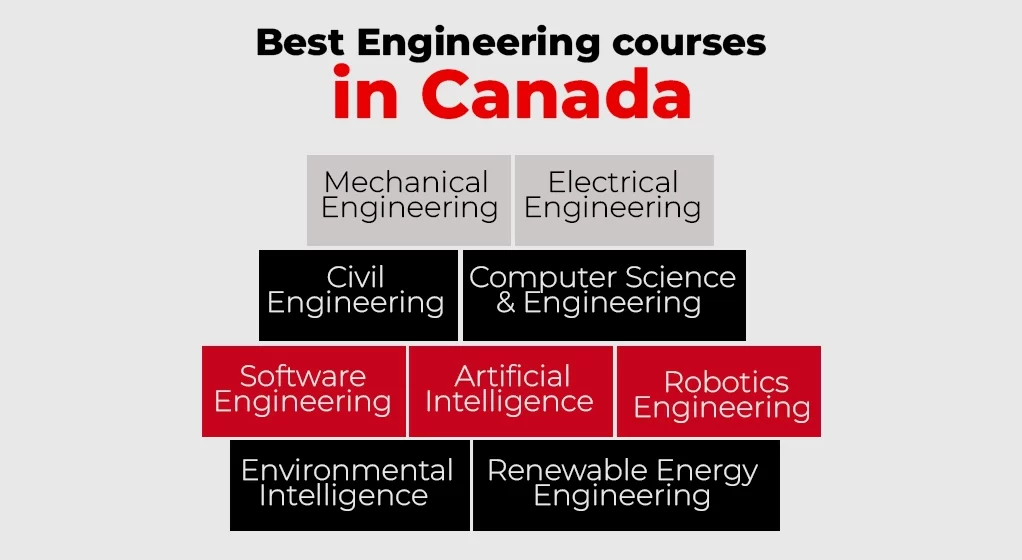
The best engineering courses in Canada include Mechanical Engineering, Electrical Engineering, Civil Engineering, Computer Science & Engineering, Software Engineering, Artificial Intelligence, Robotics Engineering, Environmental Intelligence, and Renewable Energy Engineering.
These courses focus strongly on practical learning through co-op programs, research projects, and close industry connections, which also support post-study work opportunities and long-term PR goals.
Let’s look at each course in detail:
1. Mechanical Engineering in Canada
Mechanical Engineering in Canada focuses on designing and improving machines, systems, and technology. Most programs are 4 years long and include co-op options, giving students real industry experience while studying.
What Do We Study in Mechanical Engineering:
- Mechanics: Forces, motion, and structural basics
- Materials: Metals, composites, and advanced materials
- Fluid dynamics: Behavior of liquids and gases in engines and systems
- CAD tools: Design and simulation software like SolidWorks, AutoCAD
- Core subjects: Thermodynamics, heat transfer, machine design, manufacturing
Why it Stands Out:
- Paid co-ops: Earn $20–$30/hour with hands-on industry exposure
- High job demand: 90%+ employment rate, average starting salary ~CAD 70,000
- Future-focused research: Robotics, renewable energy, sustainable manufacturing
Best Universities for Mechanical Engineering in Canada:
- University of Toronto
- University of British Columbia (UBC)
- McGill University
- University of Waterloo (strong co-op)
- University of Alberta
Career Advantage:
- Eligible for PGWP up to 3 years, supporting PR pathways through Express Entry.
- Tuition: CAD 40,000–60,000 per year (scholarships available).
2. Electrical Engineering in Canada
Electrical Engineering in Canada focuses on power systems, electronics, communication networks, and smart technologies. Most programs are 4 years long and combine strong theoretical foundations with practical labs, simulations, and co-op or internship opportunities, particularly in renewable energy and smart grid technologies.
What Do We Study in Electrical Engineering:
- Circuits: Design and analysis of electrical and electronic circuits
- Control systems: Automation and control of machines and industrial processes
- Signal processing: Analysis and manipulation of signals for communication and data systems
- Core subjects: Power systems, electronics, telecommunications, embedded systems
Why it Stands Out:
- Industry exposure: Hands-on laboratories, real-world simulations, and paid co-op opportunities
- Strong job demand: High demand across energy, telecommunications, electronics, and technology sectors
- Future-ready skills: Emphasis on smart grids, clean energy solutions, and digital electrical systems
Best Universities for Electrical Engineering in Canada:
- University of Toronto
- University of Waterloo
- McMaster University
- University of British Columbia (UBC)
- University of Calgary
Career Advantage:
- Eligible for PGWP up to 3 years, supporting permanent residence pathways through Express Entry
- Tuition: CAD 40,000–60,000 per year (scholarships available)
3. Civil Engineering in Canada
Civil Engineering in Canada focuses on designing, building, and maintaining infrastructure such as roads, bridges, buildings, and sustainable urban systems. Programs typically last 4 years and include fieldwork, software-based design, and industry-linked projects.
What Do We Study in Civil Engineering:
- Structural design: Analysis and design of buildings, bridges, and infrastructure
- Hydraulics: Water flow systems, dams, drainage, and flood management
- Construction materials: Concrete, steel, and modern composite materials
- Core subjects: Geotechnical engineering, transportation systems, project management
Why it Stands Out:
- Practical learning: Field training, site visits, and hands-on design software experience
- Stable careers: Strong demand in infrastructure development and public works
- Professional growth: Clear pathway toward P.Eng licensure in Canada
Best Universities for Civil Engineering in Canada:
- University of Toronto
- University of British Columbia (UBC)
- McGill University
- University of Alberta
- Queen’s University
Career Advantage:
- Eligible for PGWP up to 3 years, supporting PR pathways through Express Entry
- Tuition: CAD 40,000–60,000 per year (scholarships available)
4. Computer Science and Engineering in Canada
Computer Science & Engineering in Canada combines software and hardware expertise, making it one of the most in-demand fields. Most programs are 4 years long and offer strong co-op options, enabling students to gain hands-on experience in Canada’s rapidly growing tech sector. Popular specialisations include artificial intelligence, cybersecurity, and data systems.
What Do We Study in Computer Science and Engineering
- Programming: Writing, testing, and optimising code using modern programming languages
- Databases: Designing, managing, and securing large-scale data systems
- Networks: Computer communication systems, networking, and cybersecurity basics
- Machine learning: Foundations of AI, automation, and intelligent systems
Why it Stands Out:
- Strong co-ops: Industry-focused placements with leading Canadian tech companies
- Tech ecosystem: Access to hackathons, innovation labs, and start-up culture
- High employability: Excellent job prospects in major Canadian tech hubs
Best Universities for Computer Science and Engineering in Canada:
- University of Waterloo
- University of Toronto
- University of British Columbia (UBC)
- McGill University
- Simon Fraser University
Career Advantage:
- Eligible for PGWP up to 3 years, supporting PR pathways through Express Entry
- Tuition: CAD 40,000–60,000 per year (scholarships available)
5. Software Engineering in Canada
Software Engineering in Canada focuses on designing, building, and maintaining reliable, secure, and scalable software systems. Programs are typically 4 years long and emphasise teamwork, real-world projects, and extended co-op placements with leading technology employers.
What Do We Study in Software Engineering:
- Full-stack development: Front-end and back-end application development
- Cloud computing: Working with cloud platforms, services, and architectures
- DevOps: Software testing, deployment pipelines, and system maintenance
Why it Stands Out:
- Practical learning: Project-based coursework and collaborative team environments
- Paid co-ops: Gain real industry experience before graduation
- Global demand: Skills recognised and valued in Canada and worldwide
Best Universities for Software Engineering in Canada:
- University of Waterloo
- Carleton University
- University of Ottawa
- Concordia University
- University of Toronto
Career Advantage:
- Eligible for PGWP up to 3 years, supporting PR pathways through Express Entry
- Tuition: CAD 40,000–60,000 per year (scholarships available)
6. Artificial Intelligence Course in Canada
Artificial Intelligence in Canada focuses on developing intelligent systems that can learn, reason, and make decisions. Canada is a global leader in AI research, making it an ideal destination for students seeking strong career growth in advanced technology and data-driven roles.
What Do We Study in Artificial Intelligence:
- Machine learning: Teaching systems to learn patterns from data
- Deep learning: Advanced neural networks and AI model architectures
- Computer vision: Enabling machines to interpret images and videos
- NLP: Natural Language Processing for human–computer interaction
- Ethical AI: Responsible, transparent, and fair use of AI technologies
Why it Stands Out:
- Fast-growing field: High demand across technology, finance, healthcare, and research sectors
- High-paying roles: Competitive salaries in AI, data science, and automation
- Global research hub: Home to world-renowned AI labs and experts
Best Universities for Artificial Intelligence in Canada:
- University of Toronto
- University of Waterloo
- McGill University
- University of Alberta
- Université de Montréal
7. Robotics Engineering in Canada
Robotics Engineering in Canada combines mechanical, electrical, and software engineering to design and build intelligent machines. Students gain hands-on experience working on real-world systems such as drones, industrial automation, and healthcare robotics.
What Do We Study in Robotics Engineering:
- Sensors: How robots collect and interpret data from their environment
- Embedded systems: Integration of hardware and software in robotic platforms
- AI control: Developing intelligent, adaptive, and responsive robotic systems
- Automation: Programming machines to perform real-world tasks
Why it Stands Out:
- Hands-on learning: Project-based, lab-intensive coursework
- Industry relevance: Skills aligned with real-world engineering applications
- Wide career options: Opportunities across multiple industries
Best Universities for Robotics Engineering in Canada:
- University of Toronto
- University of British Columbia (UBC)
- McGill University
- University of Waterloo
- Carleton University
Career Scope:
- Manufacturing
- Healthcare
- Logistics
- Defence and automation
8. Environmental Engineering in Canada
Environmental Engineering in Canada focuses on protecting natural resources while supporting sustainable development. Programs combine engineering principles with environmental science to design green and resilient infrastructure.
What Do We Study in Environmental Engineering:
- Waste management: Sustainable disposal, recycling, and treatment systems
- Water management: Clean water supply and wastewater treatment processes
- Climate systems: Assessing environmental impact and mitigation strategies
- GIS tools: Mapping, modelling, and analysing environmental data
Why it Stands Out:
- Sustainability-focused: Strong alignment with global climate and environmental goals
- Stable job demand: Required across government, consulting, and private sectors
- Meaningful careers: Work that directly contributes to environmental protection
Best Universities for Environmental Engineering in Canada:
- University of British Columbia (UBC)
- University of Toronto
- McGill University
- University of Waterloo
- University of Guelph
9. Renewable Energy Engineering in Canada
Renewable Energy Engineering in Canada focuses on developing clean, sustainable energy technologies such as solar, wind, hydroelectric systems, and energy storage solutions. These programs support Canada’s transition toward a low-carbon future.
What Do We Study in Renewable Energy Engineering:
- Renewable systems: Solar, wind, hydro, and emerging clean energy technologies
- Energy efficiency: Techniques to reduce energy consumption and waste
- Smart grids: Modern power generation, transmission, and distribution systems
- Energy storage: Battery systems and next-generation energy solutions
Why it Stands Out:
- Future-ready field: Rapid growth aligned with global energy demand
- Green focus: Directly supports Canada’s net-zero and sustainability targets
- Strong career growth: Increasing demand for renewable energy specialists
Best Universities for Renewable Energy Engineering in Canada:
- University of Calgary
- University of Alberta
- Queen’s University
- University of Waterloo
- British Columbia Institute of Technology (BCIT)
Top 10 Engineering Universities in Canada
The Top 10 Engineering Universities in Canada are:
1. University of Toronto
2. University of Waterloo
3. University of British Columbia
4. McGill University
5. University of Alberta
6. McMaster University
7. University of Calgary
8. Queen’s University
9. University of Ottawa
10. Carleton University
Canada has some of the best engineering universities in the world, offering high-quality education and real industry exposure. These universities are known for strong co-op programs, modern facilities, and excellent pathways to Engineering Jobs in Canada through great career opportunities after graduation.
Requirements to Study Engineering in Canada
To study engineering courses in Canada, students should have strong academic scores (80–90% for top bachelor’s programs or 70–75% for master’s), meet English language requirements such as IELTS 6.5–7.0 or equivalent, and submit basic documents including a passport, transcripts, SOP, and LORs for master’s programs. GRE is usually not required. After receiving the offer letter, students must apply for a Canadian study permit with proof of funds and GIC for SDS applicants from India.
Here’s a detailed overview:
1. Academic Eligibility
Bachelor’s Programs:
- Completion of 12 years of schooling
- Strong background in Physics, Chemistry, and Mathematics
- Good academic scores as per university standards (usually 80–90% for top universities)
Master’s Programs:
- Relevant bachelor’s degree in engineering or a related field
- Minimum 70–75% academic performance
- Some programs may prefer project work or industry experience
2. Language Requirements
English-taught programs:
- IELTS: 6.5–7.0 overall (no band below 6.0)
- TOEFL / PTE / Duolingo accepted as per university guidelines
French may be required only for select universities in Quebec.
3. Documents Needed
- Valid passport
- Academic transcripts
- Statement of Purpose (SOP)
- Letters of Recommendation (mainly for Master’s programs)
- Resume / CV (for postgraduate applicants)
4. Entrance & Additional Requirements
- GRE is usually not mandatory
- Some universities may assess projects, interviews, or prerequisite subjects
- After receiving the offer letter, students must apply for a Study Permit
5. Visa & Financial Requirements
- Letter of Acceptance from a Canadian institution
- Proof of funds (tuition fees plus CAD 20,000+ for living expenses)
- GIC required for SDS applicants from India
Engineering in Canada for Indian Students Fees
The average fees for engineering courses in Canada range from CAD 20,000 to CAD 40,000 per year.
The cost of studying engineering in Canada for Indian students mainly depends on the university and the chosen specialization.
- Bachelor’s programs at Public Universities in Canada usually cost around CAD 25,000–40,000 per year, making them a popular choice for international students seeking quality education at a reasonable cost.
- Master’s programs are slightly lower, averaging CAD 20,000–35,000 per year, depending on the specialization.
- Living expenses come to about CAD 10,000–15,000 per year, including rent, food, transport, and health insurance.
Your total cost may change based on the city you live in and your lifestyle, but with part-time work and scholarships, many students manage their expenses comfortably.
Conclusion
Studying engineering in Canada in 2026 is a smart choice for students looking for quality education and strong career opportunities. With top universities, In Demand Courses in Canada, excellent job prospects, and clear PR pathways, Canada offers a complete package for engineering students.
With the right planning and guidance, you can build a successful academic and professional future in Canada.