



What if your engineering skills could open the door to a global career? As Australia invests heavily in clean energy, transport, and industrial development, opportunities for Electrical Engineers in Australia continue to expand. Backed by skilled Australia immigration programs, qualified professionals have a clear pathway to work and settle in the country. This guide explores everything you need to know, from qualifications and job opportunities to salaries, employer sponsorship, and permanent residency pathways.
Table Of Content
1Are Electrical Engineers in demand in Australia?2Requirements to Become a Electrical Engineers in Australia3How to Become a Electrical Engineer in Australia4Electrical Engineers Jobs in Australia5Electrical Engineering Jobs in Australia with Visa Sponsorship6Electrical Engineers Salary in Australia7Best Companies for Electrical Engineers in Australia8Conclusion9Frequently Asked Questions
Are Electrical Engineers in demand in Australia?
Yes, electrical engineers are in demand in Australia.
The demand for electrical engineers in Australia is driven by:
- Infrastructure Projects: large-scale energy, transport, and telecoms projects need electrical design, installation, and commissioning expertise.
- Renewable Energy Growth: solar, wind, battery storage, and grid‑integration work drives demand for power systems and control engineers.
- Mining and Resources: electrification of operations and remote power systems require specialised electrical skills.
- Manufacturing and Automation: Industry 4.0 upgrades increase need for control, PLC, and robotics engineers.
- Aging Workforce and Retirements: experienced engineers retiring creates job openings across public and private sectors.
- Regional and Interstate Shortages: demand is strong outside major cities where projects and utilities recruit aggressively.
- Visa Pathways and Employer Sponsorship: Australia’s skilled migration lists and employer-sponsored visas make hiring international electrical engineers common.
Requirements to Become a Electrical Engineers in Australia
To become an electrical engineers in Australia, you need a relevant engineering qualification, strong technical skills, and, for some pathways, a formal skills assessment or registration. The exact requirements can vary depending on whether you are applying for a job, a migration visa, or state-based registration.
1. Bachelor’s Degree
A Bachelor of Engineering in electrical engineering is the most common route. This gives you the core knowledge in circuits, power systems, electronics, control systems, and engineering design that employers expect.
2. Recognised Qualification
Choosing a qualification that is recognised in Australia is important because it can improve your job prospects and help with migration pathways. Employers usually prefer candidates whose education matches Australian engineering standards.
3. Technical Knowledge
Electrical engineers need strong knowledge of electrical systems, power distribution, automation, and safety standards. This technical base is essential for designing, testing, and maintaining electrical infrastructure and equipment.
4. Practical Experience
Hands-on experience through internships, placements, or graduate programs helps you apply classroom learning to real projects. It also makes your resume stronger and shows employers that you can work in an industry setting.
5. Skills Assessment
If you want to migrate to Australia as an electrical engineer, you may need a positive skills assessment. This confirms that your education and experience meet the requirements for the occupation.
6. English Proficiency
Good English is important for reading technical documents, writing reports, communicating with teams, and following workplace safety rules. It is also often required for migration and licensing purposes.
7. Registration Requirements
In some states and for certain jobs, you may need to register with a local authority or meet additional licensing rules. This is especially important for roles involving safety-critical electrical work.
How to Become a Electrical Engineer in Australia
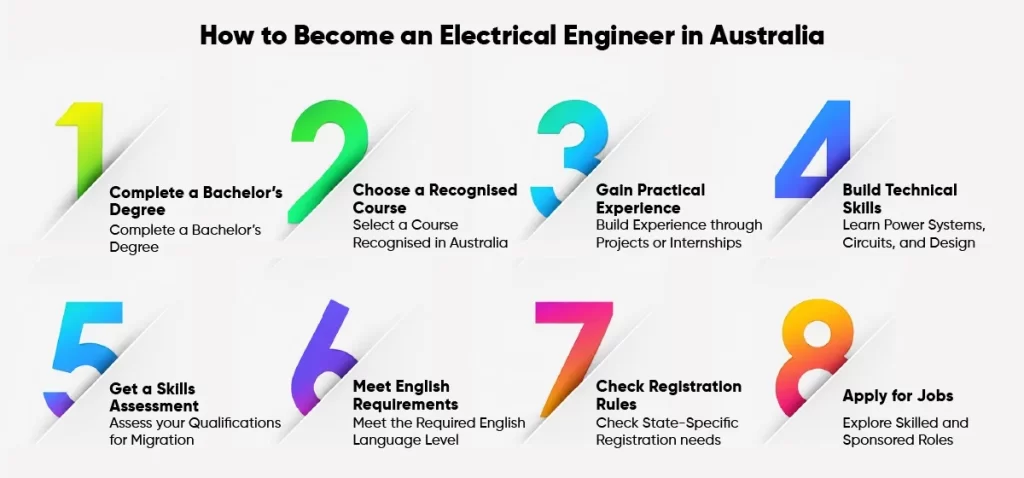
Here is the Step-by-Step Process to Work as an Electrical Engineers in Australia:
Step 1: Complete a Bachelor’s Degree
Finish a Bachelor of Engineering in electrical engineering or a related field. This is the main qualification needed to start your career in Australia.
Step 2: Choose a Recognised Course
If possible, study a course that is recognised in Australia. This can improve your job chances and support future migration pathways.
Step 3: Gain Practical Experience
Take part in internships, projects, or graduate training. Practical experience helps you apply your knowledge in real workplace settings.
Step 4: Build Technical Skills
Develop strong knowledge of power systems, circuits, control systems, and electrical design. These skills are important for most electrical engineering roles.
Step 5: Get a Skills Assessment
If you plan to migrate, you may need an Australian skills assessment to show your qualification and experience meet Australian standards.
Step 6: Meet English Requirements
Good English is important for communication, safety, and visa applications. Some pathways may also require proof of English ability.
Step 7: Check Registration Rules
Some states or jobs may need registration or licensing before you can work independently. Always check the rules for the place where you want to work.
Step 8: Apply for Jobs
Once you meet the requirements, start applying for electrical engineering roles. You can target graduate jobs, skilled positions, or employer-sponsored opportunities.
Electrical Engineers Jobs in Australia
As an Electrical Engineer, you can explore a wide range of In Demand Jobs in Australia across various industries, including:
1. Electrical Engineer
2. Electrical Project Engineer
3. Electrical Design Engineer
4. Electrical Power Engineer
5. Senior Electrical Engineer
6. Principal Electrical Engineer
7. Graduate Electrical Engineer
8. Electrical Site Engineer
9. Electrical Commissioning Engineer
10. Electrical Systems Engineer
11. Electrical Engineering Manager
12. Electrical Technician
13. Electrical Designer
14. Electrical Engineer/Electrical Designer
15. Renewable Energy Project Engineer
16. Controls Commissioning Engineer
17. Electrical Field Engineer
18. Electrical Engineering Technician
Electrical Engineering Jobs in Australia with Visa Sponsorship
Electrical engineering jobs in Australia with visa sponsorship are usually available in infrastructure, energy, mining, automation, and consulting sectors.
Here are the most common Electrical Engineer jobs in Australia with visa sponsorship:
- Electrical Engineer
- Senior Electrical Engineer
- Electrical Project Engineer
- Electrical Design Engineer
- Electrical Power Engineer
- Electrical Site Engineer
- Electrical Commissioning Engineer
- Electrical Systems Engineer
- Controls Engineer
- Instrumentation and Control Engineer
- Renewable Energy Engineer
- Mining Electrical Engineer
- Electrical Maintenance Engineer
- Graduate Electrical Engineer
Companies and employers that commonly hire for these roles include major engineering consultancies, construction firms, utilities, mining companies, and infrastructure contractors. You may find visa sponsorship jobs for electrical engineers in Australia with employers that are actively seeking skilled professionals for eligible roles.
- AECOM
- Jacobs
- WSP
- GHD
- Aurecon
- Hatch
- Beca
- Siemens
- BHP
- Rio Tinto
- Downer
- Ventia
- UGL
Visa sponsorship is usually more common for roles where employers struggle to find local talent, especially in power, rail, mining, and large infrastructure projects.
Electrical Engineers Salary in Australia
The average annual salary of an Electrical Engineer in Australia is around AU$102,000.
Entry Level Electrical Engineer Salary in Australia: AU$65,000–AU$88,000 per year
Mid-Career: Around AU$81,000–AU$100,000 per year
Senior Engineer: Around AU$122,000 per year
Top-Tier / Principal Engineer: Around AU$165,000 per year or more
Best Companies for Electrical Engineers in Australia
- Amazon Australia and New Zealand
- Tesla Australia
- Lockheed Martin Australia
- Jacobs Australia
- GHD
- BP Australia
- BAE Systems Australia
- AECOM Australia
- Arup Australia
- Siemens Australia
- Powerlink Queensland
- Aurecon Australia
- Northrop Consulting Engineers
- Saab Australia
- Cochlear
Conclusion
In conclusion, electrical engineering is a strong career option in Australia, with good demand, competitive salaries, and opportunities across infrastructure, energy, mining, and technology sectors. If you are planning your move, understanding the right qualification, skills assessment, and visa pathway is essential for a smooth process. For more guidance, you can visit the official Australian immigration website at immi.homeaffairs.gov.au, and explore your options for How to Migrate to Australia from India.