


If you are in Australia and waiting for a visa decision, a Bridging Visa allows you to remain in the country lawfully while your immigration matter is being processed. But not all bridging visas are created equal – some might allow you to work or study, some might give you travel rights or help you get your immigration status sorted. In this guide, I’ll take you through the different types of Bridging visas in Australia, who can apply, eligibility requirements, work and travel rights, how to apply, and the latest rules you need to know in 2026.
Table Of Content
1What is Bridging Visa in Australia? 2Types of Bridging Visas in Australia 3What is the Difference Between Bridging Visa A, B, C, and E? 4Who is eligible for a bridging visa in Australia? 5What are the requirements for bridging visa in Australia? 6How to Apply for a Bridging Visa in Australia 7New Rules for Bridging Visa in Australia 8Conclusion 9Frequently Asked Questions
What is Bridging Visa in Australia?
A Bridging Visa in Australia is a temporary visa that allows you to stay lawfully in Australia while your new visa application is being processed or your immigration status is being resolved.
Think of it as a bridge between your current visa and the outcome of your next visa application.
Benefits of a Bridging Visa in Australia
- Staying in Australia legally while waiting for your visa application to be decided.
- Overstaying in Australia when your current visa expires if you qualify.
- Continuing to work or study, if your Bridging Visa conditions permit
- Keeping your legal immigration status until a decision is made on your visa application or immigration case.
Types of Bridging Visas in Australia
Australia has four main types of Bridging Visa, each designed for a different situation:
- Bridging Visa A (BVA) – Subclass 010
- Bridging Visa B (BVB) – Subclass 020
- Bridging Visa C (BVC) – Subclass 030
- Bridging Visa E (BVE) – Subclasses 050 & 051
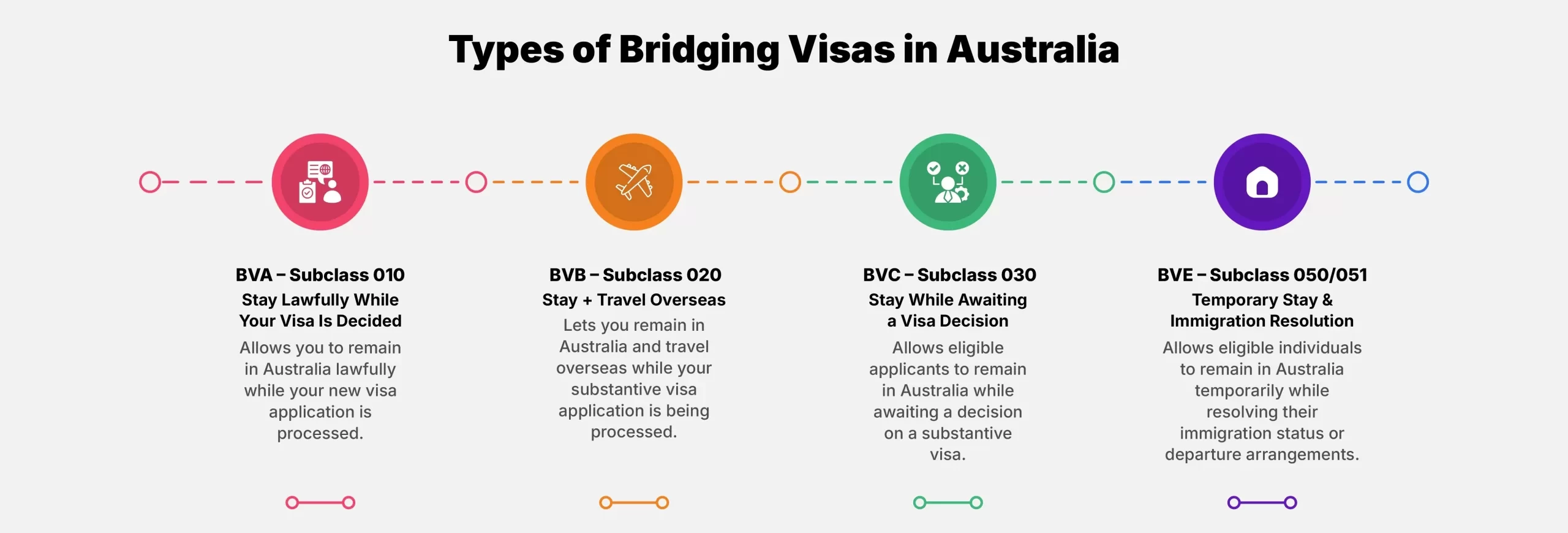
The way each one works will vary based on your present visa, your new visa application and your circumstances. Let’s take them one by one.
1. Bridging Visa A (BVA) – Subclass 010
Bridging Visa A (BVA) is the most common bridging visa. It generally applies if you apply for a new substantive visa in Australia before your current visa expires.
Who Can Apply for a Bridging Visa A (Subclass 010)?
- People who apply for a valid visa on-shore while they have a valid visa.
- Applicants awaiting a decision on a new visa application.
Key features of a Bridging Visa A (subclass 010)
- This allows you to remain in Australia legally while your visa application is being processed.
- Depending on the conditions attached to your visa, this may allow you to work.
- Does not generally permit overseas travel and re-entry to Australia. If you need to travel while waiting for your new visa, you may need a Bridging Visa B (BVB) before you leave Australia.
2. Bridging Visa B (BVB) – Subclass 020
A Bridging Visa B (BVB) lets you stay lawfully in Australia while your new visa application is being processed and travel overseas for a specific period.
This is usually used if you have a substantive visa application on hand and need to temporarily leave and re-enter Australia while waiting for a decision.
Who Can Apply for a Bridging Visa B (Subclass 020)?
- People who have a substantive visa application being processed and hold or are eligible for a Bridging Visa A or B.
- Applicants who genuinely need to travel outside of Australia while waiting for a decision on their visa.
- People who meet the relevant BVB requirements and travel criteria.
Key Features of a Bridging Visa B (Subclass 020)
- Permits you to stay legally in Australia while you wait for the outcome of your visa.
- Allows you to leave and re-enter Australia during the approved travel period.
- May permit you to work, depending on the terms of your visa.
- You may only travel during the travel period that is included in your BVB.
3. Bridging Visa C (BVC) – Subclass 030
Bridging Visa C (BVC) is another type of Bridging Visa in Australia that may allow eligible applicants to remain lawfully in Australia while their substantive visa application is processed.
Who Can Apply for a Bridging Visa C (Subclass 030)?
- Visa applicants in Australia for a substantive visa.
- Applicants who are outside Australia and do not hold a substantive visa when they apply for the new visa.
- People meeting the relevant BVC eligibility requirements.
Key Features of a Bridging Visa C (Subclass 030)
- It enables you to remain in Australia legally until your visa application is finalized.
- Depending on the conditions attached to your BVC, you may be able to work. If you have work rights, researching Highest Paying Jobs in Australia may help you explore employment opportunities in your field.
- Does not generally allow overseas travel and return to Australia.
- If you have a BVC, your visa may stop if you leave Australia. You should check your travel options before you leave.
4. Bridging Visa E (BVE) – Subclasses 050 & 051
A Bridging Visa E (BVE) is a short-term bridging visa that allows a person to stay lawfully in Australia while they sort out their immigration status or make arrangements to leave Australia. It is generally used by persons who do not hold a substantive visa and are resolving their immigration status.
Who Can Apply for a Bridging Visa E (Subclass 050)?
- People who are currently in Australia and meet the relevant BVE eligibility requirements.
- Applicants who are unlawful or hold certain bridging visas and need to remain lawfully in Australia while resolving their immigration status.
- People who meet the relevant BVE eligibility requirements.
Key Features of a Bridging Visa E (Subclass 050)
- It allows eligible applicants to remain in Australia lawfully for a temporary period while their immigration status is being resolved.
- Depending on the conditions attached to your BVE, you may be able to work. If you have work rights, you should check your visa conditions before starting employment.
- Does not generally allow overseas travel and return to Australia.
- If you have a BVE, your visa will cease if you leave Australia. You should check your travel options carefully before you leave.
If you are unsure which Australian visa may suit your circumstances, an Australia Visa Finder can be a useful starting point before you review the specific eligibility requirements for a bridging visa.
What is the Difference Between Bridging Visa A, B, C, and E?
| Bridging Visa | Purpose | Who Qualify? | Travel Rights | Work Rights |
|---|---|---|---|---|
| Bridging Visa A (BVA) | Stay lawfully in Australia while waiting for a visa decision | Applicants who apply for a new visa before their current visa expires | ❌ No | May be available |
| Bridging Visa B (BVB) | Travel overseas and return while waiting for a visa decision | Eligible BVA holders who need to travel | ✅ Yes (during the approved travel period) | Usually continues from your BVA |
| Bridging Visa C (BVC) | Stay lawfully in Australia while a visa application is being processed | Applicants who apply for a visa while not holding a substantive visa | ❌ No | May be available or limited |
| Bridging Visa E (BVE) | Resolve immigration status or prepare to leave Australia | Unlawful non-citizens and certain eligible visa holders | ❌ Generally No | Depends on visa conditions |
If your bridging visa allows you to work, you may also explore Jobs in Australia with Visa Sponsorship while waiting for your substantive visa application to be decided. However, your actual work rights depend on the conditions attached to your bridging visa.
Who is eligible for a bridging visa in Australia?
Eligibility for a Bridging Visa in Australia includes:
- Have applied for a valid substantive visa while in Australia.
- Hold a current visa that is expiring and need to remain lawfully in Australia while your new visa is processed.
- Have applied for a review or appeal following a visa refusal or cancellation.
- Need to maintain lawful status while your visa application or immigration matter is being resolved.
- Meet the eligibility requirements for the specific Bridging Visa subclass.
- Comply with the conditions of your current or previous visa.
- Be physically present in Australia, as bridging visas are generally granted to people already in Australia.
If you are planning to Get a Job in Australia from India, remember that a bridging visa is generally relevant to people already in Australia and does not itself provide a pathway to enter Australia for employment.
Note: Eligibility depends on your visa status, visa application, and the specific Bridging Visa (A, B, C, or E) that applies to your situation.
What are the requirements for bridging visa in Australia?
The Requirements for a Bridging Visa in Australia include:
- A valid passport or travel document to verify your identity and nationality.
- A substantive visa application or eligibility for the relevant Bridging Visa subclass depending on your circumstances.
- Proof of your current visa status or details of your previous Australian visa, if applicable.
- Being physically present in Australia, as most Bridging Visa subclasses can only be granted while you are in the country.
- Identity documents, such as a passport or other documents requested by the Department of Home Affairs.
- Supporting documents related to your visa application, review, appeal, or immigration matter, if required.
- Compliance with the conditions of your current or previous Australian visa.
- Meeting any health and character requirements, where applicable for your visa subclass.
- Payment of the applicable visa application charge, if required for the specific Bridging Visa subclass you are applying for.
If you are considering a skilled migration pathway, checking the Australian Skilled Occupation List may help you determine whether your occupation is relevant to a skilled visa option.
How to Apply for a Bridging Visa in Australia
Here is the step-by-step process for applying for a Bridging Visa in Australia:
Step 1: Make Sure You Are Eligible
Confirm that you meet the requirements for the relevant Bridging Visa subclass.
Step 2: Get Your Documents Ready
Gather your passport, current or previous visa details, substantive visa application details and any supporting documents you need.
Step 3: Choose the Correct Application Method
For Bridging Visa A, B or C, applications are generally made through ImmiAccount or the relevant online webform, depending on how you lodged your substantive visa application. BVE applications have their own application process.
Step 4: Complete and Submit Your Application
Provide accurate information, complete the required forms, and upload your supporting documents.
Step 5: Pay the Applicable Fee, if required
Some bridging visas are free, while others may require an application charge. Check the requirements for your specific subclass before submitting.
Step 6: Wait for the Decision
The Department of Home Affairs will assess your application and notify you of the outcome in writing.
Step 7: Check Your Visa Conditions
Once granted, check your grant notice and VEVO to confirm your visa conditions, including work and travel rights.
If your bridging visa gives you work rights, you can research In Demand Jobs in Australia while your visa application is being processed. Always check your visa conditions before starting employment.
New Rules for Bridging Visa in Australia
Here are the key Bridging Visa rules to know in 2026:
Apply through the correct channel: BVA, BVB and BVC applications may be lodged through ImmiAccount or the Department’s online form, depending on how your substantive visa was lodged.
BVB is the travel option: Only a Bridging Visa B (BVB) allows you to leave and return to Australia while waiting for a substantive visa decision. It comes with a specific travel period.
Other bridging visas and travel: If you leave Australia while another type of bridging visa is in effect, it will generally cease.
Work depends on conditions: Your bridging visa does not automatically give you unrestricted work rights. Check the conditions attached to your visa.
Immigration and citizenship Website BVE has specific eligibility: Bridging Visa E (BVE) is available only in specific circumstances, including certain people resolving their immigration status or eligible Protection visa applicants.
Immigration and citizenship Website BVE cannot be extended: A BVE is temporary and ends on its specified date, event or period. It also ends if you leave Australia.
Immigration and citizenship Website Check your current conditions: Use VEVO to check your visa status, expiry date and conditions.
Important: There is no new rule that applies to all bridging visas. The requirements and conditions will depend on the specific subclass and your circumstances of immigration
Conclusion
Knowing about Bridging Visa in Australia can help you make the right decisions while your Australian visa or immigration issue is being resolved. Each bridging visa has different conditions for staying, working, studying and traveling, so it is important to know what applies to your specific visa.
Always check the latest requirements and visa conditions on the official Australian Department of Home Affairs website https://immi.homeaffairs.gov.au before you make any application.