




Which are the best countries for civil engineering jobs in 2027? If you are a civil engineer thinking about taking your career abroad, this is probably one of the first questions on your mind and you’re in the right place.
Civil engineering is a global profession. From roads and bridges to airports, railways, housing, water systems and renewable energy infrastructure, countries continue to invest heavily in construction and infrastructure development.
For civil engineers considering a career abroad, this creates opportunities to work on large international projects, earn competitive salaries and, in some countries, explore long-term immigration or permanent residence options.
In this guide, we compare some of the best countries for civil engineers, their job markets, salary potential and career opportunities.
Table Of Content
1Why Civil Engineering Careers Abroad Are Growing in 20272Best Countries for Civil Engineering Jobs in 20273Which Country Has the Highest Demand for Civil Engineers in Europe?4Which Country Pays Civil Engineers the Highest Salary 5Best Countries for Civil Engineering Jobs Abroad for Freshers6What Qualifications Do You Need to Work as a Civil Engineer Abroad?7Which Country Is Best for You?8Best Countries for Civil Engineering Jobs — A Quick Comparison9Frequently Asked Questions
Why Civil Engineering Careers Abroad Are Growing in 2027
Civil engineering remains closely connected to infrastructure development and population growth. Countries are investing in transportation networks, housing, water management, renewable energy infrastructure and the maintenance of ageing infrastructure.
This is creating opportunities for professionals in areas such as:
- Structural engineering
- Transportation engineering
- Geotechnical engineering
- Construction engineering
- Water and wastewater engineering
- Environmental engineering
- Municipal engineering
- Project management
- Infrastructure planning
The US Bureau of Labor Statistics, for example, projects 5% employment growth for civil engineers between 2024 and 2034, with around 23,600 openings expected each year on average. It also reported a median annual wage of US$99,590 for civil engineers in May 2024.
Canada’s labour market also shows a positive long-term picture. Canada’s Job Bank currently classifies civil engineering as facing a moderate risk of labour shortage nationally over 2024–2033.
Australia is another strong market. Civil engineering professionals recorded median full-time earnings of A$2,217 per week in the latest Jobs and Skills Australia data, compared with A$1,852 across all occupations.
These trends make civil engineering jobs abroad worth considering for qualified professionals planning an international career.
Best Countries for Civil Engineering Jobs in 2027
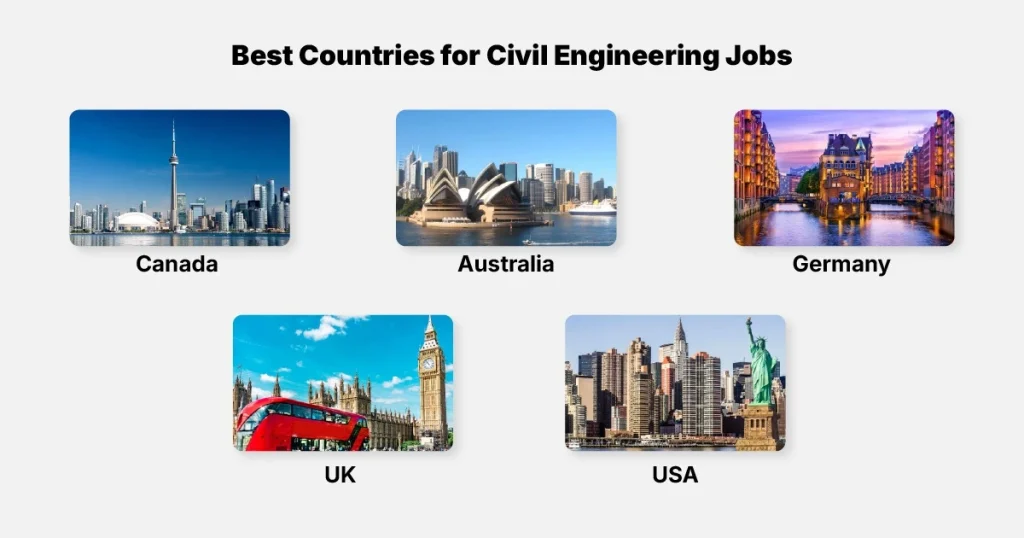
Canada, Australia, Germany, the UK and the USA are among the top destinations to consider in 2027. Each country offers opportunities across construction, infrastructure and engineering, but the demand, salaries, licensing requirements and career growth can vary. Let’s explore what makes each of these countries a potential choice for civil engineers.
1. Canada
Canada is one of the most attractive destinations for professionals searching for civil engineering jobs overseas, particularly those interested in combining career opportunities with potential immigration pathways.
Civil engineers in Canada work across construction, engineering consulting, government, transportation, infrastructure and other industries.
According to Canada’s Job Bank, civil engineers have a current median wage of approximately C$48.56 per hour nationally. Job prospects vary by province, with current ratings ranging from moderate to good in several regions.
Canada’s Job Bank also reports that civil engineering employment is closely linked to major infrastructure projects, public-sector investment and residential construction.
Why consider Canada?
- Strong infrastructure and construction sector
- Opportunities across multiple provinces
- Demand for civil engineering professionals in several regions
- English and French-speaking work environments
- Potential immigration pathways for eligible skilled workers
- Opportunities in structural, transportation, municipal and environmental engineering
For international professionals, however, working as a professional engineer may require provincial licensing. Requirements can differ between provinces.
Salary potential in Canada
The current national median wage listed by Job Bank is around C$48.56 per hour.
This means experienced professionals can potentially earn significantly more than entry-level engineers, particularly in specialized or senior positions.
Best for: Civil engineers looking for a balance between career opportunities, earning potential and long-term settlement possibilities.
2. Australia
Australia is another popular destination for civil engineers looking for international career opportunities.
The country’s construction, transport, mining, infrastructure and urban development sectors create demand for engineering professionals.
Jobs and Skills Australia classifies civil engineers under the broader Civil Engineering Professionals group, which includes civil, geotechnical, structural and transport engineering roles.
The latest available data shows that Civil Engineering Professionals have median full-time earnings of $2,217 per week, equivalent to roughly $115,000 annually if annualised over 52 weeks.
Why consider Australia?
- Strong earning potential
- Large infrastructure and construction sector
- Opportunities in metropolitan and regional areas
- Demand across several engineering specializations
- Potential skilled migration pathways
- English-speaking professional environment
Civil engineers can work in areas such as:
- Structural engineering
- Transport engineering
- Geotechnical engineering
- Construction
- Water infrastructure
- Mining-related infrastructure
- Project management
Australia can therefore be one of the best countries for civil engineers to work if salary, professional growth and skilled migration opportunities are important factors.
If you’re planning to build your career in Australia, check out our guide to the top 10 most in-demand jobs in Australia to see which professions are currently offering strong career opportunities.
Best for: Experienced civil engineers seeking high earning potential and skilled migration opportunities.
3. Germany
Germany is an attractive option for civil engineers who want to build a career in Europe.
The country has a large engineering and construction sector, with opportunities connected to infrastructure, transport, buildings, energy and urban development.
Germany’s Federal Employment Agency reported that labour shortages were particularly visible in areas including construction management and civil engineering-related fields such as civil construction in its 2025 analysis.
Why consider Germany?
- Strong engineering reputation
- Access to the wider European job market
- Infrastructure and construction opportunities
- Opportunities for qualified international professionals
- Structured skilled-worker immigration routes
- Growing importance of sustainable infrastructure
German language skills can significantly improve your employment opportunities, particularly for roles involving local clients, authorities and construction sites.
While some international companies may operate in English, learning German can make the transition into the local engineering market much easier. If you’re a civil engineer planning to look for job opportunities in Germany through the Opportunity Card, you can use our Germany Opportunity Card Points Calculator to check your eligibility and see how many points you may qualify for.
Best for: Civil engineers who want to work in Europe and are willing to develop German-language skills.
4. UK
The UK has a well-established civil engineering industry covering infrastructure, construction, transportation, water, environmental projects and urban development.
Civil engineers can work with engineering consultancies, construction companies, government organisations and infrastructure contractors.
The UK’s National Careers Service currently lists civil engineer salaries at approximately £29,000 to £63,000, while industry career guidance shows that experienced and senior professionals can earn more depending on role and professional status.
For example, Prospects reports typical salaries of £26,000–£35,000 for graduate consulting civil engineers, £35,000–£45,000 with around three to five years of experience and up to £60,000 for senior consulting engineers.
Why consider the UK?
- English-speaking work environment
- Established engineering sector
- Strong professional institutions
- Opportunities in infrastructure and construction
- Clear career progression
- Professional development through organisations such as the Institution of Civil Engineers
Chartered status can also strengthen career progression and earning potential.
Best for: Civil engineers who want an established English-speaking engineering market and strong professional development opportunities.
5. USA
The USA offers one of the largest civil engineering job markets and some of the highest salary potential among the countries compared here.
According to the US Bureau of Labor Statistics, civil engineers had a median annual wage of US$99,590 in May 2024. The highest 10% earned more than US$160,990.
Employment is projected to grow by 5% between 2024 and 2034, with approximately 23,600 openings each year on average.
Infrastructure investment is one of the factors supporting demand, including projects involving roads, bridges, water systems and other public infrastructure.
Why consider the USA?
- High salary potential
- Large engineering employment market
- Major infrastructure projects
- Opportunities across public and private sectors
- Strong demand for experienced professionals
However, professional licensing can be important for civil engineers whose work involves providing engineering services directly to the public. State-specific requirements apply.
Best for: Experienced civil engineers prioritising salary and career opportunities in a large engineering market.
Which Country Has the Highest Demand for Civil Engineers in Europe?
Germany is one of the best European countries for civil engineers seeking strong job opportunities. The country continues to invest in infrastructure, construction, transportation and urban development, creating demand for skilled engineering professionals. With its strong engineering industry and opportunities for qualified international workers, Germany can be an attractive destination for civil engineers planning to build their careers in Europe.
Which Country Pays Civil Engineers the Highest Salary
Among the five countries compared in this guide, the USA and Australia stand out for strong salary potential, although direct salary comparisons can be misleading because currencies, taxes, living costs, experience levels and job responsibilities differ.
For example:
USA: Median annual wage of US$99,590 for civil engineers in May 2024.
Australia: Median full-time earnings of A$2,217 per week for Civil Engineering Professionals.
Canada: Median wage of C$48.56 per hour for civil engineers.
UK: Civil engineer salaries are listed at approximately £29,000–£63,000 by the National Careers Service.
Germany: Salaries vary considerably according to experience, location, employer and specialization.
So, if your only priority is earning more as a civil engineer, the USA and Australia deserve close attention.
If your priority is salary + immigration + long-term settlement, Canada and Australia may be more attractive depending on your profile.
Best Countries for Civil Engineering Jobs Abroad for Freshers
Starting your civil engineering career abroad as a fresher can be challenging, but countries such as Canada, Australia, Germany and the UK offer opportunities for graduates who have the right qualifications, technical skills and, where required, local registration or language proficiency.
Canada
Canada can be a strong long-term option for civil engineering graduates, especially for those interested in eventually settling there. Infrastructure development and construction create opportunities across several provinces. However, engineering is regulated at the provincial level, so fresh graduates may need to complete the required assessment and registration process. Many international graduates begin in EIT (Engineer-in-Training), junior or engineering technician roles before progressing into professional engineering positions.
If you’re considering a career in this field, you can also explore our guide to the top 10 highest-paying engineering jobs in Canada to see how civil engineering compares with other engineering careers.
Australia
Australia is another popular destination for civil engineering graduates. The country has opportunities across construction, infrastructure, transport and urban development. International graduates may need an assessment through Engineers Australia, depending on their qualifications and career pathway. While skilled migration opportunities can make Australia attractive, freshers may find it easier to enter the market with relevant internships, practical experience or additional study.
Germany
Germany has a strong engineering and infrastructure sector, making it an attractive option for civil engineering graduates interested in building a career in Europe. However, German language skills can be an important advantage, particularly for construction-site, client-facing and government-related roles. International graduates should also check whether their qualifications need recognition for their intended role.
UK
The UK can be a good option for fresh civil engineering graduates because of its established construction and infrastructure industry and English-speaking work environment. Graduates can explore opportunities with construction companies, engineering consultancies and infrastructure organisations. Building practical experience, developing skills in tools such as AutoCAD, Civil 3D and BIM, and working towards professional development can help improve career prospects.
What Qualifications Do You Need to Work as a Civil Engineer Abroad?
The exact requirements depend on the country, employer and type of engineering work.
However, most international civil engineering positions typically require:
1. Civil Engineering Degree
A bachelor’s degree in civil engineering is generally the starting point.
Canada’s Job Bank states that civil engineering usually requires a university degree, while the US Bureau of Labor Statistics lists a bachelor’s degree as the typical entry-level education for civil engineers.
2. Relevant Work Experience
Experience in construction, infrastructure, structural design, transportation or other specialist areas can improve your chances of securing international employment.
3. Technical Skills
Employers may look for experience with CAD, BIM, structural analysis, project management and other industry software.
4. English or Local Language Skills
English proficiency is important in countries such as Canada, Australia, the UK and the USA.
For Germany and other non-English-speaking countries, local language skills can be particularly valuable.
5. Professional Registration or Licensing
Engineering is a regulated profession in several countries.
For example, Canada regulates professional engineering at the provincial level, while the USA has state-specific licensing requirements for engineers providing services directly to the public.
You should therefore check the requirements of the specific country and state or province before applying.
6. Credential Recognition
Your international degree and professional experience may need to be assessed or recognised before you can work in certain regulated engineering roles.
Which Country Is Best for You?
The best country for civil engineering jobs depends on what you want from your international career.
Canada – Ideal for Skilled Migration and Settlement
- You are interested in skilled migration and long-term settlement.
- You want opportunities across different provinces.
- You prefer an English-speaking environment.
- Infrastructure and construction are your target sectors.
Australia – A Strong Option for Higher Earning Potential
- High earning potential is important to you.
- You have strong professional experience.
- You are interested in skilled migration.
- You want to work in infrastructure, construction or related engineering fields.
Germany – Great for Building a Career in Europe
- You want to build a career in Europe.
- You are willing to learn German.
- You have a strong technical profile.
- You are interested in engineering and infrastructure projects.
UK – Suitable for Professional Growth
- You want an English-speaking European destination.
- Professional development is important to you.
- You are interested in chartered engineering pathways.
- You want access to an established construction and infrastructure industry.
USA – Attractive for High-Paying Engineering Careers
- You have strong experience and technical skills.
- You want to work on large infrastructure projects.
- You are prepared to navigate US visa and licensing requirements.
Best Countries for Civil Engineering Jobs — A Quick Comparison
| Country | Key Advantage | Salary Potential | Immigration Potential | Best For |
|---|---|---|---|---|
| Canada | Infrastructure and construction demand | Very High | Strong | Engineers seeking career + settlement options |
| Australia | Strong engineering market and high earnings | Very High | Strong | Skilled engineers and experienced professionals |
| Germany | European engineering market | Good | Good | Engineers interested in Europe |
| UK | Established engineering industry | Good | Good | Engineers seeking English-speaking opportunities |
| USA | High salaries and large job market | High | More complex | Experienced engineers targeting high earnings |
There is no single best country for civil engineering jobs for everyone. The right choice depends on your qualifications, work experience, specialization, salary expectations and long-term plans.
Frequently Asked Questions
There is no universal answer. Canada and Australia can be particularly attractive for civil engineers who prioritise skilled migration and long-term settlement, while Germany, the UK and USA can be strong choices for professionals prioritising European opportunities, English-speaking markets or high earning potential. Your age, education, experience, language skills and immigration eligibility should be considered before choosing a country.