


Student Visa & Career in Canada: A Complete Guide for International Students
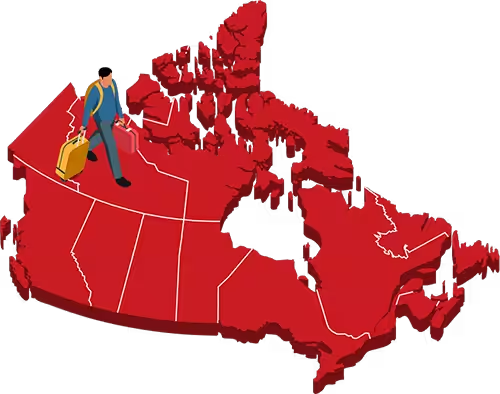
For many students, studying in Canada is about more than earning an international degree. It’s about turning education into opportunity and ambition into a lasting future. Whether you’re a Voyager seeking global exposure and growth or a Builder pursuing a career abroad, the goal is the same: maximize your journey’s potential.
Student Visa & Career in Canada involves choosing the right study program, gaining Canadian work experience, and exploring career opportunities and Canada PR after study. From obtaining a Canada study permit to applying for a Post-Graduation Work Permit (PGWP), each step shapes what comes next. This guide covers the journey from studying in Canada to building a career and exploring potential pathways to permanent residence.
Arriving In Canada After Study Permit Approval
What to Do After Arriving in Canada?
Although getting your study permit approval is a major milestone, the first few weeks in Canada decide how smoothly everything else goes.
1. Accommodation. Secure your housing before you land. Options include university residences, shared apartments, and homestays. Also, be cautious of rental scams; never send money for a place without verification.
2. Immigration and Entry Documentation. Always carry your passport, letter of introduction, proof of enrollment, and proof of funds in your hand luggage.
3. University or College Enrolment. Report to your Designated Learning Institution (DLI) and complete your registration. More importantly, staying enrolled and making progress is a condition of your study permit.
4. Health Insurance. Coverage rules differ by province. Some provinces include international students in public health plans, while others do not or have waiting periods. Confirm what your province and school offer, and arrange private cover for any gap.
5. Bank Account. Open a bank account in Canada as soon as possible. It streamlines the process of paying rent, fees, and, in the future, salary deposits. Numerous financial institutions offer special packages for newcomers or students.
6. Social Insurance Number (SIN), if eligible. A SIN is required to operate in Canada. As soon as you arrive, submit an application through Service Canada if your study permit permits employment.
7. Transportation and Mobile Connectivity. Acquire a local SIM card or plan and familiarize yourself with the transit system. Regular fares are frequently pricier than student transit passes.
8. Student ID. Collect your student card. It unlocks library access, discounts, and campus services.
9. Local Administrative Requirements. Depending on your province, you may need to register for health coverage, set up a local address for official mail, or complete school orientation steps. Do these early.
Working While Studying In Canada
Can International Students Work in Canada?
Yes indeed, in the majority of instances. International students are permitted to work while pursuing their studies, provided that the conditions of their study permit are met and that the hours are within the permitted range. Working without authorization may jeopardize your status and subsequent post-graduation work permit application in Canada.
On-campus Employment Eligible full-time students at a DLI can generally work on campus, for example, in libraries, labs, cafeterias, student services, or as research or teaching assistants. This is often the easiest first job because it is close to your classes, and understanding of student schedules is built in.
Off-Campus Employment Students with the right condition on their study permit can work off campus. Under the current IRCC rules, that is generally up to 24 hours per week during academic sessions and full-time during scheduled breaks, such as winter and summer holidays. The rules have changed recently, so check the latest limit on the IRCC site before you start.
Part-Time Jobs for Students Common student jobs include retail, food service, customer support, warehouse work, tutoring, and campus roles. These jobs will not necessarily match your long-term career, but they build Canadian references, improve your communication skills, and help with living costs.
Internships and Co-op Opportunities If your program includes a co-op or internship component, you will need a co-op work permit in addition to your study permit. Co-op placements are one of the strongest ways to get relevant Canadian experience before you graduate, and many students receive job offers from their co-op employers.
Benefits of Working While Studying
- Helps cover living expenses
- Builds Canadian work experience and references
- Improves English or French in real workplace settings
- Expands your professional network
- Helps you understand Canadian workplace culture
Building A Career While Studying
How to Prepare for a Career in Canada While Studying?
It is uncommon for students who secure lucrative employment opportunities to commence their job search during their final semester. They commence construction in the first year.
1. Develop English or French Language Skills Language ability is not only about getting a job. It also affects your eligibility for a work permit and for permanent residence. Take practice tests early, join conversation groups, and use campus language support. Strong French can also provide additional immigration advantages.
2. Acquire Practical Experience by participating in campus projects, volunteering, taking part-time work, or conducting research with a professor. Employers are convinced that you can thrive in a Canadian workplace by completing even the most modest assignments.
3. Establish a Professional Network: Most job opportunities in Canada come through personal connections, not through applications. Join student associations, attend industry events, connect with alumni on LinkedIn, and request informational conversations with individuals in positions that align with your interests.
4. Develop Industry-Relevant Skills – Analyze job postings in your field and identify the tools, certifications, and skills that are frequently mentioned. Subsequently, they are constructed through coursework, online courses, and projects.
5. Participate in Internships and Co-op Programs— If your post-secondary program includes a mandatory co-op or internship placement, check the applicable requirements. As of April 1, 2026, eligible post-secondary international students no longer need a separate co-op work permit for qualifying placements required by their program. The placement must meet IRCC requirements.
Career Opportunities After Graduation
Career opportunities in Canada after graduation vary by region, demand, and your qualification. Student Visa & Career in Canada involves understanding the available employment pathways after completing your studies and gaining relevant work experience. These are some of the major employment sectors that regularly hire graduates.
IT & Software Development: Software developers, QA engineers, cloud and cybersecurity specialists, and IT support professionals are needed across Toronto, Vancouver, Waterloo, Ottawa, and other tech hubs.
Engineering: Civil, mechanical, electrical, and environmental engineers work in infrastructure, energy, manufacturing, and technology.
Healthcare: Nurses, healthcare aides, lab technologists, therapists, and allied health professionals remain in demand, though many roles require provincial licensing.
Data Science & Artificial Intelligence: Data analysts, machine learning engineers, and AI specialists are in demand, with strong research ecosystems in Toronto, Montreal, and Edmonton.
Business & Management: Project management, operations, marketing, human resources, and supply chain roles are available across industries.
Finance & Accounting: Banks, insurers, and consulting firms hire accountants, financial analysts, auditors, and banking professionals.
Construction: Project coordinators, estimators, site supervisors, and construction managers support Canada’s ongoing building demand.
Skilled Trades: Electricians, plumbers, welders, carpenters, and HVAC technicians consistently meet strong demand.
Hospitality & Tourism: Hotel management, event planning, food service management, and tourism operations offer entry points, especially in major cities and tourist regions.
Research & Development: Universities, government agencies, and private companies hire researchers and lab specialists, particularly graduates of master’s and doctoral programs.
How To Find A Job In Canada After Graduation
Finding a job in Canada after graduation requires a strong resume, effective job searching, networking, and preparation. As part of your Student Visa & Career in Canada journey, these steps can help you explore employment opportunities and build your professional career.
1. Prepare a Canadian-Style Resume Canadian resumes are usually one to two pages, focused on achievements, and do not include a photo, age, marital status, or other personal details. Use measurable results, such as “reduced processing time by 20%”, and tailor each version to the job.
2. Use Online Job Portals search on the Government of Canada Job Bank, LinkedIn, Indeed, Glassdoor, and industry-specific boards. Set up job alerts so you can apply early.
3. Connect With Employers and Recruiters Contact recruiters, follow companies you like, and send brief, specific messages. Referrals can help your application stand out.
4. Attend Career Fairs and Networking Events College and university career fairs, meetups, and industry conferences are valuable. Prepare a brief introduction about yourself and follow up within 24 to 48 hours.
5. Explore Opportunities Through University Career Services Career centers offer resume reviews, mock interviews, employer connections, and job boards. Many students never use them, which means they miss out on a benefit included in their fees.
Work Permit Options After Graduation
What Is a Post-Graduation Work Permit (PGWP)?
A Post-Graduation Work Permit (PGWP) is an open work permit that allows international graduates to work in Canada after graduating from a qualifying institution. It lets graduates apply to most Canadian employers without a job offer. Canadian work experience may help with future permanent residence (PR) applications, depending on immigration program eligibility. A PGWP is usually issued once in a lifetime.
Who Is Eligible for a PGWP?
To be eligible for a Post-Graduation Work Permit (PGWP), you must satisfy Canada’s general eligibility criteria and any supplementary requirements that are specific to your academic program. Your eligibility is contingent upon the date of your study permit application, the duration of your program, your qualifications, your language proficiency, and the institution to which you belong.
In general, you must meet the following requirements:
Eligible Institution and Program: Successfully complete a qualifying program that lasts for a minimum of eight months at a PGWP-eligible Designated Learning Institution (DLI). Different minimum duration requirements exist for specific Quebec programs.
Full-Time Study: Maintain full-time student status during each academic session, except where specific exceptions apply, such as your final semester.
Language Proficiency: Most applicants submitting a PGWP application on or after November 1, 2024, must demonstrate proficiency in English or French. The minimum requirement is CLB/NCLC 7 for bachelor’s, master’s, doctoral, and other university programs, and CLB/NCLC 5 for college, polytechnic, and other non-university programs.
Field of Study: Graduates of certain college and non-degree programs must complete an eligible field of study if the requirement applies to them. Bachelor’s, master’s, and doctoral graduates are exempt from this requirement.
Valid Immigration Status and Application Timing: Meet the applicable status requirements and submit your application within the prescribed deadline, generally within 180 days of receiving confirmation that you completed your program.
PGWP Application Process
Once you get official confirmation that you have completed your program, such as a letter of completion or final transcript, you submit an online application with your documents and fees. Applying from inside Canada before your study permit expires is generally the safest route.
Employment Opportunities After Graduation
Because the PGWP is an open permit, you can work for any employer, change jobs, or work in different cities. Many graduates use this period to move into roles at skill levels that support later PR applications.
Important Work Permit Conditions
- You must keep your passport valid and follow the conditions printed on your permit.
- The length of the PGWP is generally linked to the length of your program, up to a maximum of three years.
- Unauthorized work during your studies, such as exceeding the allowed off-campus hours, can lead to refusal.
- You cannot extend a PGWP in the usual way, so plan your next step early.
Post-graduation Work Permit In Canada
1. Eligibility Requirements
Two significant modifications that were implemented in late 2024 continue to be relevant today:
Language Requirement: In general, applicants must exhibit proficiency in either English or French. In general, CLB/NCLC 7 is required for all four language skills for bachelor’s, master’s, and doctoral graduates, as well as graduates of other university programs. CLB/NCLC 5 is typically required for graduates of college and other non-university programs.
Field-of-study Requirement: Bachelor’s, master’s, and doctoral graduates are exempt from the field-of-study requirement. Depending on the date of their study permit application, graduates of college/non-university programs and other university programs may be required to satisfy the field-of-study requirement. Prior to submitting an application, verify the most recent eligibility list and prerequisites for the IRCC.
2. Required Documents
- Valid passport
- Letter of completion or final transcript from your school
- Proof of language test results
- Study permit and proof of previous status
- Proof of program eligibility (field of study, where required)
- Application fee payment
- Any additional documents requested, such as police certificates or a medical exam
3. Application Process
1. Confirm that your program and school are eligible.
2. Complete your language test and keep your results.
3. Get your official letter of completion and transcript.
4. Create or log into your IRCC account.
5. Fill in the application, upload the documents, and pay the fees.
6. Wait for confirmation and any follow-up requests.
4. Application Timing and Deadlines
You are required to submit your application within 180 days of receiving official confirmation that you have successfully completed your program. One of the most prevalent and costly errors is the failure to include this window. If your study permit remains valid and you submit your application from within Canada, you are generally permitted to continue working while your application is being processed, provided that you were eligible to work off campus during your academic career.
5. Important Considerations for PGWP Applicants
- Avoid leaving Canada while your application is processing unless you have confirmed how it affects your work eligibility.
- Do not exceed your permitted work hours while studying.
- Do not assume that a program from before the 2024 changes still qualifies. Check your own situation.
- Keep copies of every document and every test result.
- If your case includes gaps, program changes, or study breaks, speak to a regulated immigration professional before you apply.
Canada PR After Study
How Can International Graduates Apply for Canadian Permanent Residence?
Many international graduates pursue Canada PR after study by gaining eligible Canadian work experience and applying through an economic immigration pathway. As part of the Student Visa & Career in Canada journey, understanding permanent residence options can help graduates plan their education, career, and long-term settlement goals.
Canadian Experience Class (CEC)— Requires at least one year of eligible skilled Canadian work experience within the past three years and the required language proficiency. It is a common pathway for eligible PGWP holders.
Provincial Nominee Programs (PNPs)— Provinces and territories offer streams aligned with local labor needs, including options for eligible international graduates. A nomination can boost an Express Entry CRS score or support a non-Express Entry PR application.
Express Entry manages applications under three federal economic immigration programs, including CEC. Eligible candidates receive a CRS score and may be invited to apply based on draw criteria. Category-based draws target specific skills, occupations, or French-language proficiency.
Eligibility Factors for International Graduates
- Age
- Education, including Canadian credentials
- English or French language results
- Canadian and foreign work experience
- Job offer or provincial nomination, where applicable
- Other factors such as French ability or a Canadian sibling
Importance of Canadian Work Experience
Canadian work experience can help eligible graduates qualify for certain permanent residence pathways. For example, qualifying skilled work experience may support an application under the Canadian Experience Class (CEC). However, not all work experience counts toward immigration eligibility, and meeting the requirements does not guarantee permanent residence. Choosing a program aligned with career goals and understanding the relevant immigration requirements can help graduates plan their next steps.
How CanApprove Helps With Your Canada Study Journey
Planning your Canada student visa, choosing the right program, and mapping out your long-term career can feel overwhelming. With CanApprove by your side, you can navigate each step of your Student Visa & Career in Canada journey with greater clarity and confidence.
Program and School Selection: Helping you choose a Designated Learning Institution (DLI) and program that align with your career goals, budget, and Post-Graduation Work Permit (PGWP) eligibility.
Study Permit Application Support: Guiding you through documents, proof of funds, study plans, and submission.
Pre-departure and Arrival Guidance: Housing, banking, insurance, and settlement checklists.
Work and Career Planning: Advice on balancing work and study, resumes, networking, and job search strategies.
PGWP and PR Planning: Helping you understand timelines, language test targets, and PR pathways before you start your program, not after.
With the right planning from day one, your education becomes more than a degree. It becomes the foundation for your future career in Canada.
Not Sure Where to Start?
Let’s Figure It Out Together.
Talk to a CanApprove advisor to know all about your student visa, your program options, and your long-term career and PR goals
Listen to our CEO, Adv. Binoy P.R., share expert insights on immigration and visa pathways in Dhinamalar’s podcast.
FAQs About Student Visa and Career Opportunities in Canada
Visa for Parents Visiting Australia: Requirements, Fees & Application Process
The main visa for parents visiting Australia is the visitor visa (subclass 600). Understanding the visa for parents visiting Australia…
SX1 Visa Canada: Success Rate, Eligibility, Requirements & How to Apply
Are you considering studying in Canada without a study permit? The SX1 visa in Canada is frequently linked to eligible…

Canada Visa Rejection: Common Reasons and How to Avoid Them
Canada Visa Rejection can happen for many reasons including incomplete documents, no proof of funds, wrong information, or not meeting…

High Demand for Chefs in Australia
Australia continues to offer opportunities for qualified chefs, supported by demand across restaurants, hotels, catering businesses, resorts and regional hospitality…

Civil Engineering Jobs in Germany with Salaries (2026)
Civil engineering jobs in Germany are in high demand in 2026, driven by ageing infrastructure, housing shortages and large public…