




Germany is an excellent destination for Electrical Engineers looking to advance their careers in a booming engineering industry, offering competitive salaries and a strong demand for qualified professionals. It’s a great place for fresh graduates and experienced engineers. Whether you are considering a move abroad, or just want to see what is available, this guide has all the information you need, including the latest Electrical Engineering jobs in Germany, salary expectations, visa options, top companies hiring and skills that can get you the job of your dreams.
Table Of Content
1Are Electrical Engineers in demand in Germany?2Electrical Engineering Jobs in Germany3Electrical Engineering Jobs in Germany with Visa Sponsorship4Electrical Engineer Salary in Germany5Electrical Engineering Companies in Germany6Frequently Asked Questions
Are Electrical Engineers in demand in Germany?
Yes, electrical engineers are in high demand in Germany. Germany offers many opportunities for skilled professionals looking for Electrical Engineering Jobs in Germany, especially in automation, renewable energy, EV technology, and industrial manufacturing, the demand for skilled electrical engineers continues to grow. Germany is also hiring skilled international employees to help fill the engineering talent gap.
Why are Electrical Engineers in Demand in Germany?
A Growing Skills Shortage: Germany is experiencing a shortage of engineering professionals to fill industry demand, offering more job opportunities.
Renewable Energy Expansion: Electrical engineers are needed to design, develop, and maintain the critical infrastructure for wind, solar, and power grid modernization projects.
Booming EV Industry: With electric vehicle production on the rise, companies are looking for engineers who specialize in electrical systems, electronics, and battery technology.
Industry 4.0 and Automation: Electrical engineers play a crucial role in the development and optimization of modern manufacturing systems, including smart factories, robotics, and industrial automation.
High Demand in Multiple Sectors: There are career opportunities in automotive, power systems, telecommunications, robotics, electronics, and semiconductor manufacturing.
Excellent Opportunities for International Professionals: Germany welcomes skilled engineers through pathways like the EU Blue Card and other work visa programs.
Competitive Salaries and Long-term Career Growth: Electrical engineers are well compensated, have steady employment, and can grow into specialized or leadership roles.
Electrical Engineering Jobs in Germany
The electrical engineering jobs in Germany include:
1. Electrical Design Engineer
2. Power Systems Engineer
3. Automation Engineer
4. Control Systems Engineer
5. Electronics Engineer
6. Renewable Energy Engineer
7. Embedded Systems Engineer
These are some of the most in-demand electrical engineering jobs in Germany for skilled professionals, including fresh graduates and international candidates.
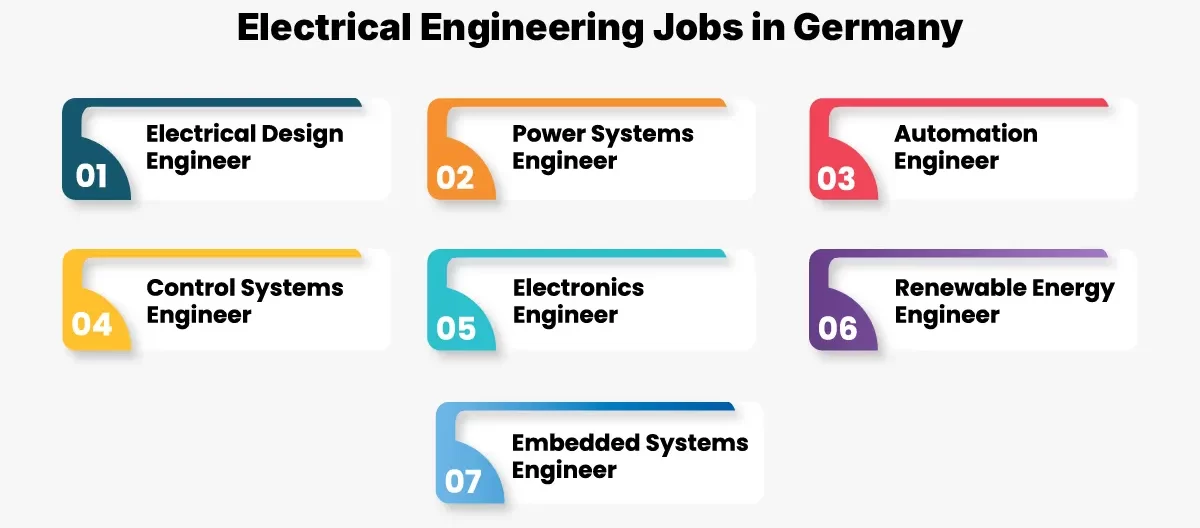
Now, let’s look at each of these roles in detail:
1. Electrical Design Engineer
Electrical Design Engineers are involved in the design, development and enhancement of electrical systems for manufacturing, automation, power distribution and industrial machinery. Electrical Design Engineers remain one of the most in demand professionals as Germany continues to invest in advanced manufacturing, automotive and renewable energy.
Electrical Design Engineer Job Description
- Design electrical systems, control panels, and wiring layouts using CAD software.
- Develop electrical schematics, single line diagrams and technical documentation.
- Develop electrical designs to meet project requirements and industry standards.
- Collaborate with mechanical, automation and production teams.
- Perform electrical calculations, load analysis and component selection.
- Ensure compliance with German, IEC and international electrical standards.
- Troubleshoot design problems and optimize the electrical systems.
How to Become an Electrical Design Engineer in Germany
1. Earn a Bachelor’s or Master’s degree in Electrical Engineering or a related field.
2. Learn industry-standard software such as AutoCAD Electrical, EPLAN, or SolidWorks Electrical.
3. Gain practical experience through engineering projects or internships.
4. Improve your German language skills (many employers prefer B1/B2 level).
5. Apply for a German work visa or EU Blue Card if required and start applying for Electrical Design Engineer roles.
Electrical Design Engineer Salary in Germany
The average salary for an Electrical Design Engineer in Germany ranges from €55,000 to €68,000 per year, depending on experience, qualifications, industry, and location.
Salary by Experience level:
- Entry Level (0–2 years): €48,000–€58,000 per year
- Mid Level (3–7 years): €58,000–€72,000 per year
- Senior Level (8+ years): €72,000–€90,000+ per year
2. Power Systems Engineer
Power Systems Engineers play a critical role in keeping Germany’s electricity infrastructure reliable and efficient. From power plants and substations to smart grids and high-voltage transmission networks, they ensure electricity is generated, transmitted, and distributed safely across the country.
Power Systems Engineer Job Description
- Analyze and design electrical power systems.
- Design power distribution networks and substations.
- Perform load flow, fault and protection studies.
- Support renewable energy grid integration.
- Ensure compliance with grid and safety regulations.
- Troubleshoot electrical network issues.
- Improve power system reliability and efficiency.
How to Become a Power Systems Engineer in Germany
1. Complete a Bachelor’s or Master’s degree in Electrical or Power Engineering.
2. Learn industry-standard tools such as ETAP, DIgSILENT PowerFactory, or PSCAD.
3. Gain practical experience with utilities, energy companies, or EPC firms.
4. Develop knowledge of German electrical standards and grid codes.
5. Apply for power engineering roles and obtain a German work visa or EU Blue Card if required.
Power Systems Engineer Salary in Germany
The average salary of a Power Systems Engineer in Germany ranges from €60,000 to €75,000 per year, with salaries varying based on experience, industry, company size, and location.
Salary by Experience level:
- Entry Level (0–2 years): €50,000–€60,000 per year
- Mid Level (3–7 years): €60,000–€78,000 per year
- Senior Level (8+ years): €78,000–€95,000+ per year
3. Automation Engineer
Automation Engineers design automated production systems using PLCs, robotics, and industrial control technologies. Automation Engineering is one of the most in demand jobs in Germany, driven by Industry 4.0, smart factories, robotics, and advanced manufacturing. German companies are actively looking for skilled automation engineers to improve production efficiency and develop next-generation industrial systems.
Automation Engineer Job Description
- Program PLC and SCADA systems.
- Design industrial automation solutions.
- Configure robotics and automated production lines.
- Perform system testing and commissioning.
- Troubleshoot automation equipment.
- Improve manufacturing efficiency.
- Collaborate with production teams.
How to Become an Automation Engineer in Germany
1. Earn a Bachelor’s or Master’s degree in Electrical, Automation, or Mechatronics Engineering.
2. Learn Siemens TIA Portal, PLC programming, and SCADA systems.
3. Gain practical experience in industrial automation.
4. Improve your German language skills (B1/B2 preferred).
5. Apply for automation engineering positions and obtain a German work visa or EU Blue Card if required.
Automation Engineer Salary in Germany
The average salary of an Automation Engineer in Germany ranges from €58,000 to €72,000 per year, with pay depending on experience, industry, company size, and location.
- Entry Level (0–2 years): €48,000–€58,000 per year
- Mid Level (3–7 years): €58,000–€72,000 per year
- Senior Level (8+ years): €72,000–€90,000+ per year
4. Control Systems Engineer
Control Systems Engineers design, build and improve automated control systems for manufacturing plants, robotics, process industries and industrial equipment.
Control Systems Engineer Job Description
- Design industrial control systems.
- Program PLCs and HMIs.
- Configure SCADA platforms.
- Perform control system testing.
- Optimize industrial processes.
- Troubleshoot control equipment.
- Maintain system documentation.
How to Become a Control Systems Engineer in Germany
1. Complete a Bachelor’s or Master’s degree in Electrical or Control Engineering.
2. Learn PLC, SCADA, and industrial networking.
3. Gain practical automation experience.
4. Build knowledge of IEC and industrial standards.
5. Apply for control engineering roles and obtain a German work visa or EU Blue Card if required.
Control Systems Engineer Salary in Germany
The average salary of a Control Systems Engineer in Germany ranges from €58,000 to €74,000 per year, with earnings influenced by experience, industry, company size, and location.
Salary by Experience Level:
- Entry Level (0–2 years): €48,000–€58,000 per year
- Mid Level (3–7 years): €58,000–€74,000 per year
- Senior Level (8+ years): €74,000–€92,000+ per year
5. Electronics Engineer
Electronics Engineers develop electronic circuits, embedded hardware, consumer electronics, automotive systems, and semiconductor devices for Germany’s technology and automotive industries.
Electronics Engineer Job Description
- Design electronic circuits and PCB layouts.
- Develop analog and digital hardware.
- Test and validate electronic components.
- Troubleshoot hardware failures.
- Collaborate with embedded software teams.
- Create technical documentation.
- Ensure product quality and compliance.
How to Become an Electronics Engineer in Germany
1. Obtain a Bachelor’s or Master’s degree in Electronics or Electrical Engineering.
2. Learn PCB design tools such as Altium Designer or KiCad.
3. Gain experience with embedded hardware and systems.
4. Build projects to strengthen practical skills.
5. Apply to electronics manufacturers and automotive companies in Germany.
Electronics Engineer Salary in Germany
The average salary of an Electronics Engineer in Germany ranges from €55,000 to €70,000 per year, with salaries influenced by experience, industry, company size, and location.
Salary by Experience Level:
- Entry Level (0–2 years): €46,000–€55,000 per year
- Mid Level (3–7 years): €55,000–€70,000 per year
- Senior Level (8+ years): €70,000–€88,000+ per year
6. Renewable Energy Engineer
Renewable Energy Engineers work on solar, wind, battery storage, and smart grid projects that support Germany’s clean energy transition.
Renewable Energy Engineer Job Description
- Design renewable energy systems.
- Analyze energy production and efficiency.
- Support wind and solar installations.
- Integrate renewable energy into electrical grids.
- Conduct site assessments.
- Ensure compliance with environmental standards.
- Monitor system performance.
How to Become a Renewable Energy Engineer in Germany
1. Complete a Bachelor’s or Master’s degree in Electrical or Renewable Energy Engineering.
2. Learn power systems and renewable technologies.
3. Gain experience through renewable energy projects or internships.
4. Develop grid integration and smart energy knowledge.
5. Apply to renewable energy companies and obtain a German work visa or EU Blue Card if required.
Renewable Energy Engineer Salary in Germany
The average salary of a Renewable Energy Engineer in Germany ranges from €58,000 to €73,000 per year, with compensation varying based on experience, industry, company size, and location.
Salary by Experience Level:
- Entry Level (0–2 years): €48,000–€58,000 per year
- Mid Level (3–7 years): €58,000–€73,000 per year
- Senior Level (8+ years): €73,000–€90,000+ per year
7. Embedded Systems Engineer
Embedded Systems Engineers develop hardware-software solutions for automotive electronics, IoT devices, robotics, medical devices, and industrial equipment.
Embedded Systems Engineer Job Description
- Design embedded hardware and firmware.
- Develop software for microcontrollers.
- Debug embedded systems.
- Perform hardware testing and validation.
- Optimize system performance.
- Collaborate with electronics and software teams.
- Maintain technical documentation.
How to Become an Embedded Systems Engineer in Germany
1. Earn a Bachelor’s or Master’s degree in Electrical, Electronics, or Computer Engineering.
2. Learn C/C++, Embedded C, and RTOS concepts.
3. Gain experience with ARM microcontrollers and embedded hardware.
4. Build real-world embedded projects.
5. Apply for embedded engineering roles and obtain a German work visa or EU Blue Card if required.
Embedded Systems Engineer Salary in Germany
The average salary of an Embedded Systems Engineer in Germany ranges from €60,000 to €78,000 per year, depending on experience, industry, company size, and location.
Salary by Experience Level:
- Entry Level (0–2 years): €50,000–€60,000 per year
- Mid Level (3–7 years): €60,000–€78,000 per year
- Senior Level (8+ years): €78,000–€98,000+ per year
Fresh graduates can find entry level electrical engineering jobs in Germany in areas such as electrical design, automation, embedded systems, and power engineering.
Electrical Engineering Jobs in Germany with Visa Sponsorship
Electrical Engineering Jobs in Germany with Visa Sponsorship include:
1. Electrical Design Engineer
2. Power Systems Engineer
3. Automation Engineer
4. Control Systems Engineer
5. PLC Programmer
6. Electronics Engineer
7. Electrical Project Engineer
8. Renewable Energy Engineer
Electrical engineering jobs in Germany with visa sponsorship are available across a wide range of industries, including automotive companies, renewable energy firms, power utilities, manufacturing, industrial automation, electronics, and engineering consulting. With Germany’s growing demand for skilled professionals, international engineers have access to plenty of career opportunities.
Due to the shortage of skilled electrical engineers, many German employers offer work visa sponsorship, relocation assistance, accommodation support, competitive salaries, and excellent career growth opportunities for qualified international candidates.
International electrical engineers can apply for a wide range of engineering roles based on their educational qualifications, technical skills, specialization, and relevant work experience.
To apply for electrical engineering jobs in Germany with visa sponsorship, candidates typically need a recognized Electrical Engineering degree, relevant work experience, and German language proficiency at the A2 or B1/B2 level. “Many multinational companies also offer electrical engineering jobs in Germany for English speakers, especially in industries like automotive, semiconductor, renewable energy, and industrial automation.”
Electrical Engineer Salary in Germany
The average electrical engineer salary in Germany per month is around €4,500 to €6,250, depending on experience, skills, and location.
Due to the growing demand for skills in these areas, electrical engineers with specializations in automation, power systems, renewable energy, embedded systems and semiconductor technologies often earn higher salaries.
Factors That Influence an Electrical Engineer’s Salary in Germany
Work Experience – Experienced electrical engineers earn higher salaries than entry-level professionals as they take on greater responsibilities and specialized functions.
Education & Certifications – A degree along with certifications in PLC programming, automation, power systems, or renewable energy can improve your earning potential.
Job Role & Specialization – Engineers specializing in automation, electrical design, power systems, embedded systems, or industrial electronics often receive better salary packages.
Industry – Salaries vary across industries, with automotive, renewable energy, semiconductor, manufacturing, industrial automation, and power generation offering competitive pay.
Location – Cities like Munich, Stuttgart, Frankfurt, Berlin, and Hamburg typically offer higher salaries due to greater demand and higher living costs.
Company Size – Large multinational companies often provide higher salaries, performance bonuses, and better employee benefits than smaller organizations.
Technical & Language Skills – Proficiency in German and technical tools like EPLAN, AutoCAD Electrical, Siemens TIA Portal, or MATLAB can improve your job prospects and salary.
Relevant Work Experience – Hands-on experience in electrical engineering projects, industrial automation, or international work environments can help you secure higher-paying roles.
Electrical engineering is among the Highest Paying Jobs in Germany due to demand in advanced industries.
Electrical Engineering Companies in Germany
The best electrical engineering companies in Germany include:
- Siemens
- Bosch
- Infineon Technologies
- ABB
- Schneider Electric
- Phoenix Contact
- WAGO
- Leoni AG
- ZF Friedrichshafen
- SMA Solar Technology
These companies recruit electrical engineers for roles in automation, power systems, renewable energy, embedded systems, semiconductor technology, industrial electronics, and electrical design.
Conclusion
Germany offers excellent opportunities through Electrical Engineering Jobs in Germany, especially in automation, renewable energy, EVs, and advanced technologies. With the right skills and qualifications, international engineers can build a successful career in Germany. For job opportunities and visa information, visit the official Germany website: https://www.make-it-in-germany.com/