




Australia’s healthcare industry is a vibrant and rapidly expanding sector, creating strong demand for healthcare jobs in Australia and offering countless opportunities for those aspiring to build a career in this field.
With an aging population and a rising prevalence of chronic illnesses, the demand for skilled healthcare professionals has never been greater.
The Australian government continues to prioritize healthcare improvements, rolling out initiatives that enhance services nationwide. This makes it an exciting time to be part of an industry dedicated to improving lives and shaping the future of care.
This blog will help you understand the in-demand healthcare jobs in Australia in 2026.
Table of Content
1Are Healthcare Jobs in Demand in Australia?2In Demand Healthcare Jobs in Australia3How to Get Healthcare Jobs in Australia4Conclusion5Frequently Asked Questions
Are Healthcare Jobs in Demand in Australia?
Yes, healthcare jobs are in demand in Australia.
Australia has strong and ongoing demand for healthcare professionals across Nursing, Allied Health, Laboratory Technology, Pharmacy, Audiology, Occupational Therapy, and Social & Community Work.
This demand is driven by an ageing population, rising healthcare needs, and the expansion of aged care, disability, and community health services. Many of these roles consistently feature on Australia’s Skilled Occupation and Priority Migration Lists, especially in hospitals, aged care facilities, community healthcare centres, and regional areas.
With continued government investment and workforce expansion, healthcare professions in Australia offer excellent job prospects, long-term stability, and strong future demand.
In Demand Healthcare Jobs in Australia
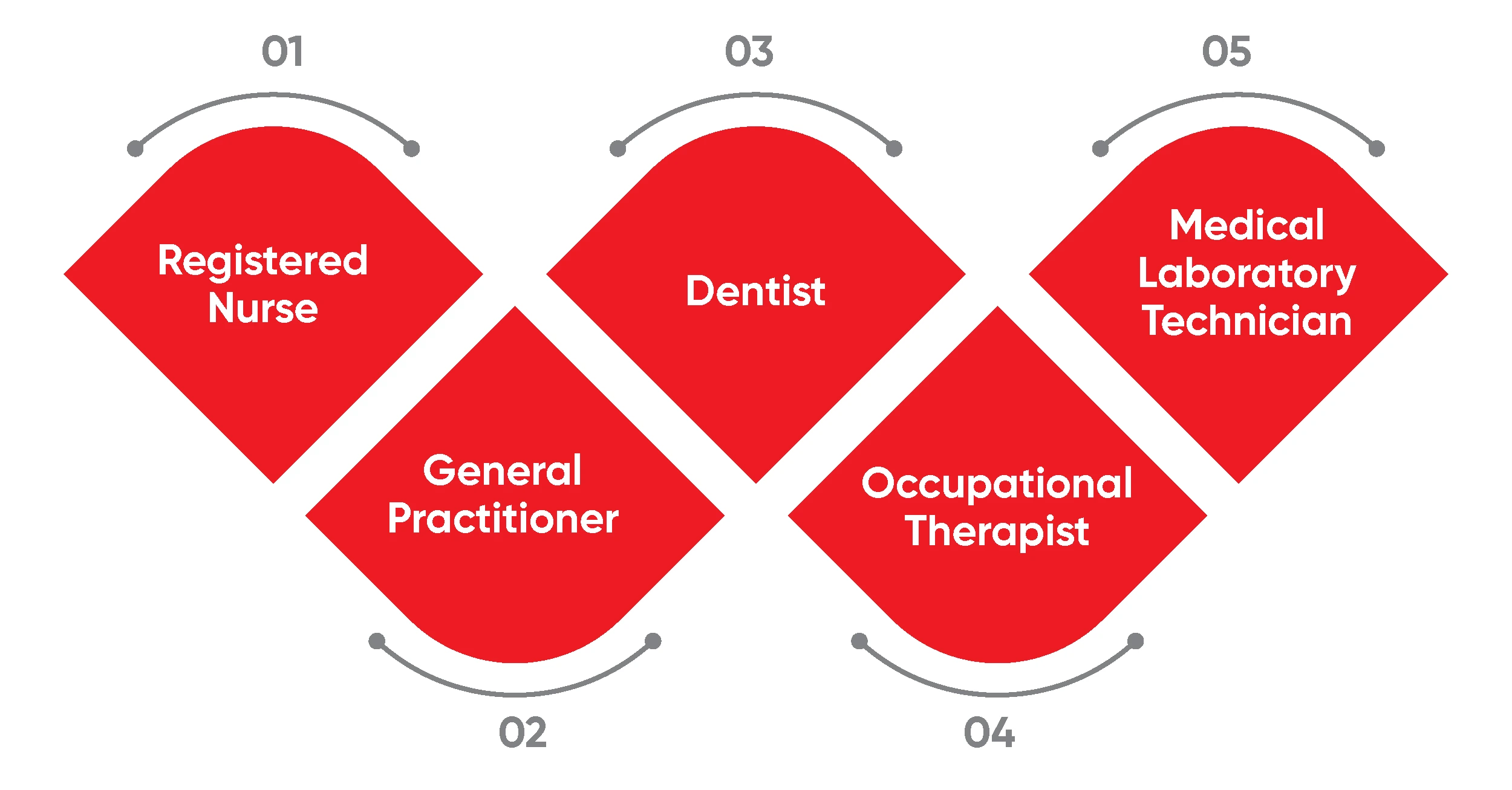
In-demand healthcare jobs in Australia include Registered Nurses, General Practitioners, Dentists, Occupational Therapists, and Medical Laboratory Technicians.
| Job Role | Job Overview | Eligibility Criteria | Career Designations |
|---|---|---|---|
| Registered Nurse | Provide patient care in hospitals, clinics. | Nursing degree, registration with AHPRA | Staff Nurse, Charge Nurse |
| General Practitioner | Diagnose and treat illnesses, prescribe meds. | Medical degree, AHPRA registration | Family Doctor, GP Specialist |
| Dentist | Diagnose and treat dental issues. | Dental degree, AHPRA registration | General Dentist, Orthodontist |
| Occupational Therapist | Help patients improve daily living skills. | Degree in Occupational Therapy, AHPRA registration | OT Specialist, Rehabilitation Consultant |
| Medical Laboratory Technician | Conduct tests for disease diagnosis. | Diploma in Laboratory Technology | Lab Assistant, Technologist |
Let’s look at each in detail:
1. Registered Nurse
Registered nurses (RNs) in Australia play a vital role in the healthcare system, providing patient care, administering treatments, and collaborating with other medical professionals to make sure quality healthcare. They work in hospital, aged care facilities and community health services. To get nursing jobs in Australia, you need a nursing degree and AHPRA registration.
How to Become a Registered Nurse in Australia
1. Complete a nursing degree (B.Sc. in Nursing) from a recognized institution.
2. Pass the NCLEX-RN or relevant assessments.
3. Apply for AHPRA registration through their online portal.
4. Search for job opportunities in Australian healthcare facilities.
5. Secure a job offer and apply for a work visa (e.g., subclass 482).
Salary of Registered Nurse in Australia
The average salary for registered nurses in Australia typically ranges from AUD 65,000 to AUD 95,000 per year, depending on experience, qualifications, and location.
Higher compensation may be available for roles in remote or underserved areas, as well as for specialized positions. Additionally, nurses benefit from flexible working options and strong opportunities for career growth.
| State/Territory | Registered Nurse (RN) Salary Range |
|---|---|
| Tasmania | $75,902 – $96,423 |
| Queensland | $79,058 – $106,144 |
| South Australia | $70,535 – $96,242 |
| Northern Territory | $85,000 – $105,000 |
| Victoria | $58,489 – $129,833 |
| New South Wales | $69,810 – $98,014 |
2. General Practitioner
Work in Australia as General practitioners (GPs), who are primary healthcare providers who diagnose, treat, and manage a wide range of medical conditions. As In Demand healthcare jobs in Australia, GPs often serve as the first point of contact for patients, providing preventative care, managing chronic illnesses, and referring patients to specialists when necessary.
General practitioners play a crucial role in community health, working in private practices, clinics, or hospitals. A medical degree and AHPRA registration are required.
How to Become a General Practitioner in Australia
1. Obtain an MBBS degree from a recognized institution.
2. Pass the Australian Medical Council (AMC) exams.
3. Apply for AHPRA registration and provide proof of qualifications.
4. Explore job opportunities in clinics or hospitals in Australia.
5. Secure a position and apply for a work visa (e.g., subclass 186 or 482).
Salary of General Practitioner in Australia
The average salary for general practitioners in Australia typically ranges from AUD 150,000 to AUD 300,000 per year, depending on experience, location, and practice type. Those working in rural or remote areas often earn higher incomes due to strong demand.
| Category | Salary Range (AUD) | Notes |
|---|---|---|
| Entry-Level GP | 150,000 – 200,000 | For newly qualified GPs or those with limited experience. |
| Mid-Level GP | 200,000 – 250,000 | For GPs with several years of experience. |
| Experienced GP | 250,000 – 300,000+ | For highly experienced GPs or those with a well-established patient base. |
| Rural/Remote GP | 250,000 – 400,000+ | Higher demand and incentives for working in underserved areas. |
| Public Sector GP | 150,000 – 220,000 | Stable income with benefits such as leave entitlements and superannuation. |
| Private Practice GP | 200,000 – 400,000+ (varies) | Earnings depend on patient fees, bonuses, and business performance. |
3. Dentist
Dentists in Australia are healthcare professionals specializing in oral health, diagnosing and treating dental conditions, and promoting preventative care. They work in various settings, including private clinics, hospitals, and community health centers.
Dentists provide services such as fillings, root canals, orthodontics, and cosmetic dentistry. A dental degree and AHPRA registration are essential.
How to Become a Dentist in Australia
1. Earn a dental degree (BDS or equivalent).
2. Pass the Australian Dental Council (ADC) exams.
3. Register with AHPRA by submitting qualifications and completing competency assessments.
4. Apply for jobs in Australian dental clinics or hospitals.
5. Obtain a relevant work visa upon securing employment.
Salary of Dentist in Australia
The average salary for dentists in Australia typically ranges from AUD 80,000 to AUD 200,000 per year, with higher earnings available for those working in private practice or specialized fields.
Dentists in rural or underserved areas often receive additional incentives, further increasing their earning potential.
As of December 2024, the average annual salary for dentists in Australia varies by state, with some of the highest paying cities being:
| New South Wales | $225,000 |
| Western Australia | $225,000 |
| South Australia | $200,000 |
| Tasmania | $197,061 |
| Rockhampton, QLD | $162,767 |
| Perth, WA | $159,418 |
| Gold Coast, QLD | $156,221 |
| Townsville, QLD | $149,777 |
| Wollongong, NSW | $142,558 |
4. Occupational Therapist
Occupational therapists (OTs) ia a medical job in Australia work to help individuals achieve independence and improve their ability to perform daily activities despite physical, mental, or developmental challenges.
As In Demand healthcare jobs in Australia, OTs collaborate with patients across various settings, including hospitals, rehabilitation centers, schools, and aged care facilities, tailoring interventions to individual needs.
How to Become a Occupational Therapist in Australia
1. Complete a degree in Occupational Therapy.
2. Clear any competency assessments or certifications required by AHPRA.
3. Register with AHPRA by submitting necessary documents and proof of skills.
4. Seek employment opportunities in rehabilitation centers or hospitals in Australia.
5. Apply for a work visa once a job offer is received.
Salary of Occupational Therapist in Australia
The average salary for Occupational Therapist in Australia typically ranges from AUD 90,000 to AUD 115,000 per year, depending on experience, qualifications, and location.
| Experience Level | Hourly Rate (AUD) |
|---|---|
| Entry-Level OT | 30 – 40 |
| Mid-Level OT | 40 – 50 |
| Senior/Experienced OT | 50 – 70 |
| Rural/Remote OT | 60 – 80 |
5. Medical Laboratory Technician
Medical laboratory technicians in Australia are vital members of the healthcare system, performing tests and analyzing samples to aid in diagnosing and treating illnesses. They work in hospitals, diagnostic laboratories, and research facilities, handling blood, tissue, and other specimens using specialized equipment. A diploma in Laboratory Technology is required.
How to Become a Medical Laboratory Technician in Australia
1. Obtain a diploma or degree in Medical Laboratory Technology.
2. Gain certification if needed for specific roles.
3. Apply for positions in Australian laboratories or healthcare facilities.
4. Secure a job offer and initiate the visa application process (e.g., subclass 482).
Salary of Medical Laboratory Technician in Australia
The average salary for Medical Laboratory Technicians in Australia typically ranges from AUD 55,000 to AUD 85,000 per year, depending on experience, qualifications, and location. Those working in rural or high-demand areas may also receive additional allowances or benefits.
However, salaries can vary by location, with the following average annual salaries for MLTs in some Australian cities:
| Sydney | $70,000 – $80,000 |
| Melbourne | $65,000 – $70,000 |
| Queensland | $70,000 – $85,000 |
How to Get Healthcare Jobs in Australia
Here’s a step-by-step guide to getting healthcare jobs in Australia:
1. Meet Eligibility Requirements: Make sure that your qualifications align with Australian standards and register with relevant authorities like AHPRA.
2. Search for Job Openings: Use job boards like Seek, Indeed, and healthcare-specific portals.
3. Prepare Documentation: Update your CV, cover letter, and professional certifications.
4. Apply for a Visa: Check Australia’s immigration requirements and apply for a skilled worker visa.
5. Attend Interviews: Be prepared for virtual or in-person interviews.
6. Relocate and Start Work: Once hired, follow your employer’s relocation guidance.
Conclusion
In Demand Healthcare jobs in Australia offer fantastic opportunities for those looking to grow in their careers while enjoying a high quality of life. Whether you’re a nurse, doctor, or allied health professional, the demand for skilled healthcare workers continues to rise.
By understanding eligibility requirements, applying for roles, and securing your visa, you’ll be well on your way to starting your healthcare career in Australia in 2026.