




Canada’s healthcare system is expanding rapidly and with it, the demand for Allied Healthcare Professionals in Canada has reached an all-time high. From diagnostic experts to rehabilitation specialists, allied health workers play a crucial role in patient care and overall healthcare delivery.
If you’re planning to build a career abroad, this guide will walk you through the top allied health careers in Canada, salaries, demand, and immigration pathways.
Table Of Content
1Who are Allied Health Professionals in Canada?2What are the 14 Allied Health Professions?3Most In Demand Allied Health Professions in 20264Why Allied Healthcare Professionals Are in High Demand in Canada?5Salary of Allied Healthcare Professionals in Canada6Immigration Pathways for Allied Healthcare Professionals in Canada7Top Provinces for Allied Healthcare Jobs in Canada8Frequently Asked Questions
Who are Allied Health Professionals in Canada?
Allied Healthcare Professionals are trained experts who support doctors and nurses in diagnosing, treating, and rehabilitating patients. They form a major part of the healthcare workforce in Canada.
These healthcare support professionals or paramedical professionals work across hospitals, clinics, laboratories, and rehabilitation centers.
Some key responsibilities include:
- Conducting diagnostic tests
- Providing therapy and rehabilitation
- Supporting patient care and recovery
- Managing medical equipment and lab procedures
In simple terms, they are the backbone of patient care support roles in Canada’s healthcare system.
What are the 14 Allied Health Professions?
Here are the most recognized 14 allied health professions in Canada:
1. Physiotherapists
2. Occupational Therapists
3. Medical Laboratory Technologists
4. Radiologic Technologists
5. Respiratory Therapists
6. Speech-Language Pathologists
7. Audiologists
8. Dietitians & Nutritionists
9. Pharmacists
10. Dental Hygienists
11. Paramedics
12. Medical Sonographers
13. Psychologists
14. Social Workers.
These roles fall under healthcare practitioners in Canada and are essential for delivering quality care.
Most In Demand Allied Health Professions in 2026
Allied Healthcare Jobs in Canada are highly in demand due to increasing healthcare needs and workforce shortages. These professions offer competitive salaries and strong career growth opportunities.
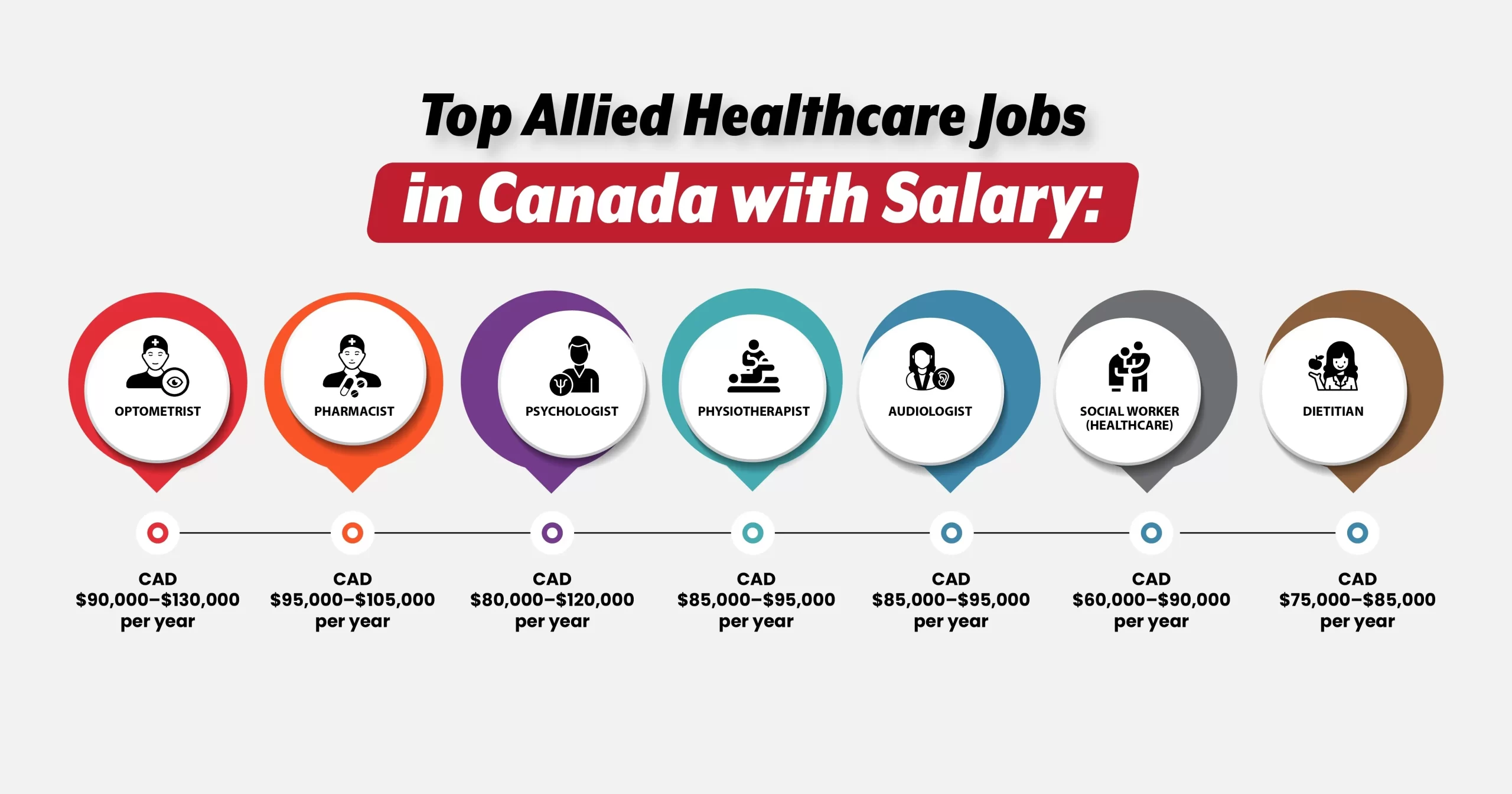
Here are some of the most in-demand allied healthcare careers along with their average salaries:
Optometrist
Role: Eye care specialists who diagnose vision problems, prescribe corrective lenses, and detect eye diseases.
Average Salary in Canada: CAD $90,000 – $130,000+ per year (varies by experience & location)
Why in demand: Rising cases of vision disorders and aging population.
Pharmacist
Role: Dispense medications, advise patients on drug usage, and ensure safe pharmaceutical care.
Average Salary in Canada: Around CAD $99,875 per year
Why in demand: Expanding healthcare services and chronic disease management.
Psychologist
Role: Assess, diagnose, and treat mental health conditions through therapy and counseling.
Average Salary in Canada: CAD $80,000 – $120,000 per year
Why in demand: Increased awareness of mental health and demand for therapy services.
Physiotherapist
Role: Help patients recover from injuries, improve mobility, and manage chronic pain.
Average Salary in Canada: Around CAD $88,644 per year
Why in demand: Growing need for rehabilitation and post-surgery care.
Audiologist
Role: Diagnose and treat hearing and balance disorders.
Average Salary in Canada: Around CAD $91,890 per year
Why in demand: Increasing hearing-related issues, especially among older adults.
Social Worker (Healthcare Settings)
Role: Provide emotional support, counseling, and connect patients with healthcare and social services.
Average Salary in Canada: CAD $60,000 – $90,000 per year
Why in demand: Essential role in patient support and mental health care systems.
Dietitian
Role: Create nutrition plans, manage dietary needs, and support patients with chronic illnesses.
Average Salary in Canada: Around CAD $82,696 per year
Why in demand: Increasing focus on preventive healthcare and lifestyle diseases.
Why Allied Healthcare Professionals Are in High Demand in Canada?
Allied healthcare professionals are in high demand in Canada due to a combination of demographic, economic, and healthcare system factors:
Aging Population: Canada’s growing older population is increasing the need for rehabilitation, vision care, mental health support, and chronic disease management.
Healthcare Workforce Shortages: There is a consistent shortage of skilled healthcare workers, creating strong demand for allied health professionals across provinces.
Rising Chronic Diseases: Conditions like diabetes, heart disease, and obesity require ongoing care from professionals such as dietitians, physiotherapists, and pharmacists.
Increased Focus on Mental Health: Growing awareness has boosted demand for psychologists and social workers in healthcare settings.
Expansion of Healthcare Services: Canada is investing in healthcare infrastructure, leading to more job opportunities in hospitals, clinics, and community care.
Preventive Healthcare Trends: More emphasis on early diagnosis and lifestyle management is driving demand for roles like optometrists and dietitians.
Salary of Allied Healthcare Professionals in Canada
The salary of allied healthcare professionals in Canada typically ranges from CAD $70,000 to $97,000 per year, depending on the role, experience, and location. Entry-level professionals can earn around CAD $50,000, while experienced professionals may earn CAD $100,000+ annually.
Quick salary examples:
- Pharmacist – CAD $95,000–$120,000/year
- Physiotherapist – CAD $85,000–$95,000/year
- Psychologist – CAD $80,000–$120,000/year
- Dietitian – CAD $75,000–$85,000/year
Overall, allied healthcare jobs in Canada offer competitive salaries, strong job security, and excellent long-term career growth.
Immigration Pathways for Allied Healthcare Professionals in Canada
Allied healthcare professionals can migrate to Canada through several immigration pathways designed to address skill shortages in the healthcare sector.
Top immigration pathways include:
Express Entry System: The most popular pathway for skilled professionals under programs like the Federal Skilled Worker Program (FSWP) and Canadian Experience Class (CEC).
Provincial Nominee Program (PNP): Provinces select healthcare professionals based on local demand, increasing chances of receiving permanent residency.
Healthcare-Specific Streams: Some provinces offer targeted draws or streams specifically for healthcare and allied health professionals.
Job Offer & Work Permit: Securing a job offer from a Canadian employer can help you apply for a work permit and later transition to PR.
Atlantic Immigration Program (AIP): Ideal for professionals willing to work in Atlantic provinces like Nova Scotia, New Brunswick, and Newfoundland & Labrador.
Top Provinces for Allied Healthcare Jobs in Canada
Several provinces in Canada offer strong demand and excellent opportunities for allied healthcare professionals due to workforce shortages and growing healthcare needs.
Top provinces include:
Ontario – Canada’s most populous province with the highest number of healthcare job openings, especially in major cities like Toronto and Ottawa.
British Columbia – High demand in both urban and rural areas, with continuous hiring in hospitals and healthcare facilities.
Alberta – Offers high salaries, modern healthcare infrastructure, and strong demand for allied health professionals.
Nova Scotia – Actively recruiting international healthcare workers with easier immigration pathways.
Saskatchewan & Manitoba – High demand in rural areas with fast-track immigration options and incentives.