




The globally ranked universities, industry-aligned curriculum, and strong emphasis on research and innovation in Canada continue to make it one of the most sought-after destinations for engineering studies among international students. Students acquire both academic depth and practical exposure through comprehensive co-op programs, access to advanced laboratories, and clear post-graduation work pathways. Engineering education in Canada provides a direct pathway to global opportunities, in addition to its strong career prospects and immigration-friendly policies.
Table Of Content
1Why Study Engineering in Canada for International Students?2Top 10 Engineering Universities in Canada3Engineering Universities in Canada Ranking4How to Apply for Engineering Universities in Canada?5Conclusion6Frequently Asked Questions
Why Study Engineering in Canada for International Students?
There are numerous reasons why Canada is one of the most desirable countries for international students to pursue engineering, such as the following:
- Canada offers engineering education of exceptional quality from internationally recognized universities.
- Industry-focused programs that combine theoretical knowledge with practical learning.
- Opportunities for cooperative education and internships to acquire practical work experience.
- Engineers are in high demand across various industries in Canada.
- Access to cutting-edge research facilities, technology, and innovation initiatives.
- Competitive salaries and exceptional career prospects await upon graduation.
- Post-graduation work opportunities for eligible international students.
- A multicultural, safe, and welcoming environment that is conducive to both life and learning.
- Potential routes to permanent residency for graduates who meet the qualifications.
Top 10 Engineering Universities in Canada
Engineering universities in Canada are among the best in-demand courses in Canada, offering exceptional career opportunities, industry-focused programs, and high-quality education. In addition to the opportunity to select from a wide range of engineering specializations, international students can also take advantage of co-op programs, research opportunities, and promising graduate employment prospects. More importantly, there are several engineering universities in canada with scholarships.
Here are the top 10 engineering universities in Canada:
1. University of Toronto
2. University of British Columbia (UBC)
3. University of Waterloo
4. McGill University
5. University of Alberta
6. McMaster University
7. University of Calgary
8. Queen’s University
9. Western University
10. Toronto Metropolitan University (TMU)
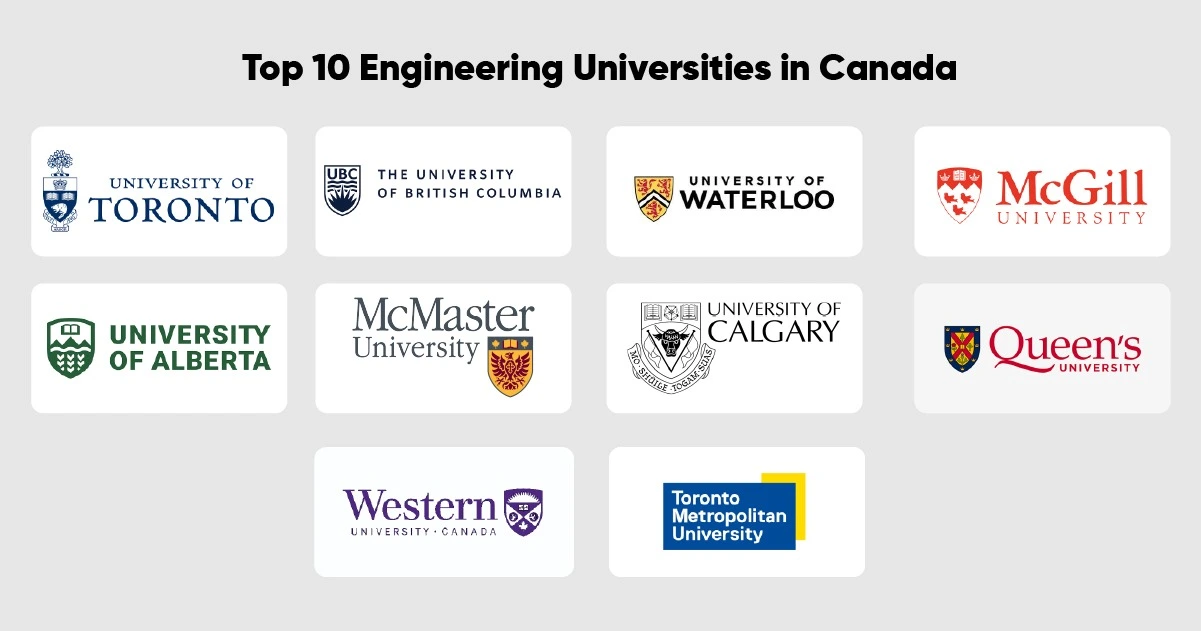
Engineering is one of the best courses to study in Canada. Now, let’s take a detailed look at each engineering university in Canada.
1. University of Toronto
The University of Toronto is consistently ranked among the top engineering universities in Canada, and it is renowned for its exceptional career opportunities for engineering graduates, strong industry connections, and world-class research.
| Factors | Details |
|---|---|
| Type of University | Public Research University |
| Location | Toronto, Ontario, Canada |
| Popular Engineering Programs | • Mechanical Engineering
• Civil Engineering • Electrical Engineering • Chemical Engineering • Computer Engineering |
| Tuition Fees for International Students | CAD 65,000 – CAD 72,000 per year |
| Internship/Co-op Opportunities | • Professional Experience Year (PEY) Co-op Program
• Research Internships • Industry Placements with Leading Employers |
| Scholarships for International Students | • Lester B. Pearson International Scholarship
• University of Toronto International Scholar Award • Engineering Entrance Awards • Faculty of Applied Science & Engineering Awards • Merit-Based Admission Scholarships |
| Acceptance Rate | Approximately 43% (Engineering programs are more competitive) |
2. University of British Columbia (UBC)
The University of British Columbia offers world-class engineering programs with strong connections to the tech industry in Vancouver and beyond, along with some of the top research and STEM courses in Canada.
| Factors | Details |
|---|---|
| Type of University | Public Research University |
| Location | Vancouver, British Columbia, Canada |
| Popular Engineering Programs | • Civil Engineering
• Electrical & Computer Engineering • Mechanical Engineering • Chemical & Biological Engineering • Mining Engineering |
| Tuition Fees for International Students | CAD 47,000 – CAD 55,000 per year |
| Internship/Co-op Opportunities | • Engineering Co-op Program (12–16 months)
• Research Internships • Industry Partnerships with Tech Giants |
| Scholarships for International Students | • International Leader of Tomorrow Award
• UBC Engineering Entrance Awards • Trek Excellence Scholarship • Faculty Merit Awards |
| Acceptance Rate | Approximately 46% (Engineering programs are selective) |
3. University of Waterloo
The University of Waterloo is an internationally recognized public university in Canada for its engineering and technology programs, which are distinguished by the world’s largest co-op program and robust industry partnerships with companies such as Apple, Microsoft, and Google.
| Factors | Details |
|---|---|
| Type of University | Public Research University |
| Location | Waterloo, Ontario, Canada |
| Popular Engineering Programs | • Software Engineering
• Electrical Engineering • Mechanical Engineering • Systems Design Engineering • Computer Engineering |
| Tuition Fees for International Students | CAD 55,000 – CAD 65,000 per year |
| Internship/Co-op Opportunities | • World’s Largest Co-op Program
• 6 Work Terms (up to 2 years of paid experience) • Placements at Top Global Tech Companies |
| Scholarships for International Students | • International Student Entrance Scholarship
• Faculty of Engineering Awards • President’s Scholarship • Ontario Graduate Scholarship (OGS) |
| Acceptance Rate | Approximately 53% (Engineering programs are highly competitive) |
4. McGill University
In the lively city of Montreal, McGill University is one of the most esteemed universities in Canada, providing a rigorous engineering curriculum and an international academic atmosphere.
| Factors | Details |
|---|---|
| Type of University | Public Research University |
| Location | Montreal, Quebec, Canada |
| Popular Engineering Programs | • Electrical Engineering
• Mechanical Engineering • Civil Engineering • Chemical Engineering • Biomedical Engineering |
| Tuition Fees for International Students | CAD 28,000 – CAD 40,000 per year |
| Internship/Co-op Opportunities | • Engineering Internship Program
• Research Opportunities via SURE Program • Industry Connections across North America |
| Scholarships for International Students | • Entrance Scholarship for Excellence
• McGill Engineering Entrance Scholarship • International Work Experience Program Awards • Trottier Engineering Awards |
| Acceptance Rate | Approximately 46% |
5. University of Alberta
The University of Alberta is a premier engineering institution in Western Canada, providing specialized programs that are closely associated with Canada’s energy sector, mining, and advanced manufacturing industries.
| Factors | Details |
|---|---|
| Type of University | Public Research University |
| Location | Edmonton, Alberta, Canada |
| Popular Engineering Programs | • Petroleum Engineering
• Civil Engineering • Electrical Engineering • Chemical Engineering • Mining Engineering |
| Tuition Fees for International Students | CAD 30,000 – CAD 42,000 per year |
| Internship/Co-op Opportunities | • Engineering Co-op Program
• Research Internships • Energy Sector Placements |
| Scholarships for International Students | • University of Alberta International Scholarship
• Provost’s Doctoral Entrance Award • Engineering Awards • Graduate Research Assistantships |
| Acceptance Rate | Approximately 58% |
6. McMaster University
McMaster University is renowned for its innovative engineering programs, experiential learning approach, and robust research output, particularly in the fields of advanced manufacturing and health sciences engineering.
| Factors | Details |
|---|---|
| Type of University | Public Research University |
| Location | Hamilton, Ontario, Canada |
| Popular Engineering Programs | • Engineering & Management
• Electrical & Computer Engineering • Mechanical Engineering • Chemical Engineering • Materials Engineering |
| Tuition Fees for International Students | CAD 40,000 – CAD 52,000 per year |
| Internship/Co-op Opportunities | • Co-op Engineering Programs
• Industry Research Partnerships • McMaster Engineering Career Centre |
| Scholarships for International Students | • McMaster International Excellence Award
• Faculty of Engineering Scholarships • Graduate Excellence Scholarships |
| Acceptance Rate | Approximately 58% |
7. University of Calgary
The University of Calgary is an exceptional choice for students who are interested in petroleum, environmental, and software engineering, as it provides dynamic engineering programs that are closely connected to the energy industry and the expanding technology sector.
| Factors | Details |
|---|---|
| Type of University | Public Research University |
| Location | Calgary, Alberta, Canada |
| Popular Engineering Programs | • Petroleum Engineering
• Electrical Engineering • Software Engineering • Civil Engineering • Mechanical Engineering |
| Tuition Fees for International Students | CAD 28,000 – CAD 38,000 per year |
| Internship/Co-op Opportunities | • Engineering Co-op Program
• Industry Placements in Energy Sector • Research Internships |
| Scholarships for International Students | • International Entrance Scholarship
• Eyes High Doctoral Scholarship • Schulich School of Engineering Awards |
| Acceptance Rate | Approximately 60% |
8. Queen’s University
Queen’s University is distinguished by its exceptional graduate employment rates, strong engineering culture, and close-knit student community, particularly in the fields of civil, electrical, and mining engineering
| Factors | Details |
|---|---|
| Type of University | Public Research University |
| Location | Kingston, Ontario, Canada |
| Popular Engineering Programs | • Mining Engineering
• Civil Engineering • Electrical & Computer Engineering • Mechanical & Materials Engineering • Chemical Engineering |
| Tuition Fees for International Students | CAD 45,000 – CAD 55,000 per year |
| Internship/Co-op Opportunities | • Professional Internship Program (PIP)
• Queen’s Engineering Society Networking Events • Industry Partnerships |
| Scholarships for International Students | • Queen’s University International Scholarships
• Dean’s Scholarship • Engineering Excellence Award • Chancellor’s Award |
| Acceptance Rate | Approximately 44% |
9. Western University
Western University’s engineering programs provide graduates with a competitive advantage in the engineering and business sectors throughout Canada by integrating rigorous academics with robust professional development opportunities.
| Factors | Details |
|---|---|
| Type of University | Public Research University |
| Location | London, Ontario, Canada |
| Popular Engineering Programs | • Mechanical & Materials Engineering
• Civil & Environmental Engineering • Electrical & Computer Engineering • Chemical & Biochemical Engineering • Software Engineering |
| Tuition Fees for International Students | CAD 38,000 – CAD 48,000 per year |
| Internship/Co-op Opportunities | • Engineering Internship Program
• Industry Partnerships • Western Engineering Career Fair |
| Scholarships for International Students | • Western Scholarship of Excellence
• International Student Award • Engineering Entrance Scholarships |
| Acceptance Rate | Approximately 59% |
10. Toronto Metropolitan University (TMU)
In the heart of Toronto, Toronto Metropolitan University (formerly Ryerson University) provides career-focused engineering and technology programs that prioritize applied, hands-on learning and are characterized by strong industry connections.
| Factors | Details |
|---|---|
| Type of University | Public University |
| Location | Toronto, Ontario, Canada |
| Popular Engineering Programs | • Electrical Engineering
• Mechanical Engineering • Computer Engineering • Aerospace Engineering • Civil Engineering |
| Tuition Fees for International Students | CAD 25,000 – CAD 35,000 per year |
| Internship/Co-op Opportunities | • Cooperative Education Program
• Industry Project Courses • Toronto Tech Ecosystem Connections |
| Scholarships for International Students | • TMU International Scholarship
• Dean’s Entrance Scholarships • Faculty of Engineering & Architectural Science Awards |
| Acceptance Rate | Approximately 70% |
Engineering Universities in Canada Ranking
The global rankings of the top engineering universities in Canada are presented in the following table, as compiled by the Times Higher Education (THE) World University Rankings 2026 and the QS World University Rankings:
| University | QS World University Rankings 2026 | Times Higher Education (THE) World University Rankings 2026 |
|---|---|---|
| University of Toronto | #17 | #25 |
| University of British Columbia | #29 | Top 50 |
| University of Waterloo | Top 50 | Top 100 |
| McGill University | Top 75 | Top 100 |
| University of Alberta | Top 100 | Top 100 |
| McMaster University | Top 150 | Top 100 |
| University of Calgary | Top 200 | Top 150 |
| Queen’s University | Top 250 | Top 200 |
| Western University | Top 250 | Top 200 |
| Toronto Metropolitan University | Top 300 | Top 250 |
How to Apply for Engineering Universities in Canada?
Here is a simple step-by-step process for applying to engineering universities in Canada:
Step 1: Research and Shortlist Universities
Start by researching engineering universities in Canada that match your academic goals, budget, and preferred location. Compare programs, tuition fees, rankings, co-op opportunities, and scholarship options to create a shortlist of 4–6 universities.
Step 2: Check Admission Requirements
Each university has specific entry requirements for international students. Typically you will need a high school transcript or undergraduate degree (for postgraduate programs), English requirements include a statement of purpose (SOP), proficiency test scores (IELTS: 6.5+, TOEFL: 90+), letters of recommendation, and a valid passport.
Step 3: Prepare Your Application Documents
Gather all required documents, including academic transcripts, English language test scores, letters of recommendation, a well-written statement of purpose, a resume or CV (for postgraduate applications), and financial proof of funds.
Step 4: Submit an Application via the University Portal
Applications are accepted by the majority of Canadian universities via their official online portals. The Ontario Universities’ Application Centre (OUAC) is one of the centralized platforms that certain provinces have implemented for their universities. If you wish to ensure that your application receives the utmost attention, submit it in advance of the deadline.
Step 5: Submit an Application for a Study Permit
Upon receiving an acceptance letter (letter of acceptance), submit an application for a Canadian student visa (study permit) on the Immigration, Refugees, and Citizenship Canada (IRCC) websites. We require the following: a completed application form, proof of financial support, a valid passport, and your acceptance letter.
Step 6: Confirm Your Seat and Arrange Accommodation
Pay the mandatory tuition deposit to secure your seat. Ensure that you have reserved on-campus or off-campus housing in advance, as international students have a tendency to fill up quickly.
Step 7: The Beginning of Your Engineering Journey in Canada
Upon the approval of your study permit, arrange your travel, attend any pre-arrival orientation sessions offered by your university, and begin your engineering journey in Canada.
Conclusion
International students interested in pursuing an engineering education continue to consider Canada one of the most popular destinations. The long-term career value of studying engineering in Canada is exceptional, as it offers world-class universities, diverse specializations, robust co-op programs, and robust post-graduation work options. Whether you are drawn to the research powerhouse of the University of Toronto, the co-op excellence of the University of Waterloo, or the energy-sector focus of the University of Alberta, the engineering universities in Canada offer exceptional opportunities for all aspiring engineers.
To explore official engineering programs and admission requirements, visit the official website of Universities Canada: https://www.univcan.ca