




Canada isn’t just a study destination, it’s more of a career launchpad. The presence of world-ranked universities, a welcoming immigration system makes it an excellent prospect for international students. On top of this, with countless enthusiastic employers hunting for skilled graduates, your choice of course here can determine your entire future in the country. So let’s take a deep dive into the best courses to study in Canada that actually pay off.
Table Of Content
1Best Courses to Study in Canada2Best Courses in Canada after 12th3Best Courses in Canada after 12th Commerce4Best Courses to Study in Canada for PR5Conclusion5Frequently Asked Questions
Best Courses to Study in Canada
The best courses to study in Canada for international students are those that offer high job demand, strong salary potential, and clear pathways to permanent residency (PR). Choosing the right course depends on your career goals, industry demand, and long-term plans in Canada.
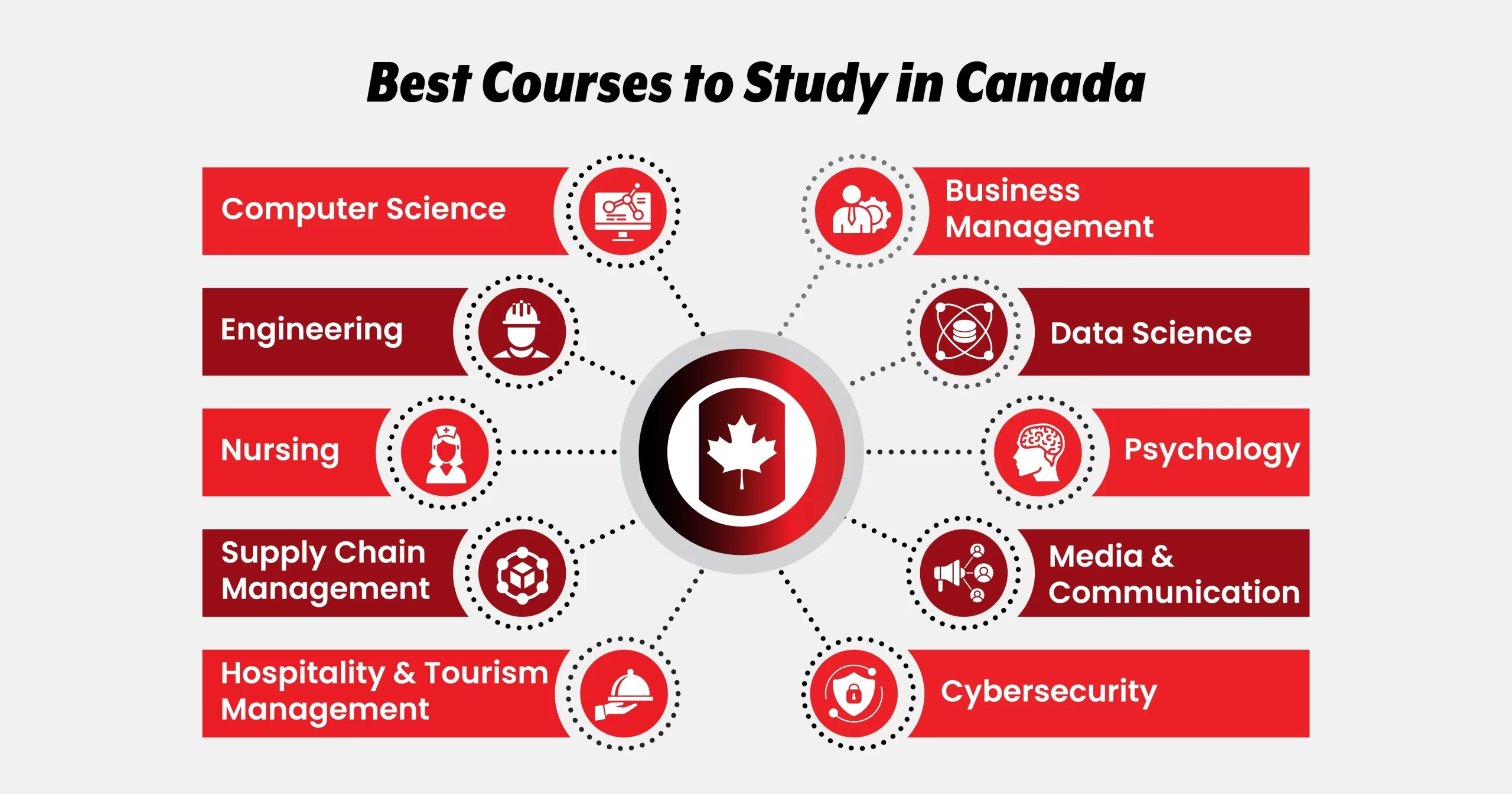
Here are the best courses to study in Canada for international students:
- Computer Science
- Business Management
- Engineering
- Nursing
- Data Science
- Psychology
- Supply Chain Management
- Hospitality & Tourism Management
- Media & Communication
- Cybersecurity
1. Computer Science
Computer Science is one of the most popular courses among international students owing to its strong job demand, huge salary potential, and excellent career opportunities in the growing tech industry.
Here’s why studying Computer Science in Canada is a top choice for international students:
- High demand for IT and software professionals in Canada
- Strong tech hubs like Toronto, Vancouver, and Montreal
- High-paying job opportunities after graduation
- Eligible for Post-Graduation Work Permit (PGWP)
- Better chances for Permanent Residency (PR)
Best Universities in Canada for Computer Science
Here are the best universities in Canada for Computer Science:
- University of Toronto
- University of British Columbia
- University of Waterloo
- McGill University
- University of Alberta
Computer Science Course Fees in Canada
The average Computer Science course fees in Canada for international students is approximately CAD 20,000 to CAD 45,000 per year.
To understand the cost better, here is a breakdown of Computer Science fees in Canada based on course level:
Diploma in Computer Science in Canada (1–2 year programs): CAD 13,000 – 20,000/year
Bachelor’s in Computer Science in Canada (4-year program): CAD 20,000 – 45,000/year
Master’s in Computer Science in Canada (1–2 year programs): CAD 17,000 – 35,000/year
2. Business Management
Business Management is among the Best Courses to Study in Canada for international students. Indeed Canada’s thriving economy and global business connections opens doors across industries including finance, marketing, entrepreneurship, and operations.
Here’s why studying Business Management in Canada is a top choice for international students:
- Broad career opportunities across multiple industries
- Strong industry connections and networking opportunities
- High-demand graduates in corporate and public sectors
- Eligible for Post-Graduation Work Permit (PGWP)
- Solid pathway to Canadian Permanent Residency (PR)
Best Universities in Canada for Business Management
Here are the best universities in Canada for Business Management:
- Schulich School of Business – York University
- Rotman School of Management – University of Toronto
- Sauder School of Business – University of British Columbia
- HEC Montréal
- Queen’s Smith School of Business
Business Management Course Fees in Canada
The average Business Management course fees in Canada for international students is approximately CAD 18,000 to CAD 40,000 per year.
To understand the cost better, here is a breakdown of Business Management fees in Canada based on course level:
Diploma in Business Management in Canada(1–2 year programs): CAD 12,000 – 20,000/year
Bachelor’s in Business Management in Canada(4-year program): CAD 18,000 – 40,000/year
Master’s in Business Management in Canada(1–2 year programs): CAD 25,000 – 60,000/year
3. Engineering
Engineering is one of the most in-demand and high-paying fields in Canada. Whether it is civil, mechanical, electrical, or software engineering, Canada’s booming infrastructure and technology sectors ensure excellent employment prospects for graduates. The quality of education at public universities in Canada is also top-class.
Here’s why studying Engineering in Canada is a top choice for international students:
- Critical skills shortage driving high demand for engineers
- Excellent salary packages across all engineering disciplines
- Opportunities in construction, energy, tech, and manufacturing
- Eligible for Post-Graduation Work Permit (PGWP)
- Strong PR pathways through Express Entry and PNPs
Best Universities in Canada for Engineering
Here are the best universities in Canada for Engineering:
- University of Toronto
- University of Waterloo
- McGill University
- University of British Columbia
- McMaster University
Engineering Course Fees in Canada
The average Engineering course fees in Canada for international students is approximately CAD 22,000 to CAD 50,000 per year.
To understand the cost better, here is a breakdown of Engineering fees in Canada based on course level:
Diploma in Engineering in Canada (1–2 year programs): CAD 14,000 – 22,000/year
Bachelor’s in Engineering in Canada (4-year program): CAD 22,000 – 50,000/year
Master’s in Engineering in Canada (1–2 year programs): CAD 18,000 – 38,000/year
4. Nursing
Nursing is one of the most in-demand professions in Canada. And nursing programs in Canada are among the best opportunities for international students. As an ageing population always faces a critical shortage of healthcare workers, international nursing graduates enjoy excellent employment prospects, competitive salaries, and clear pathways to PR.
Here’s why studying Nursing is among the Best Courses to Study in Canada for international students:
- Critical shortage of nurses across all Canadian provinces.
- High employment rate immediately after graduation
- Competitive salary with strong benefits
- Eligible for Post-Graduation Work Permit (PGWP)
- Direct PR pathways through healthcare immigration streams
Best Universities in Canada for Nursing
Here are the best universities in Canada for Nursing:
- University of Toronto
- University of British Columbia
- University of Alberta
- McMaster University
- Dalhousie University
Nursing Course Fees in Canada
The average Nursing course fees in Canada for international students is approximately CAD 18,000 to CAD 40,000 per year.
To understand the cost better, here is a breakdown of Nursing fees in Canada based on course level:
Diploma/Certificate in Nursing in Canada (1–2 year programs): CAD 12,000 – 20,000/year
Bachelor of Science in Nursing (BScN) in Canada (4-year program): CAD 18,000 – 40,000/year
Master of Nursing (MN) in Canada (1–2 year programs): CAD 16,000 – 32,000/year
5. Data Science
Data Science is one of the fastest-growing fields globally. In today’s age, industries across finance, healthcare, retail, and technology are relying heavily on data-driven decision-making. Consequently, the demand for skilled data scientists in Canada is at an all-time high. Moreover, there are huge scholarships to study in Canada.
Here’s why studying Data Science in Canada is a top choice for international students:
- Explosive demand for data professionals across all industries
- Highest average salary in the tech sector
- Opportunities in AI, machine learning, and analytics
- Eligible for Post-Graduation Work Permit (PGWP)
- Strong PR prospects through the tech immigration streams
Best Universities in Canada for Data Science
Here are the best universities in Canada for Data Science:
- University of Toronto
- Simon Fraser University
- University of British Columbia
- University of Waterloo
- Ryerson University (Toronto Metropolitan University)
Data Science Course Fees in Canada
The average Data Science course fees in Canada for international students is approximately CAD 18,000 to CAD 45,000 per year.
To understand the cost better, here is a breakdown of Data Science fees in Canada based on course level:
Certificate/Diploma in Data Science in Canada (Short-term programs): CAD 12,000 – 20,000/year
Bachelor’s in Data Science in Canada (4-year program): CAD 18,000 – 45,000/year
Master’s in Data Science in Canada (1–2 year programs): CAD 20,000 – 40,000/year
6. Psychology
Psychology is a versatile and popular course among international students in Canada. Graduates find careers in mental health, counselling, human resources, research, education, and social services, all among high-demand fields in Canada.
Here’s why studying Psychology in Canada is a top choice for international students:
- Growing demand for mental health professionals across Canada
- Diverse career paths in healthcare, HR, and social sectors
- Research opportunities at world-class Canadian universities
- Eligible for Post-Graduation Work Permit (PGWP)
- Pathways to PR through healthcare and social service roles
Best Universities in Canada for Psychology
Here are the best universities in Canada for Psychology:
- University of Toronto
- McGill University
- University of British Columbia
- York University
- University of Waterloo
Psychology Course Fees in Canada
The average Psychology course fees in Canada for international students is approximately CAD 15,000 to CAD 35,000 per year.
To understand the cost better, here is a breakdown of Psychology fees in Canada based on course level:
Bachelor’s in Psychology in Canada (4-year program): CAD 15,000 – 35,000/year
Master’s in Psychology in Canada (1–2 year programs): CAD 12,000 – 28,000/year
PhD in Psychology in Canada (Funded positions common): CAD 8,000 – 20,000/year
7. Supply Chain Management
Supply Chain Management has emerged as a critical field in Canada following global disruptions. Which highlighted the importance of efficient logistics and operations. With Canada’s role as a major trade hub, professionals in this field are highly sought after by both public and private sector employers.
Here’s why studying Supply Chain Management in Canada is a top choice for international students:
- High demand driven by e-commerce and global trade growth
- Opportunities in logistics, procurement, and operations
- Canada’s position as a G7 trade nation boosts job prospects
- Eligible for Post-Graduation Work Permit (PGWP)
- Clear PR pathways through skilled worker immigration programs
Best Universities in Canada for Supply Chain Management
Here are the best universities in Canada for Supply Chain Management:
- Ryerson University (Toronto Metropolitan University)
- University of British Columbia
- York University – Schulich School of Business
- Concordia University
- Dalhousie University
Supply Chain Management Course Fees in Canada
The average Supply Chain Management course fees in Canada for international students is approximately CAD 16,000 to CAD 38,000 per year.
To understand the cost better, here is a breakdown of Supply Chain Management fees in Canada based on course level:
Diploma/Certificate in Supply Chain Management in Canada (1–2 year programs): CAD 12,000–20,000/year
Bachelor’s in Supply Chain Management in Canada (4-year program): CAD 16,000–38,000/year
Master’s in Supply Chain Management in Canada (1–2 year programs): CAD 18,000–35,000/year
8. Hospitality & Tourism Management
Canada’s thriving tourism industry and hospitality sector make it an excellent choice for international students. As Canada is attracting millions of visitors annually, trained hospitality professionals are in consistent demand across the country.
Here’s why studying Hospitality & Tourism Management in Canada is a top choice for international students:
- Strong and consistent demand in hotels, resorts, and tourism companies
- Practical, hands-on training with industry placements
- Opportunities in food services, event management, and travel
- Eligible for Post-Graduation Work Permit (PGWP)
- PR pathways especially strong in provinces like British Columbia and Ontario
Best Colleges/Universities in Canada for Hospitality & Tourism
Here are the best universities in Canada for Hospitality & Tourism Management:
- Ryerson University (Toronto Metropolitan University)
- George Brown College
- Centennial College
- Vancouver Community College
- Niagara College
Hospitality & Tourism Management Course Fees in Canada
The average Hospitality & Tourism course fees in Canada for international students is approximately CAD 14,000 to CAD 32,000 per year.
To understand the cost better, here is a breakdown of Hospitality & Tourism fees in Canada based on course level:
Diploma/Certificate in Hospitality & Tourism in Canada(1–2 year programs): CAD 10,000–18,000/year
Bachelor’s in Hospitality & Tourism in Canada(3–4 year programs): CAD 14,000–32,000/year
Master’s in Hospitality & Tourism in Canada(1–2 year programs): CAD 15,000–28,000/year
9. Media & Communication
Media & Communication is a dynamic field in Canada, encompassing journalism, digital media, public relations, broadcasting, and content creation. Canada’s vibrant media landscape makes this an ideal destination for aspiring communication professionals.
Here’s why studying Media & Communication in Canada is a top choice for international students:
- Expanding digital media industry with growing content demand
- Opportunities in PR, journalism, film, broadcasting, and social media
- Canada’s strong multicultural identity enriches communication studies
- Eligible for Post-Graduation Work Permit (PGWP)
- Flexible career paths across public, private, and non-profit sectors
Best Universities in Canada for Media & Communication
Here are the best universities in Canada for Media & Communication:
- Ryerson University (Toronto Metropolitan University)
- Carleton University
- University of British Columbia
- Concordia University
- Humber College
Media & Communication Course Fees in Canada
The average Media & Communication course fees in Canada for international students is approximately CAD 14,000 to CAD 32,000 per year.
To understand the cost better, here is a breakdown of Media & Communication fees in Canada based on course level:
Diploma/Certificate in Media & Communication in Canada (1–2 year programs): CAD 10,000–18,000/year
Bachelor’s in Media & Communication in Canada (3–4 year programs): CAD 14,000–32,000/year
Master’s in Media & Communication in Canada (1–2 year programs): CAD 14,000–28,000/year
10. Cybersecurity
Cybersecurity is one of the most critical and fastest-growing fields globally. And Canada has been actively investing in digital infrastructure for some time now. Amidst rising threats to both public and private sector systems, qualified cybersecurity professionals are among the highest-paid and most sought-after graduates in Canada.
Here’s why studying Cybersecurity in Canada is a top choice for international students:
- Massive demand driven by increasing cyber threats and digital transformation
- Among the highest-paying graduate roles in Canada’s tech sector
- Opportunities in government, banking, healthcare, and defense sectors
- Eligible for Post-Graduation Work Permit (PGWP)
- Strong PR pathways through Express Entry and technology immigration streams
Best Universities in Canada for Cybersecurity
Here are the best universities in Canada for Cybersecurity:
- University of Waterloo
- University of Toronto
- Carleton University
- University of New Brunswick
- Ryerson University (Toronto Metropolitan University)
Cybersecurity Course Fees in Canada
The average Cybersecurity course fees in Canada for international students is approximately CAD 18,000 to CAD 45,000 per year.
To understand the cost better, here is a breakdown of Cybersecurity fees in Canada based on course level:
Diploma/Certificate in Cybersecurity in Canada (1–2 year programs): CAD 12,000–20,000/year
Bachelor’s in Cybersecurity in Canada (4 year program): CAD 18,000–45,000/year
Master’s in Cybersecurity in Canada (1–2 year programs): CAD 18,000–38,000/year
Best Courses in Canada after 12th
The best courses in Canada after 12th for international students are:
- Computer Science
- Business Management
- Engineering
- Nursing
- Data Science
- Psychology
- Supply Chain Management
- Media & Communication
- Hospitality & Tourism
- Culinary Arts
Choosing the best course to study in Canada after 12th depends on your stream, career goals, and future job demand. Canada is known for offering industry-focused, globally recognised courses that help students build strong careers.
Best Courses in Canada after 12th Commerce
The best courses in Canada after 12th Commerce for international students are:
- Business Management
- Accounting
- Finance
- Marketing
- International Business
- Supply Chain Management
- Human Resource Management
- Economics
- Banking & Insurance
- Hospitality Management
Selecting the best courses to study in Canada after 12th plays a key role in shaping your future career. Therefore, it is significant that they choose excellent opportunities to build careers in business, finance, and management fields.
Best Courses to Study in Canada for PR
The best courses to study in Canada for PR (Permanent Residency) are:
- Computer Science
- Information Technology
- Nursing
- Healthcare & Allied Health
- Engineering
- Data Science & Analytics
- Cybersecurity
- Supply Chain Management
- Construction Management
- Hospitality Management
Choosing the right course in Canada for PR (Permanent Residency) is important because your field of study can directly impact your job opportunities after graduation. Courses related to high-demand sectors such as healthcare, IT, engineering, and skilled trades are often preferred, as they align with Canada’s labour market needs.
After completing your studies, gaining relevant work experience through a Post-Graduation Work Permit (PGWP) can strengthen your profile for PR pathways like Express Entry or Provincial Nominee Programs (PNPs).
So Select a course that not only matches your interest but also falls under in-demand occupations in Canada to improve your chances of securing PR.
Conclusion
Above all, Canada continues to be one of the most preferred destinations for international students thanks to its high-quality education, post-study work opportunities, and clear immigration pathways. Certainly, choosing the In demand Courses in Canada for career growth, PR, or long-term settlement is the most important first step.
Focusing on in-demand courses aligned with Canada’s labour market need and a PGWP-eligible institution. This can maximise your chances of success.
For official information on Canadian immigration and study permits, visit: Immigration, Refugees and Citizenship Canada (IRCC) – Study in Canada