Student Visa & Career in Germany

Successfully securing your Germany student visa is just the beginning. Student Visa & Career in Germany involves understanding what happens after arrival, from settling in and working part-time to building a long-term career. This page covers the essential steps after visa approval, work opportunities while studying, and pathways from student life to employment. Whether studying in Germany is a short-term goal or a long-term career move, understanding your visa rights, work options, and post-graduation pathways, including the EU Blue Card and permanent residency, can help you plan your future and make the most of your time in Germany.
Arriving in Germany after Visa Approval
Once your visa is approved and you land, there’s a short checklist to complete before you officially begin your study in Germany journey.
Register Your Address (Anmeldung) – Register at the local Residents’ Registration Office (Bürgeramt) within 14 days of arrival; this is a mandatory step for almost everything that follows
Open a German Bank Account – Set up a local account to access your blocked account funds and manage daily expenses
Activate Your Blocked Account – Switch your blocked account to a regular account so you can start withdrawing your monthly instalment
Finalise Health Insurance – Confirm your health insurance provider and get your insurance card, required for university enrolment
Complete University Enrolment (Immatrikulation) – Submit your admission documents, insurance proof, and address registration to officially enrol and receive your student ID
Apply for a Residence Permit – Convert your entry visa into a residence permit at the local Foreigners’ Office (Ausländerbehörde), usually within 90 days of arrival
Get a Semester Ticket – Collect your public transport pass, often included as part of your semester contribution
Set Up a SIM Card and Internet – Arrange local connectivity for communication and day-to-day logistics
Find Accommodation (If Not Already Arranged) – Confirm or finalise student housing, student dorms (Studentenwohnheim) or private rentals
Attend Orientation Week – Join your university’s orientation programme to get familiar with the campus, course structure, and support services
Working While Studying in Germany
Whether you’re a Voyager exploring Germany or a Builder working toward a long-term career there, working part-time on your Germany student visa is one of the clearest ways to make the most of your time in the country.
Can International Students Work in Germany?
Yes, international students in Germany are allowed to work part-time alongside their studies, within set limits defined by their residence permit.
Part-Time Jobs for Students
- Students can work up to 140 full days or 280 half days per year without needing separate permission from the Foreigners’ Office or Employment Agency
- A “full day” counts as any day worked, regardless of hours, so planning shift patterns matters
- Common part-time roles include campus jobs, retail, hospitality, tutoring, and research assistant (HiWi) positions at the university
- Minijobs, earning up to €603 per month (2026), are tax-free and popular among students for flexible, low-commitment work
- Exceeding the permitted working days requires approval and can affect visa compliance, so students should track their hours carefully
Internships During Study
- Mandatory internships required as part of the curriculum don’t count toward the 140/280-day limit
- Voluntary internships, taken outside the course structure, do count toward the standard working-day limit
- Internships are a common way to build relevant experience and industry connections, particularly in fields like engineering, business, and IT
Benefits of Working While Studying
- Helps offset living costs and reduces financial pressure during the course
- Builds practical, resume-ready experience in the German job market
- Strengthens language skills and workplace familiarity with German work culture
- Creates networking opportunities that can lead to post-study job offers
- Supports long-term goals for students on the Builder path aiming to settle in Germany, while also giving Voyager-minded students genuine exposure to work and life abroad
How to Prepare for a Career in Germany While Studying?
Whether you’re a Voyager seeking global exposure or a Builder planning to settle in Germany, preparing for your future career is an essential part of your Student Visa & Career in Germany journey, starting long before graduation.
1. Build German Language Skills
Even in English-taught programmes, learning German significantly widens your job prospects, most employers, even in international companies, expect at least conversational German for day-to-day workplace communication. Aim to reach B1–B2 level by the time you graduate, since this is often the baseline for full-time roles outside pure tech or research positions.
2. Gain Practical Experience
Internships, working student roles (Werkstudent), and HiWi positions aren’t just resume fillers, they’re often the direct pipeline into a full-time offer after graduation. Many German companies prefer to convert interns and working students into permanent employees, since it reduces hiring risk on both sides. Start seeking these opportunities from your second semester onward rather than waiting until your final year.
3. Build a Professional Network
Attend university career fairs, join student chapters of professional associations, and use platforms like LinkedIn and Xing, Germany’s own professional networking site, to connect with industry professionals. Many roles in Germany are filled through referrals and direct outreach rather than public job postings, so an active network can open doors that applications alone won’t.
4. Understand Your Industry’s Hiring Cycle
German companies often recruit for Werkstudent and graduate roles on a rolling basis, but formal graduate programmes may have fixed annual application windows, usually in autumn. Knowing your target industry’s cycle helps you time your applications instead of missing a key opportunity.
5. Tailor Your CV to German Standards
German CVs follow a specific format, typically including a photo, structured work history, and a clear skills section, different from CVs used in India or other countries. Getting this right early makes a real difference once you start applying for internships or jobs.
Whether your goal is long-term settlement as a Builder or simply gaining strong international experience as a Voyager, starting this preparation early gives you a real head start once your studies end.
Career Opportunities After Greaduation
Germany job market offers strong, sustained demand across several sectors, giving graduates a wide range of career paths to build on after their studies.
IT & Software Engineering – Over 149,000 unfilled IT positions nationally, with strong demand for full-stack developers, AI specialists, and cybersecurity experts; average salaries often exceed €71,000
Engineering (Automotive, Mechanical, Electrical) – Backbone of Germany’s industrial economy, with automotive hubs in Munich and Stuttgart offering starting salaries of €50,000–€68,000
Healthcare & Nursing – One of the highest-vacancy sectors, driven by Germany’s aging population, with government healthcare investment among the highest in the EU
Finance & Banking – Frankfurt remains the country’s financial hub, with roles in banking, asset management, and consulting paying €55,000–€120,000+
Renewable Energy & Green Jobs – Growing demand tied to Germany’s clean-energy transition, spanning engineering, sustainability, and project management roles
Business, Data Science & Analytics – Rising demand across logistics, manufacturing, and fintech, supporting decision-making through data-driven roles
Skilled Trades & Logistics – Steady demand for technical and supply-chain professionals as Germany’s industrial base continues to evolve.
With over 150 officially recognised shortage occupations, mostly concentrated in these sectors, graduates who build their skills around Germany’s actual labour needs, whether as a Voyager gaining global experience or a Builder working toward long-term settlement, tend to find the smoothest path from study to career.
How to Find A Job in Germany After Graduation
Step 1: Decide Your Direction First
Before job hunting, know whether you’re a Voyager exploring opportunities or a Builder planning a long-term career in Germany, if it’s the latter, choose a role and sector the country actually needs, since shortage occupations offer faster hiring, lower Blue Card thresholds, and a smoother path to residency.
Step 2: Extend Your Residence Permit
Apply for the 18-month job seeker visa before your student residence permit expires, this allows you to stay in Germany and search for a job matching your qualification.
Step 3: Update Your CV and Documents to German Standards
Format your CV (Lebenslauf) to German conventions, structured, with a photo and clear work history, and have your degree and language certificates ready for employers.
Step 4: Search Through the Right Channels
Use job portals like LinkedIn, Xing, and the Federal Employment Agency’s job board, alongside university career services and company career pages, since many roles are also filled through direct outreach and networking.
Step 5: Leverage Your Internship or Working Student Experience
Reach back out to companies where you interned or worked as a Werkstudent, many German employers prefer converting known candidates into full-time hires rather than starting a fresh search.
Step 6: Apply to Roles Aligned With Shortage Occupations
If you’re building a career in Germany after graduation, prioritise applications in fields like IT, engineering, healthcare, or green energy, these come with lower EU Blue Card salary thresholds and faster visa processing.
Step 7: Prepare for German-Style Interviews
Research company culture and expect a more formal interview style, punctuality, directness, and clear qualifications matter heavily in the German hiring process.
Step 8: Secure a Job Offer and Apply for a Work Visa
Once you receive a qualifying job offer, apply for the EU Blue Card or a standard skilled worker visa, converting your student status into a long-term work and residence permit.
From Student to Employee
Germany Work Visa After Graduation
Once you complete your degree, your student residence permit doesn’t automatically carry over, you need to actively apply for the next stage before it expires.
18-Month Job Seeker Visa (Section 20 AufenthG)
- Available to all international graduates of a German university, regardless of nationality
- Apply for the appropriate residence permit before your current student residence permit expires to maintain lawful residence in Germany
- Allows unrestricted employment, you can work any job, full-time or part-time, while searching for a role matching your qualification
- Requires proof of sufficient financial means (around €1,091/month) and valid health insurance for the full duration
Converting to a Work Permit
Once you secure a job offer related to your degree, you switch from the job seeker permit to one of the following:
- EU Blue Card– Requires a gross annual salary of at least €50,700 (or €45,934 for shortage occupations like IT, engineering, and healthcare); offers a faster path to permanent residency
- Skilled Worker Permit– Available even if your salary falls below the Blue Card threshold, provided the role matches your qualification
Why Choosing the Right Field Matters
If the goal is to build a long-term career in Germany, choosing a field that aligns with the country’s employment needs can make the transition from student to employee smoother. As part of planning your Student Visa & Career in Germany, understanding shortage occupations, EU Blue Card salary requirements, and job opportunities in high-demand sectors can help you make informed career decisions and prepare for long-term professional growth in Germany.
EU Blue Card after Study
Eligibility
- A recognised university degree (your German degree automatically qualifies)
- A binding job offer matching your qualification
- A minimum salary threshold, which varies by occupation
Salary Thresholds (2026)
- Standard occupations: €50,700/year
- Shortage occupations (IT, engineering, healthcare): €45,934/year
Key Benefits
- Valid for the duration of the employment contract plus six months, up to a maximum of four years
- Family reunification without German language proof
- Mobility to work in other EU countries after 12 months
- Fast-track permanent residency in 21–27 months
Why Field Choice Matters
Graduates in shortage occupations benefit from a lower salary threshold and faster approval, making career planning around Germany’s actual labour needs a genuine advantage for anyone aiming to settle long-term as a Builder.
Germany PR after Study
A German settlement permit (Niederlassungserlaubnis) grants permanent residence with no expiration, and graduates have faster routes to it than most other applicants.
Fast-Track via EU Blue Card
- 21 months – with B1-level German proficiency
- 27 months – with A1-level German proficiency
- Requires continuous qualifying employment and pension contributions throughout the period, plus passing the “Life in Germany” integration test
Standard Skilled Worker Route
- 24 months – for graduates of a German university working under a regular skilled-worker permit (§18a/§18b/§18d), with 24 months of pension contributions
Standard Route (Without Fast-Track)
- 5 years – of continuous, lawful residence, with at least 60 months of pension contributions and B1 German
Why It Matters for Builders
The EU Blue Card path, especially with B1 German, is the fastest legal route from graduation to permanent residency in Germany, making early language preparation and choosing a shortage-occupation field two of the most practical steps for anyone planning a long-term future there.
How CanApprove Helps With Your Germany Study Journey
With 28+ years of experience guiding study in Germany for Indian students and immigration since 1998, CanApprove brings career-aligned guidance backed by a global institution network and end-to-end support, from course selection to APS certification, visa filing, and job seeker visa guidance. With branches across India and offices in Canada, Australia, UAE, and Qatar, our Voyager/Builder approach ensures every student’s journey is matched to their own goals, whether exploring new experiences or building a long-term career in Germany.
Book a Free Consultation with CanApprove to get personalised guidance on your university, visa, and career journey.
Listen to our CEO, Adv. Binoy P.R., share expert insights on immigration and visa pathways in Dhinamalar’s podcast.
FAQs About Student Visa & Career in Germany

High Demand for Chefs in Australia
Australia continues to offer opportunities for qualified chefs, supported by demand across restaurants, hotels, catering businesses, resorts and regional hospitality…
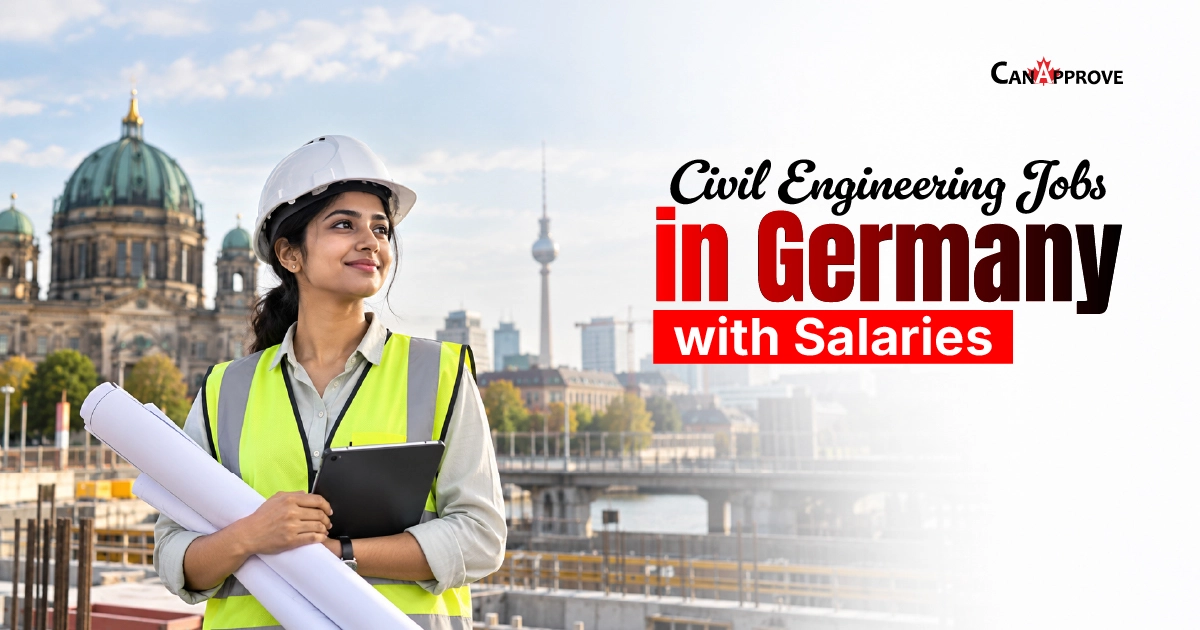
Civil Engineering Jobs in Germany with Salaries (2026)
Civil engineering jobs in Germany are in high demand in 2026, driven by ageing infrastructure, housing shortages and large public…
How to Get Nursing Jobs in Australia in 2026: Complete Guide
How to get Nursing Jobs in Australia is a very important question for internationally qualified nurses looking to build a…
Demand for Medical Laboratory Technician Jobs in Canada
Medical Laboratory Technician jobs in Canada are available across the healthcare sector, but employment prospects vary by province and territory.…

Best Job Sites in Canada for Foreigners (2026): Top Websites to Find Jobs
Job seekers from abroad rely on job sites in Canada to identify verified vacancies, connect with employers and begin the…