



Germany is one of the best countries in the world for international students, offering high-quality education at public universities with little to no tuition fees. Home to some of the Best Public Universities in Germany, the country provides globally recognized degrees and a wide range of courses, including the Best Courses in Germany, making studying abroad both affordable and valuable.
In this blog, we’ll explore whether public universities in Germany are free, share a detailed list of public universities in Germany, highlight the best universities to choose from, English-taught programs, admission requirements, and explain how you can apply everything you need to start your study journey in Germany with confidence.
Table Of Content
1Are Public Universities Free in Germany?2Best Public Universities in Germany3Public Universities in Germany that teach in English4Germany Public University Requirements5How to get Admission in Public Universities in Germany?6Conclusion7Frequently Asked Questions
Are Public Universities Free in Germany?
Yes, Public universities in Germany are mostly tuition-free, even for international students, with only a small semester fee for administration and services. Most bachelor’s and consecutive master’s programs don’t charge tuition, making Germany an affordable choice for quality education.
Some exceptions exist: Baden-Württemberg charges €1,500 per semester for non-EU students, and a few universities like TU Munich may charge €2,000–€6,000 per semester for new non-EU students.
Even when tuition is waived, students must pay a semester contribution, usually between €150 and €400 per semester. This fee covers:
- Student services
- Enrollment and administrative costs
- Access to campus facilities
- Public transport pass (in most cases)
This is a mandatory university charge, not a tuition fee.
Apart from university costs, students should also plan for living expenses, which typically range from €850 to €1,200 per month. This includes accommodation, food, health insurance, and daily expenses. Indian students can reduce costs through scholarships like DAAD and by working part-time up to 20 hours per week.
Best Public Universities in Germany
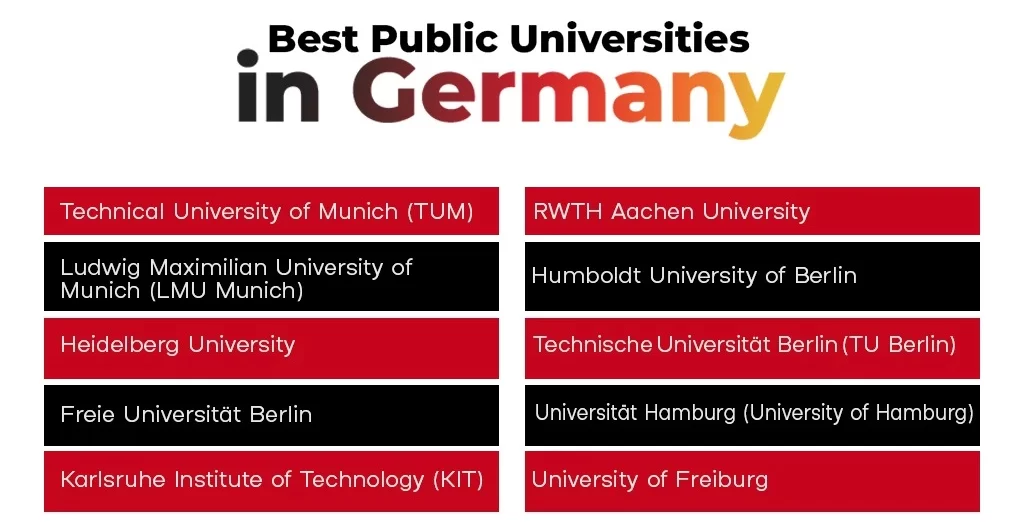
The best public universities in Germany include:
- Technical University of Munich (TUM)
- Ludwig Maximilians University Munich (LMU)
- Heidelberg University
- Freie Universität Berlin
- Karlsruhe Institute of Technology (KIT)
- RWTH Aachen University
- Humboldt University Berlin
- Technische Universität Berlin
- Universität Hamburg
- University of Freiburg
Now, let’s take a closer look at each university in detail:
1. Technical University of Munich (TUM)
Location: Munich, Bavaria
The Technical University of Munich (TUM) is one of Germany’s leading public universities, well known for engineering, technology, and innovation. With strong industry connections to companies like BMW, Siemens, Google, and SAP, students benefit from practical learning and real-world exposure.
Popular Courses at Technical University of Munich
- Mechanical Engineering
- Electrical & Electronics Engineering
- Computer Science & Artificial Intelligence
- Robotics & Automation
- Data Science
- Management & Technology
Technical University of Munich Admission Requirements
- Academic Score: 70–75% (approx. GPA 2.5 German scale)
- Degree: Relevant bachelor’s degree
- English Proficiency: IELTS 6.5–7.0 or TOEFL iBT 88+
- Subject Match: Strong alignment with chosen program
- Documents: Transcripts, CV, SOP, passport, LORs (if required)
Technical University of Munich Acceptance Rate
The acceptance rate at the Technical University of Munich is around 8–10%, making TUM one of the most competitive public universities in Germany.
2. Ludwig Maximilians University Munich (LMU)
Location: Munich, Bavaria
Ludwig Maximilians University Munich (LMU) is one of Germany’s oldest and most respected public universities. It is well known for strong programs in science, humanities, and social sciences, along with a research-focused learning environment and global recognition.
Popular Courses at Ludwig Maximilians University Munich
- Biology & Life Sciences
- Physics & Chemistry
- Economics
- Psychology
- Data Science
- Political Science
Ludwig Maximilians University Munich Admission Requirements
- Academic Score: Around 70% or above
- Degree: Relevant bachelor’s degree from a recognised university
- English Proficiency: IELTS 6.5+ (for English-taught programs)
- Subject Match: Background should match the chosen course
- Documents: Academic transcripts, CV, SOP, passport
Ludwig Maximilians University Munich Acceptance Rate
The acceptance rate at Ludwig Maximilian University of Munich is approximately 10–15%, depending on the program and level of competition.
3. Heidelberg University
Location: Heidelberg, Baden-Württemberg
Heidelberg University is Germany’s oldest public university and ranks among the Best Public Universities in Germany, highly respected for its research strength and academic excellence. It is especially renowned for life sciences, medicine, and social sciences, offering a strong and supportive learning environment for international students.
Popular Courses at Heidelberg University
- Medicine & Life Sciences
- Molecular Biology
- Physics
- Economics
- Social Sciences
Heidelberg University Admission Requirements
- Academic Score: 70% or above
- Degree: Relevant bachelor’s degree
- English Proficiency: IELTS 6.5–7.0 or TOEFL iBT 85+
- Subject Match: Academic background should match the chosen program
- Documents: Transcripts, CV, SOP, passport (LORs if required)
Heidelberg University Acceptance Rate
The acceptance rate at Heidelberg University is around 15–20%, depending on the course and level of competition.
4. Freie Universität Berlin
Location: Berlin
Freie Universität Berlin is a well-known public university, especially popular for social sciences, humanities, and international studies. Located in Germany’s capital city, it offers a diverse academic environment with strong research focus and many English-taught programs for international students.
Popular Courses at Freie Universität Berlin
- Political Science
- International Relations
- Economics
- Sociology
- Data Science
Freie Universität Berlin Admission Requirements
- Academic Score: Around 70% or above
- Degree: Relevant bachelor’s degree from a recognised university
- English Proficiency: IELTS 6.5+ or equivalent
- Subject Match: Background should match the chosen program
- Documents: Transcripts, CV, SOP, passport, LORs (if required)
Freie Universität Berlin Acceptance Rate
The acceptance rate at Freie Universität Berlin is approximately 15–30%, depending on the course and level of competition.
5. Karlsruhe Institute of Technology (KIT)
Location: Karlsruhe, Baden-Württemberg
Karlsruhe Institute of Technology (KIT) is one of the Best Public Universities in Germany, especially known for engineering, technology, and applied research. It combines strong academic teaching with hands-on research and maintains close industry connections, making it a popular choice for technical and science-focused students.
Popular Courses at Karlsruhe Institute of Technology
- Mechanical Engineering
- Electrical Engineering
- Computer Science
- Robotics & Automation
- Energy Engineering
- Data Science
Karlsruhe Institute of Technology Admission Requirements
- Academic Score: Around 70% or above
- Degree: Relevant bachelor’s degree
- English Proficiency: IELTS 6.5+ or equivalent
- Subject Match: Previous studies should match the chosen program
- Documents: Academic transcripts, CV, SOP, passport, LORs (if required)
Karlsruhe Institute of Technology Acceptance Rate
The acceptance rate at Karlsruhe Institute of Technology is approximately 20%, depending on the program.
6. RWTH Aachen University
Location: Aachen, North Rhine-Westphalia
RWTH Aachen University is one of Germany’s top technical public universities, especially known for engineering and applied sciences. It has strong ties with industry and research organizations, giving students excellent exposure to practical learning and innovation.
Popular Courses at RWTH Aachen University
- Mechanical Engineering
- Electrical Engineering
- Automotive Engineering
- Industrial Engineering
- Computer Science
RWTH Aachen University Admission Requirements
- Academic Score: Around 70% or above
- Degree: Relevant bachelor’s degree
- English Proficiency: IELTS 6.5–7.0 or TOEFL iBT 90+
- Subject Match: Academic background should match the chosen program
- Documents: Transcripts, CV, SOP, passport, LORs (if required)
RWTH Aachen University Acceptance Rate
The acceptance rate at RWTH Aachen University is around 10–15%, making it a highly competitive public university in Germany.
7. Humboldt University of Berlin
Location: Berlin
Humboldt University of Berlin is one of the Best Public Universities in Germany, widely respected for its strong focus on research, humanities, and social sciences. Located in the heart of Berlin, it offers students a rich academic environment along with global exposure and excellent career opportunities.
Popular Courses at Humboldt University of Berlin
- Economics
- Global Studies
- Political Science
- Social Sciences
- Philosophy
- Data Science
Humboldt University of Berlin Admission Requirements
- Academic Score: Around 70% or above
- Degree: Relevant bachelor’s degree from a recognised university
- English Proficiency: IELTS 6.5+ or equivalent (for English-taught programs)
- Subject Match: Previous studies should match the chosen course
- Documents: Academic transcripts, CV, SOP, passport, LORs (if required)
Humboldt University of Berlin Acceptance Rate
The acceptance rate at Humboldt University of Berlin is estimated at 15–25%, depending on the program.
8. Technische Universität Berlin (TU Berlin)
Location: Berlin
Technische Universität Berlin is a well-known public university focused on engineering, technology, and innovation. Located in Germany’s capital, TU Berlin offers strong industry exposure, research opportunities, and many English-taught programs, making it popular among international students. It is also considered one of the top choices for those looking for the best courses in Germany.
Popular Courses at Technische Universität Berlin
- Computer Science
- Electrical Engineering
- Mechanical Engineering
- Data Science
- Engineering Management
- Urban Planning
Technische Universität Berlin Admission Requirements
- Academic Score: Around 65–70%
- Degree: Relevant bachelor’s degree
- English Proficiency: IELTS 6.5 or TOEFL iBT 88+
- Subject Match: Previous studies should match the chosen course
- Documents: Transcripts, CV, SOP, passport, LORs (if required)
Technische Universität Berlin Acceptance Rate
The acceptance rate at Technische Universität Berlin is approximately 20–30%, making TU Berlin moderately competitive for international students.
9. Universität Hamburg
Location: Hamburg
Universität Hamburg is one of Germany’s largest public universities and is well known for its strong focus on research and interdisciplinary studies. Located in the vibrant city of Hamburg, it offers a great academic environment along with excellent career opportunities for international students.
Popular Courses at Universität Hamburg
- Economics
- Business Administration
- Data Science
- Physics
- Social Sciences
- Environmental Studies
Universität Hamburg Admission Requirements
- Academic Score: Around 65–70%
- Degree: Relevant bachelor’s degree from a recognised university
- English Proficiency: IELTS 6.5+ or equivalent
- Subject Match: Background should match the chosen course
- Documents: Academic transcripts, CV, SOP, passport
Universität Hamburg Acceptance Rate
The acceptance rate at Universität Hamburg is approximately 25–35%, making it more accessible compared to highly competitive technical universities.
10. University of Freiburg
Location: Freiburg, Baden-Württemberg
The University of Freiburg is one of Germany’s oldest and most respected public institutions and is consistently ranked among the Best Public Universities in Germany. It is well known for its strong focus on natural sciences, sustainability, and interdisciplinary research, offering a balanced mix of academic excellence and a high quality of student life.
Popular Courses at the University of Freiburg
- Environmental Sciences
- Biology
- Physics
- Economics
- Renewable Energy
- Sustainability Studies
University of Freiburg Admission Requirements
- Academic Score: Around 65–70%
- Degree: Relevant bachelor’s degree from a recognised university
- English Proficiency: IELTS 6.5+ or equivalent (for English-taught programs)
- Subject Match: Background related to the chosen program
- Documents: Academic transcripts, CV, SOP, passport, LORs (if required)
University of Freiburg Acceptance Rate
The acceptance rate at the University of Freiburg is approximately 20–30%, depending on the program.
Public Universities in Germany that teach in English
Many English-taught public universities in Germany offer programs, especially at the master’s level, in engineering, IT, science, and business. Most of these programs are tuition-free, except at some universities in Baden-Württemberg, making Germany a top choice for international students.
Public Universities in Germany that teach in English are:
- Technical University of Munich (TUM) – Around 79 English programs in engineering and management
- Ludwig Maximilian University of Munich (LMU) – About 50 English programs in sciences and humanities
- Heidelberg University – Life sciences and social sciences
- Freie Universität Berlin – Political science and economics
- Humboldt University of Berlin – Economics and global studies
- Karlsruhe Institute of Technology (KIT) – Engineering and technology
- RWTH Aachen University – Engineering master’s programs
- University of Freiburg – Natural sciences
- Technische Universität Berlin – Technology and innovation
- University of Tübingen – Humanities and sciences
Germany Public University Requirements
To study at public universities in Germany, bachelor’s students need 12 years of schooling with 60–70%+ while master’s students require a recognized bachelor’s with 60–75%, German programs need TestDaF/DSH and English programs require IELTS 6.5+ or TOEFL 80–100, applicants must submit transcripts, passport, language certificate, SOP and sometimes LORs along with proof of funds of around €11,904 per year, and some courses may have exams, interviews or portfolios with semester fees ranging from €150–€350.
Here’s a detailed overview:
1. Academic Eligibility
- Bachelor’s: 12 years of schooling with 60–70%+ in Class 12. Some students may need a Studienkolleg, unless qualified via IIT-JEE or an equivalent route.
- Master’s: Recognized bachelor’s degree with 60–75% (6.5–8.0 CGPA). Top universities like TUM may expect higher scores.
2. Language Requirements
- German-taught programs: TestDaF or DSH
- English-taught programs: IELTS 6.5+ (no band below 6.0) or TOEFL iBT 80–100
3. Documents Required
Academic transcripts, passport, language certificate, SOP/Motivation Letter, and sometimes LORs.
4. Financial Proof
Proof of funds of about €11,904 per year (2026) via blocked account, scholarship, or sponsor.
5. Additional Notes
Some courses may have exams, interviews, or portfolios. A semester contribution of €150–€350 applies. APS verification via DAAD usually takes 6–8 weeks.
How to get Admission in Public Universities in Germany?
Admission to German public universities follows a structured process. Most universities accept applications through Uni-Assist, while some like TUM have their own portals. Start preparing 6–12 months in advance, especially for Winter 2026 (applications usually open May–July). Along with academics, students can take advantage of free education in Germany and benefit from part-time jobs, which help manage living expenses and gain valuable work experience during their studies.
Now, let’s see in detail how you can get admission in Germany’s public universities:
1. Choose Your Program
Explore courses on DAAD.de and check language of instruction, eligibility, deadlines, and intakes.
2. Get APS Certificate (Mandatory)
Apply via aps-india.de and submit academic documents. Processing takes 3–5 weeks, so apply early.
3. Prepare Documents
Academic transcripts, language scores (IELTS/TOEFL/TestDaF), SOP, CV, LORs (if required), and passport.
4. Apply Online
Apply through Uni-Assist (€75 first university, €30 each additional) or directly via university portals like TUMonline.
5. Receive Offer
Processing takes 4–8 weeks. Selected students receive a VPD or admission letter.
6. Visa & Enrollment
Open a blocked account (€11,904), apply for a German student visa, and complete enrollment after arrival by paying the semester fee (€150–€350).
Conclusion
Germany is a top choice for international students, offering high-quality education at affordable public universities, including some of the Best Public Universities in Germany. With globally recognised degrees, a wide range of English-taught programs, and strong career prospects, studying in Germany is a smart investment for your future, especially with the right guidance.
For official and updated information on courses, universities, and applications, visit the German Academic Exchange Service (DAAD) website.