




Canada immigration through abundant IT jobs in Canada?
In 2026, the Great White North’s tech landscape pulses with promise, offering sky-high salaries and seamless pathways for skilled IT professionals worldwide. From AI wizards to cybersecurity guardians, Canada’s booming IT sector isn’t just hiring, it’s transforming careers amid innovation hubs like Toronto and Vancouver. Dive in to uncover the highest-paying roles and start your journey today.
Table Of Content
1Is IT Jobs in demand in Canada?2Highest Paying IT Jobs in Canada3IT Jobs in Canada with Visa Sponsorship4IT Job Salary in Canada4Top IT Companies in Canada4Conclusion5Frequently Asked Questions
Is IT Jobs in demand in Canada?
Yes, IT jobs are in demand in Canada in 2026.
The tech sector continues to grow rapidly, driven by digital transformation, with nearly 98% of IT departments focusing on cloud, cybersecurity, and automation initiatives. Labour market reports indicate strong employment prospects, talent shortages affecting 79-88% of employers, and projections for over 1.46 million tech workers.
Major hubs like Toronto, Vancouver, and Ottawa lead the demand for IT Jobs in Canada, offering stability even amid economic shifts.
Highest Paying IT Jobs in Canada
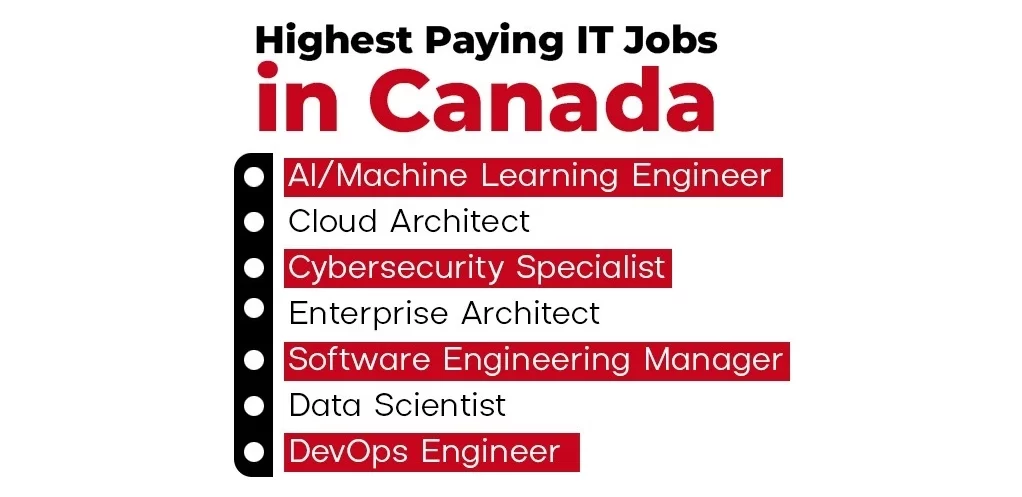
The highest-paying IT jobs in Canada include AI/Machine Learning Engineer, Cloud Architect, Cybersecurity Specialist, Enterprise Architect, Software Engineering Manager, Data Scientist, and DevOps Engineer.
Let’s see each in detail:
1. AI/Machine Learning Engineer
AI/Machine Learning Engineers design and deploy intelligent systems that learn from data to solve real-world problems. This role is vital for industries like healthcare, finance, and tech, where automation and predictions drive efficiency. Demand surges in 2026 due to Canada’s focus on AI innovation and talent shortages.
AI/Machine Learning Engineer Job Description
- Develop machine learning models using algorithms to analyze large datasets and predict outcomes.
- Build and optimize AI systems, including neural networks and deep learning frameworks.
- Collaborate with data scientists to preprocess data and improve model accuracy.
- Deploy models into production environments and monitor performance.
- Test and debug AI applications to ensure reliability and scalability.
Required Qualifications and Skills
- Bachelor’s or Master’s in Computer Science, AI, or related field.
- Proficiency in Python, TensorFlow, PyTorch, and scikit-learn.
- Experience with data processing tools like Pandas and NumPy.
- Strong knowledge of statistics, algorithms, and cloud platforms (AWS, Azure).
- 3+ years in ML projects; certifications like Google Professional ML Engineer a plus.
2. Cloud Architect
Cloud Architects design scalable cloud infrastructure to support business operations, ensuring secure and efficient systems for data storage and applications. With Canada’s rapid digital transformation and cloud adoption boom in 2026, there are strong job opportunities in Canada for skilled Cloud Architects across multiple industries.
Cloud Architect Job Description
- Design cloud solutions using AWS, Azure, or Google Cloud for optimal performance.
- Migrate on-premises systems to cloud environments with minimal downtime.
- Implement security protocols and compliance measures for data protection.
- Monitor cloud resources, optimize costs, and scale infrastructure as needed.
- Advise teams on best practices for cloud-native development.
- Troubleshoot issues and create disaster recovery plans.
Required Qualifications and Skills
- Bachelor’s in Computer Science or IT; advanced certifications preferred.
- Expertise in AWS Certified Solutions Architect, Azure Architect, or similar.
- Hands-on with Kubernetes, Docker, and IaC tools like Terraform.
- 5+ years in cloud computing and networking.
- Knowledge of DevOps practices and cybersecurity basics.
3. Cybersecurity Specialist
Cybersecurity Specialists protect organizations from digital threats and data breaches. Their role is critical as cyber risks grow with tech reliance. In 2026, Canada’s strict regulations and rising attacks fuel urgent demand.
Cybersecurity Specialist Job Description
- Conduct vulnerability assessments and penetration testing on systems.
- Implement firewalls, encryption, and intrusion detection systems.
- Respond to security incidents and perform forensic investigations.
- Develop policies and train staff on cybersecurity best practices.
- Monitor networks for threats using SIEM tools.
- Stay updated on emerging threats and compliance standards like GDPR.
Required Qualifications and Skills
- Degree in Cybersecurity, IT, or equivalent.
- Certifications: CISSP, CEH, CompTIA Security+.
- Skills in Wireshark, Splunk, and ethical hacking tools.
- Experience with firewalls, VPNs, and endpoint security.
- 3+ years in security operations; analytical mindset essential.
4. Enterprise Architect
Enterprise Architects align IT strategy with business goals for long-term success. They bridge technology and operations in large organizations. Demand rises in 2026 with Canada’s enterprise digital upgrades.
Enterprise Architect Job Description
- Create IT blueprints that support business objectives and scalability.
- Evaluate and integrate new technologies into existing systems.
- Lead cross-functional teams in architecture planning and governance.
- Assess risks and ensure alignment with regulatory requirements.
- Document architectures and recommend improvements.
- Collaborate with stakeholders to prioritize IT investments.
Required Qualifications and Skills
- Bachelor’s/Master’s in IT, Business, or Engineering.
- Certifications: TOGAF, Zachman, or ITIL.
- Proficiency in modeling tools like ArchiMate and enterprise frameworks.
- 7+ years in IT architecture and project management.
- Strong communication and leadership skills.
5. Software Engineering Manager
Software Engineering Managers lead teams to build high-quality software solutions. They oversee development while ensuring timely delivery. Canada’s tech hubs drive demand for managers amid rapid growth in 2026.
Software Engineering Manager Job Description
- Manage development teams, set goals, and track project progress.
- Oversee code reviews, testing, and deployment processes.
- Mentor engineers and foster a collaborative environment.
- Coordinate with product and design teams for feature delivery.
- Optimize workflows using Agile/Scrum methodologies.
- Handle budgeting, hiring, and performance evaluations.
Required Qualifications and Skills
- Bachelor’s in Computer Science; MBA a plus.
- 8+ years in software engineering, including 3+ in management.
- Expertise in Java, .NET, or full-stack development.
- Agile certifications (CSM, PMP).
- Leadership and problem-solving abilities.
6. Data Scientist
Data Scientists extract insights from complex data to inform decisions. Essential for analytics-driven industries, their demand peaks in 2026 with big data expansion in Canada.
Data Scientist Job Description
- Analyze datasets to identify trends and build predictive models.
- Use statistical methods and visualization for reporting.
- Clean and preprocess data from various sources.
- Collaborate with stakeholders to define data needs.
- Deploy machine learning solutions for business applications.
- Present findings through dashboards and recommendations.
Required Qualifications and Skills
- Master’s in Data Science, Statistics, or Computer Science.
- Proficiency in R, SQL, Python, and Tableau/Power BI.
- Experience with big data tools like Hadoop or Spark.
- 3+ years analyzing data; domain knowledge advantageous.
- Certifications: Google Data Analytics or Microsoft Certified: Azure Data Scientist.
7. DevOps Engineer
DevOps Engineers streamline software delivery through automation and collaboration. They reduce deployment times and improve reliability. Explosive demand in 2026 ties to Canada’s cloud and CI/CD adoption.
DevOps Engineer Job Description
- Automate infrastructure provisioning with CI/CD pipelines.
- Manage version control using Git and tools like Jenkins.
- Ensure system reliability through monitoring and logging.
- Integrate security into DevOps processes (DevSecOps).
- Troubleshoot production issues and optimize performance.
- Collaborate with developers and operations teams.
Required Qualifications and Skills
- Bachelor’s in Computer Science or related field.
- Certifications: AWS DevOps, Docker Certified Associate.
- Skills in Ansible, Terraform, Kubernetes, and Jenkins.
- 4+ years in DevOps or sysadmin roles.
- Scripting knowledge (Bash, Python).
IT Jobs in Canada with Visa Sponsorship
IT jobs in Canada with visa sponsorship are increasingly accessible for skilled professionals, particularly through programs like the Express Entry system and Provincial Nominee Programs (PNPs).
Employers in high-demand tech hubs such as Toronto, Vancouver, and Montreal often sponsor foreign workers via the Labour Market Impact Assessment (LMIA) process, which verifies no qualified Canadian is available for the role. In 2026, roles like software developers, data scientists, and cybersecurity experts top the list, with over 100,000 annual tech openings projected to face talent shortages.
Major companies including Google, Amazon, Shopify, and RBC actively provide visa sponsorship for IT positions, streamlining Temporary Work Permits or Permanent Residency pathways. Initiatives like the Global Talent Stream under the International Mobility Program fast-track approvals—often within two weeks—for priority occupations in tech.
Job portals such as Job Bank Canada, LinkedIn, and Indeed feature filters for “visa sponsorship,” while firms must demonstrate genuine recruitment efforts to Immigration, Refugees and Citizenship Canada (IRCC).
Indian professionals, in particular, benefit from tailored streams, as many IT roles rank among the most in demand jobs in Canada. Salaries often exceed CAD 100,000 annually, with provinces like Ontario and British Columbia offering region-specific PNPs that favor IT skills. Aspiring applicants should build profiles on these platforms, network via LinkedIn, and consult registered immigration consultants for LMIA-supported job matches
IT Job Salary in Canada
On average, IT jobs in Canada earn approximately CAD 90,000 to CAD 190,000 per year in 2026, depending on experience, province, role, and specialization.
1. AI/Machine Learning Engineer Salary in Canada
On average, AI/Machine Learning Engineers in Canada earn around CAD 116,000–190,000 annually, driven by strong AI demand. Pay varies based on experience, location, and skills such as TensorFlow.
- Entry-Level (0–2 years): $110,000–$140,000 CAD
- Mid-Career (3–7 years): $140,000–$170,000 CAD
- Senior (8+ years): $170,000–$220,000 CAD
2. Cloud Architect Salary in Canada
On average, Cloud Architects in Canada earn between CAD 108,000–170,000 annually, driven by rapid cloud adoption. Expertise in AWS and tech hubs like Vancouver can further boost salaries.
- Entry-Level (0–2 years): $100,000–$125,000 CAD
- Mid-Career (3–7 years): $125,000–$160,000 CAD
- Senior (8+ years): $160,000–$200,000 CAD
3. Cybersecurity Specialist Salary in Canada
On average, Cybersecurity Specialists in Canada earn between CAD 83,000–140,000 annually due to rising threats. Certifications like CISSP raise earnings in Toronto.
- Entry-Level (0–2 years): $80,000–$105,000 CAD
- Mid-Career (3–7 years): $105,000–$135,000 CAD
- Senior (8+ years): $135,000–$170,000 CAD
4. Enterprise Architect Salary in Canada
On average, Enterprise Architects in Canada earn between CAD 120,000–180,000 annually due to IT alignment needs. Seniority and TOGAF certification drive higher pay.
- Entry-Level (0–2 years): $105,000–$130,000 CAD
- Mid-Career (3–7 years): $130,000–$165,000 CAD
- Senior (8+ years): $165,000–$210,000 CAD
5. Software Engineering Manager Salary in Canada
On average, Software Engineering Managers in Canada earn up to CAD 200,000+ annually for leadership roles. Agile skills and firm size influence rates.
- Entry-Level (0–2 years): $120,000–$150,000 CAD
- Mid-Career (3–7 years): $150,000–$190,000 CAD
- Senior (8+ years): $190,000–$250,000 CAD
6. Data Scientist Salary in Canada
On average, Data Scientists in Canada earn between CAD 81,000–160,000 annually due to high data demand. Python/SQL proficiency aids growth in Ontario.
- Entry-Level (0–2 years): $85,000–$110,000 CAD
- Mid-Career (3–7 years): $110,000–$145,000 CAD
- Senior (8+ years): $145,000–$180,000 CAD
7. DevOps Engineer Salary in Canada
On average, DevOps Engineers in Canada earn between CAD 90,000–130,000 annually for automation roles. Cloud tools speed up salary advances.
- Entry-Level (0–2 years): $85,000–$110,000 CAD
- Mid-Career (3–7 years): $110,000–$140,000 CAD
- Senior (8+ years): $140,000–$170,000 CAD
Top IT Companies in Canada
Top IT companies in Canada hiring for high-paying IT Jobs in Canada in 2026 include:
1. OpenText (Waterloo)
2. Google Canada (Toronto, Montreal, Waterloo)
3. Microsoft Canada (Toronto, Vancouver, Montreal)
4. Shopify (Ottawa, Toronto, Montreal)
5. Cisco Systems Canada (Toronto, Ottawa, Vancouver)
6. Salesforce (Toronto, Montreal, Vancouver)
7. RBC (Toronto)
Conclusion
Canada’s IT sector offers some of the Highest Paying Jobs in Canada, beckoning with lucrative opportunities in 2026 that blend cutting-edge innovation with robust visa pathways for global talent From AI engineers commanding top salaries to cloud architects shaping digital futures, these roles promise stability and growth in tech hubs like Toronto and Vancouver.
Ready to launch your career? Explore openings on Job Bank Canada and take your first step.